I’ve lost count of how many times I’ve seen a glossy cookbook claim you need a laboratory-grade pH meter or a perfectly timed stopwatch to know when to bake. It’s nonsense. People spend far too much money on gadgets when they should be spending more time actually looking at their flour and water. You don’t need a digital readout to understand how to tell if a starter is ready; you need to stop treating it like a math equation and start treating it like a living thing. I remember a young apprentice back in the nineties who nearly threw away a perfectly good batch because it hadn’t doubled in exactly forty-five minutes, missing the fact that the kitchen was drafty and the yeast was simply taking its time.
I’m not here to give you a checklist of arbitrary numbers or tell you to trust a photograph of a bubbly jar. Instead, I’m going to teach you to listen to the scent, watch the way the bubbles break the surface, and feel the strength of that fermentation under your own hands. We are going to talk about real-world indicators—the smell of ripe fruit, the texture of the aeration, and the way the bubbles behave. By the time we’re done, you won’t be glancing at the clock every five minutes; you’ll be trusting your senses instead.
Listening to the Sourdough Fermentation Process

You can’t just look at a jar and expect it to tell you its secrets; you have to pay attention to the sound and the movement. When the sourdough fermentation process is truly underway, the mixture doesn’t just sit there looking pretty. It breathes. You’ll hear a faint, rhythmic crackling if you hold the jar close to your ear—that’s the sound of gas being trapped and released by the gluten. It’s a tiny, microscopic symphony. If your kitchen is quiet, listen for that soft hiss when you stir it. That is the sound of life, and it’s much more reliable than any timer on your phone.
Watch how the surface behaves, too. I don’t care if the recipe says it should double in four hours; if your house is drafty, it might take six. You are looking for those telltale sourdough starter bubbles that aren’t just sitting on top like a film, but are actually suspended within the structure, pushing the dough upward. The texture should change from a heavy, slumped paste to something that feels aerated and springy. If it feels sluggish or heavy, it’s still sleeping. Give it time to wake up.
Reading the Language of Sourdough Starter Bubbles
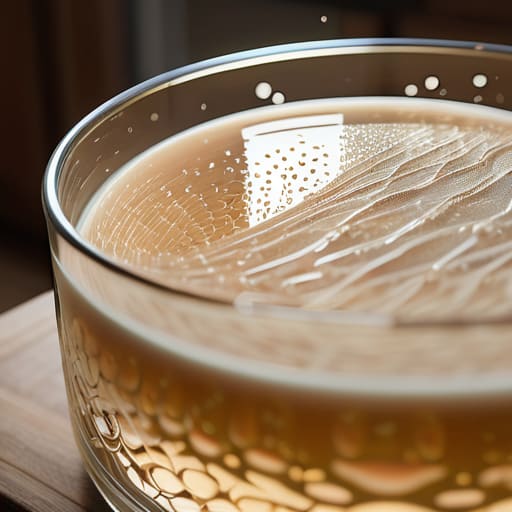
You can’t just stare at a jar and expect it to shout when it’s ready; you have to look for the architecture of the bubbles. When I was running the shop, I’d watch the sides of the crock to see if the sourdough starter bubbles were tiny and tight, like champagne, or large, irregular gas pockets that look like they’re fighting to stay under the surface. If you see those big, structural pockets, it means the yeast activity in sourdough is working overtime, stretching the gluten into thin, translucent membranes. It’s a beautiful thing to see, but it’s also a warning: those large bubbles mean the structure is thinning out, and you’re approaching the edge of the cliff.
Don’t get caught up in counting bubbles, though. Instead, look for the rhythm of the rise. A healthy, active culture doesn’t just bubble; it expands with purpose. You want to see that steady, predictable climb where the surface looks taut, not slumped or weeping liquid. If you see a pool of greyish water on top—what some call ‘hooch’—don’t panic and throw the whole thing out. It just means your starter is hungry and the fermentation has moved past its peak. It’s less a sign of death and more a sign that the clock has run out on this particular feeding.
Five Ways to Know Your Starter is Actually Ready to Work
- Trust your nose over your eyes. A ready starter shouldn’t just smell like yeast; it should have a bright, slightly boozy, fruity tang that makes you want to lean in. If it smells like nail polish remover or pure vinegar, it’s hungry and exhausted, not ready to lift a loaf.
- The Float Test is a fine trick, but don’t rely on it blindly. Drop a small spoonful into a glass of water; if it floats, it’s holding enough gas to be useful. But remember, a starter can float because it’s bubbly even if it’s about to collapse, so use it as a hint, not a law.
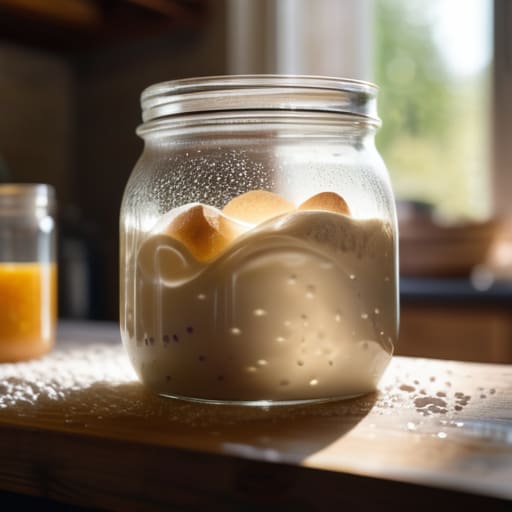
- Watch the peak, not the rise. I don’t care how much it has doubled; I care about when it stops climbing. You want to catch it when it has reached its highest point and is just starting to flatten at the top. That is the moment of maximum strength.
- Feel the tension. When you stir a ready starter, it shouldn’t feel like a thin, watery soup. It should have a certain structural resistance, a bit of “pull” to it, as if the bubbles are actually holding the weight of the flour together.
- Check the clock against the temperature. If your kitchen is a drafty cellar, your starter might take twelve hours to look ready; if it’s a warm summer afternoon, it might be ready in four. Stop looking at the recipe’s timeline and start looking at the state of the dough.
The Baker’s Final Check
Forget the timer on your oven; a starter is ready when it reaches its peak volume and smells of sweet fermentation rather than harsh vinegar, regardless of whether it took six hours or twelve.
Trust your hands and your nose over a recipe card, because a starter that looks “active” but lacks that characteristic fruity, yeasty aroma is just gasping for air and won’t have the strength to lift your dough.
If your kitchen is running cold, expect the rhythm to slow down—don’t force the bake just because the clock says so, or you’ll end up with a heavy, sour loaf that refuses to rise.
Trusting Your Hands Over the Clock

At the end of the day, stop looking at your phone for a timer and start looking at the jar. You’re looking for that sweet spot where the hydration is consistent, the bubbles are active but not frantic, and the scent has moved away from sharp vinegar toward something more mellow and fruity. Remember, a starter that has doubled or tripled in volume is a good sign, but it isn’t a law. If your kitchen is a bit drafty and the rise looks sluggish, don’t panic and don’t assume you’ve failed. You simply need to respect the temperature and give those microbes a little more time to wake up.
Baking with a living thing is a conversation, not a set of instructions. There will be mornings when the starter is sluggish and days when it seems to have too much energy, and both are perfectly fine. Don’t let a rigid schedule steal the joy out of your kitchen; instead, learn to read the rhythm of your own environment. Once you stop fighting the natural ebb and flow of fermentation, you’ll find that the dough begins to tell you exactly what it needs. Just be patient, keep your hands gentle, and trust the process—it has been working long before we arrived, and it will keep working as long as you listen.
Frequently Asked Questions
My starter looks bubbly and has doubled in size, but it still smells like vinegar—is it actually ready to bake with?
If it smells like vinegar, your starter is hungry. It’s likely gone past its peak and is starting to produce acetic acid. Don’t panic; it isn’t “dead,” it’s just hungry. If you bake with it now, your bread might end up overly sour or even a bit sluggish. Give it another feeding—maybe a slightly higher hydration to mellow things out—and wait for that sharp sting to turn into something more like creamy yogurt or sweet fruit.
If my kitchen is particularly cold today, should I be looking for different signs of readiness than I would on a warm afternoon?
Oh, darling, don’t you dare look at the clock. If your kitchen is shivering, your starter is shivering too. In a cold room, the yeast isn’t lazy; it’s just moving in slow motion. You won’t see that frantic, bubbly surge you expect, so don’t panic. Look for the smell instead—it should still shift from that sharp, vinegary sting to something mellow and creamy. If it feels sluggish, give it time and a little warmth.
How can I tell if the starter is actually at its peak strength or if it's just a temporary swell before it starts to collapse?
Don’t let a quick rise fool you; a starter that surges and crashes in two hours is just hungry and frantic. You’re looking for stability. A truly peaked starter will hold its dome—that gentle, rounded curve at the surface—for a good hour or two before the center begins to dip. It should feel pressurized, almost like a balloon about to pop, and smell pleasantly tangy, not like a sharp, stinging vinegar.