Stop buying those fancy “starter kits” with the pre-measured organic flours and the sterile glass jars that look more like laboratory equipment than kitchen tools. If you think a hundred-dollar box is going to do the heavy lifting for you, you’ve been misled. Most of these online tutorials treat a sourdough starter like a delicate chemistry experiment that requires a laboratory setting, but that’s nonsense. A starter isn’t a specimen; it’s a living, breathing thing that wants to grow, provided you stop overthinking it and start paying attention to your kitchen. This isn’t a complete guide to sourdough starters designed to sell you more gadgets; it’s a way to help you finally understand the life sitting in your jar.
I’m not going to give you a list of precise, impossible-to-follow instructions that assume your kitchen is a climate-controlled vacuum. Instead, I’m going to teach you how to read the bubbles and feel the temperature of the dough with your own hands. We’re going to focus on the rhythm of the ferment rather than the ticking of a clock. I promise to give you the honest, unvarnished truth about what happens when things go sideways, because that is usually where the real learning begins.
Choosing Your Foundation the Truth About Flour Types for Sourdough
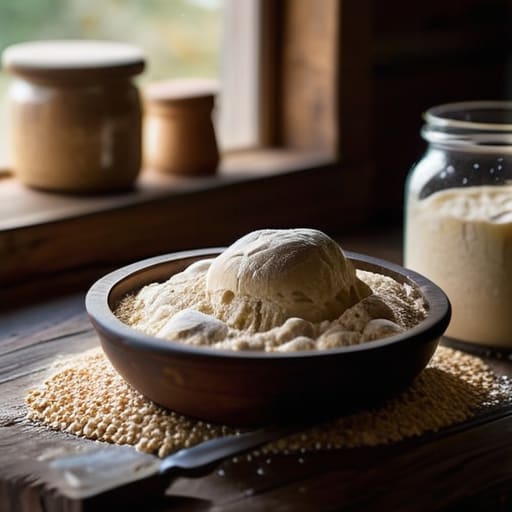
Now, don’t let the supermarket aisles fool you into thinking any bag of white powder will do. If you want to see the magic of the wild yeast fermentation process actually happen, you have to give those microbes something to eat. I’ve seen people try to build a life in a jar using highly processed, bleached flour, and all they end up with is a sluggish, sour-smelling mess that refuses to rise. You want flour with character—flour that hasn’t been stripped of its soul.
For a beginner, I always suggest starting with a stone-ground whole wheat or a good rye. These are packed with the minerals and nutrients that act like a shot of espresso for your microbes. If you’re using a standard bread flour, make sure it has a high protein content; you need that structure to hold the gases as the culture grows. Once you’ve mastered the basics, you can play around with different flour types for sourdough, but remember: the goal isn’t just to feed the starter, it’s to build a resilient ecosystem that can withstand a drafty kitchen or a busy week.
The Wild Yeast Fermentation Process Cultivating Life Not Just Bubbles

You have to understand that you aren’t just mixing flour and water; you are hosting a tiny, invisible riot. The wild yeast fermentation process isn’t a mechanical reaction like baking soda in a cake; it is a living, breathing ecosystem. Those bubbles you see aren’t just air pockets—they are the exhaust of microscopic life forms eating, multiplying, and transforming your dough. If you see a few bubbles and think you’ve succeeded, you’re only halfway there. I look for a certain rhythm: a predictable rise and fall, a pleasant tang that smells like a brewery rather than a compost heap. Those are the true signs of a healthy starter.
The biggest mistake I see is people treating the jar like a science experiment rather than a pet. If your kitchen is drafty, the life inside will simply go to sleep. Maintaining starter temperature is where most beginners stumble; if it’s too cold, nothing happens, and if it’s too hot, you’ll cook the very thing you’re trying to grow. You can’t rush it, and you certainly can’t force it. You just have to watch, wait, and learn to read the life in the jar.
Five Truths for the Patient Baker
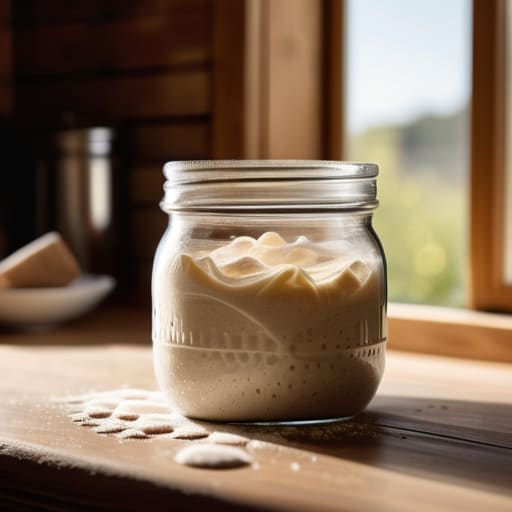
- Stop looking at the clock and start looking at the jar. If your starter is hungry, it will tell you; it’ll be weeping liquid on top or smelling more like sharp vinegar than sweet yogurt. A recipe might say “feed every twenty-four hours,” but if your kitchen is a drafty cottage, that starter might need more time to wake up before you dare touch it.
- Temperature is your silent partner, and she’s often a fickle one. If your dough isn’t moving, don’t blame the yeast—blame the air. A warm spot near the oven or even the top of the refrigerator will do more for your fermentation than any expensive “probiotic” powder you can buy in a shop.
- Throw away the measuring cups. I don’t care if the book says two cups of flour; I want to know you’re working with a 100% hydration ratio. If you aren’t weighing your flour and water in grams, you aren’t baking sourdough, you’re just guessing, and guessing is how you end up with a brick.
- Be gentle with the life you’re building. When you’re mixing or folding, you aren’t trying to beat the dough into submission; you’re coaxing the gases to stay trapped. If you handle it too roughly, you’ll knock the very breath out of it, and no amount of extra flour will fix a bruised starter.
- Don’t panic when it looks “wrong.” Sometimes a starter smells funky, or it doesn’t rise in a perfect dome on the first try. That’s just the biology settling in. Most people quit right when the character is forming. Keep feeding it, keep the temperature steady, and let the time do the heavy lifting.
The Baker’s Truth: Three Things to Remember Before You Start
Stop looking for perfection in a jar and start looking for life; a starter isn’t a static recipe you follow, but a living thing that reacts to the temperature of your kitchen and the mood of your hands.
Throw your measuring cups in the bin and stick to weights; if you aren’t tracking your hydration and your flour-to-water ratios, you aren’t baking, you’re just guessing, and guessing is how you end up with a jar of useless grey sludge.
Patience is your most vital ingredient, not something you can rush with extra flour or frantic stirring; if the dough isn’t moving, it’s likely because your environment is too cold or you’ve been too impatient to let the biology do its work.
Trust the Living, Not the Clock
At the end of the day, your starter isn’t a math problem to be solved; it’s a living thing that responds to the world around it. We’ve talked about the importance of choosing a sturdy flour, understanding that fermentation is a slow dance of wild yeast and bacteria, and why you must respect the environment of your kitchen. If your starter looks sluggish one morning, don’t panic and don’t start throwing away half your jar in a frenzy. Most of the time, you just need to adjust the temperature or give it a bit more time to wake up. Remember, the weights and percentages I gave you are your map, but your senses—the smell, the texture, and the way it bubbles—are your true compass.
I spent thirty-four years watching dough rise and fall, and if there is one thing I know, it is that you cannot force life to happen on your schedule. There will be days when your starter seems temperamental, and there will be days when it produces the most magnificent, tangy levain you’ve ever smelled. Don’t let a single flat loaf discourage you from the craft. Sourdough is a lesson in humility and observation. Stop looking at the timer on your phone and start feeling the warmth of the jar in your hands. Once you learn to listen to the dough, you’ll realize that the best ingredient you ever brought into your kitchen wasn’t the flour, but your own patience.
Frequently Asked Questions
My starter is sitting there looking completely dead after three days; did I kill it, or is it just being stubborn?
Don’t go reaching for the bin just yet. Three days in is nothing; you’re likely just in the “quiet phase” where the initial bacterial bloom settles before the real yeast takes command. If it’s sitting there looking limp, your kitchen is probably too cold or you’re overfeeding it before it’s ready to eat. Stop hovering. Give it a consistent temperature, keep your feeding schedule steady, and let it find its rhythm. Patience, remember?
Is it actually necessary to feed it every single day, or can I let it sleep if I'm not baking?
Listen, if you aren’t baking, you don’t need to be a slave to that jar. I’ve seen people exhaust themselves feeding a starter every twelve hours just because a book told them to, and all they do is invite burnout. If you aren’t using it, put it in the fridge. It’ll sleep just fine. A weekly feeding is plenty to keep the culture steady. Don’t let the ritual become a chore; let the biology work for you.
Why does my starter smell like acetone or old vinegar instead of that lovely, tangy scent I see in photos?
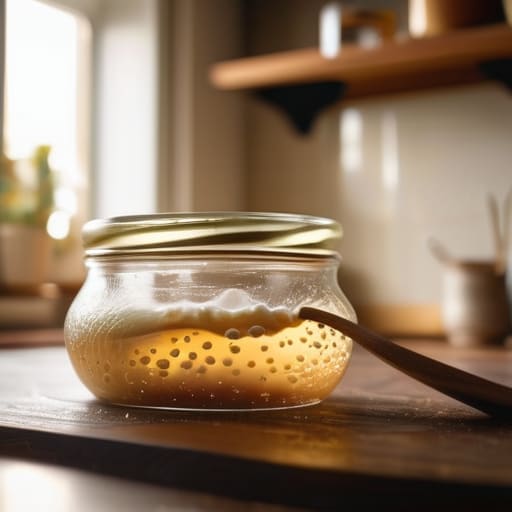
If your jar smells like nail polish remover or sharp vinegar, don’t panic—you haven’t killed it, you’ve just starved it. That acetone scent is a cry for help; your yeast has run through its food supply and is producing excess acid and alcohol as a byproduct. It’s hungry. Stop worrying about the smell and just increase your feeding frequency or the amount of flour you’re giving it. It needs more fuel, not more fuss.