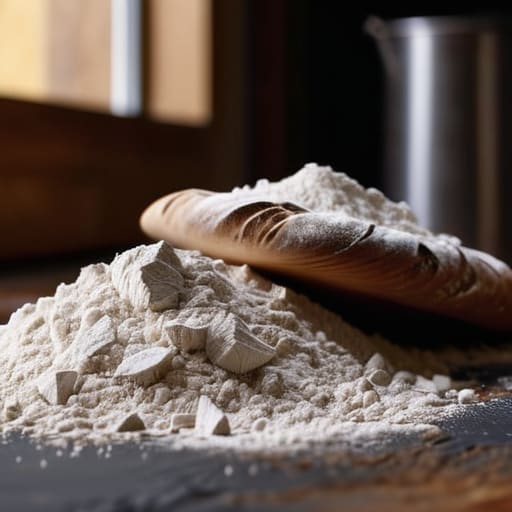
If you’ve spent any time scrolling through those glossy parenting blogs, you’ve likely seen the lie that teaching a child to bake requires a pristine kitchen, a set of miniature silicone tools, and a recipe that yields a perfect, Instagram-ready sponge every single time. It’s nonsense. When I think about how to bake with children, I don’t think about those sanitized, flour-free tutorials; I think about my own niece, four years old and covered head-to-toe in rye flour, staring in absolute wonder as a shaggy mass of dough slowly transformed under her tiny, clumsy palms. Baking isn’t a performance of precision for a camera; it is a messy, tactile conversation between a person and the ingredients.
I’m not here to give you a list of “kid-friendly” cupcake recipes that rely on boxed mixes and food coloring. Instead, I want to show you how to teach them the actual rhythm of the kitchen—the way a dough should feel when it’s properly hydrated and the patience required to wait for a rise that won’t be rushed. I’ll share the honest truth about the flour on your floor and the burnt edges, because that is where the real learning happens.
Teaching Kids Measuring Skills Through Weights and Truths
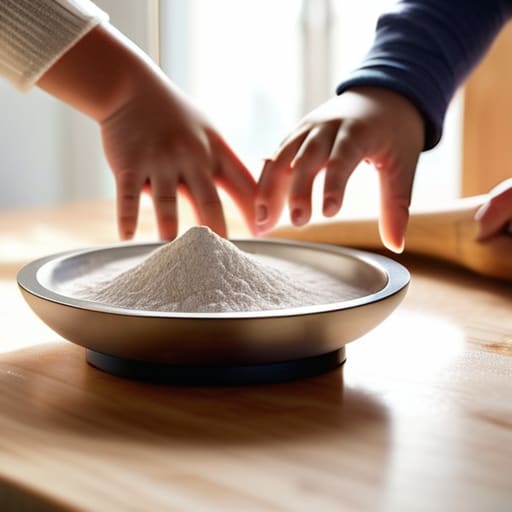
Now, I know what you’re thinking. You’ve got a little one standing on a stool, and the last thing you want to do is hand them a digital scale. It feels clinical, doesn’t it? But if you want to move past mere “playtime” and actually get into the heart of it, you have to stop using cups. Cups are liars; they hide the truth of how much flour you’ve actually packed into them. I always start by teaching kids measuring skills using a scale, because seeing the numbers climb is far more magical to a child than seeing a cup fill up. It turns the math into something real you can touch.
When we work with a 65% hydration dough, I don’t just tell them the weight; I let them feel the difference between the flour and the water before they meet. These are the best kinds of sensory baking activities because they learn that a gram of salt is a tiny, heavy thing, while a gram of flour is a cloud. We aren’t just making a snack; we are learning the honesty of ingredients. If the dough feels too stiff, we don’t consult a book—we add a splash of water and watch the numbers change.
Kitchen Safety for Toddlers Protecting the Sacred Workspace
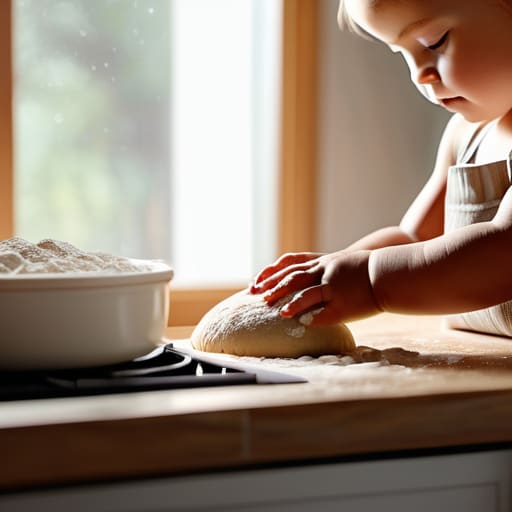
Now, we must talk about the boundaries. I spent thirty-four years navigating a bakery where a slip of the hand meant a burnt finger or a broken bowl, and while I want your little ones to feel the magic of the flour, we aren’t running a circus. When it comes to kitchen safety for toddlers, my rule is simple: the “hot zone” is strictly off-limits. If the oven door is open or the stovetop is humming, that is a no-go area. I always set up a dedicated “safe station”—usually a sturdy stool at the kitchen island—where they can engage in sensory baking activities like squishing dough or sorting dried beans without being underfoot while I’m handling boiling water or sharp knives.
It isn’t about being a drill sergeant; it’s about respect for the tools. I teach them that a wooden spoon is a friend, but a metal whisk or a paring knife is something we only touch when a grown-up is holding the other end. If you want to focus on preventing kitchen messes with kids while keeping them safe, give them their own small, blunt tasks. Let them tear herbs or stir a cool bowl of batter. If they stay within their boundaries, the kitchen remains a sanctuary rather than a battlefield.
Five Ways to Let Them In Without Losing Your Mind
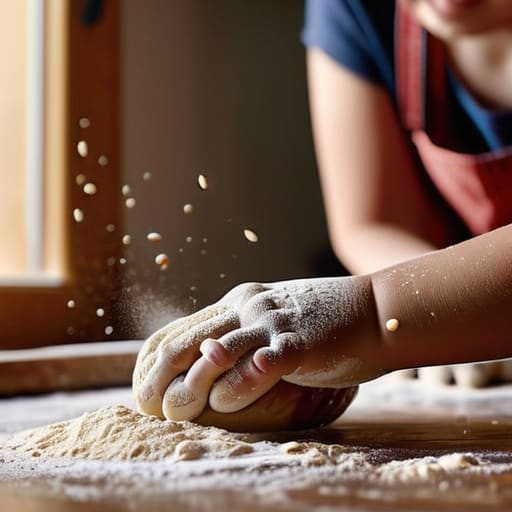
- Let them feel the temperature of the dough. Don’t just tell them it’s warm; have them press their palms into it. They need to learn that a dough that feels like a lukewarm bath is ready for the next stage, while one that feels cold as a cellar needs more time to wake up.
- Embrace the mess as a sensory lesson. If they spill a bit of flour, don’t rush to sweep it up immediately. Explain that flour is light and dances in the air, and that cleaning it up is just as much a part of the rhythm of the kitchen as the kneading itself.
- Teach them the “gentle hand” rule. Children often want to squeeze dough like playdough, but I tell them to treat it like a sleeping bird. If they are too rough, they’ll knock all the air out, and we aren’t making bricks; we’re making bread.
- Use the “wait and watch” method for patience. Baking is mostly waiting, which is a hard lesson for a child. Give them a small, specific job to do during the proofing stage—like watching the dough rise against the side of the bowl—so they learn that time is an active ingredient, not just a gap between tasks.
- Let them own a small part of the process. Even if it’s just a tiny scrap of dough that they get to shape into their own little roll, let it be theirs. When they see that scrap turn into something golden and smelling of yeast, they aren’t just following a recipe; they’re understanding the magic of the craft.
Lessons Learned Between the Flour and the Oven
Let them touch the dough, even if it’s messy; they need to feel the difference between a shaggy, unhydrated mass and a smooth, elastic dough to understand how life actually works.
Forget the timer and the strict schedule; teach them that bread moves at its own pace, and if the kitchen is chilly, we simply wait a little longer.
Use the inevitable spills as a lesson in rhythm rather than a reason for frustration, because a kitchen that is too tidy is a kitchen where nothing real is being made.
The Mess is Part of the Recipe
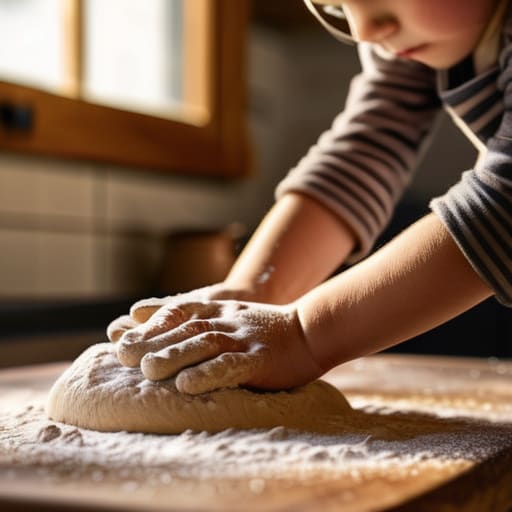
At the end of the day, baking with children isn’t about producing a perfectly symmetrical boule or a crumb that looks like it belongs in a magazine. It is about the math of the weights, the awareness of a hot oven, and the quiet discipline of waiting for the dough to rise. You’ve taught them that a cup can lie to you, but a scale never does, and you’ve shown them how to respect the heat of the kitchen. If there is flour in their hair and salt on the floor, you haven’t failed; you’ve simply provided the necessary friction for learning. As long as they understand that the dough needs warmth and the oven needs respect, you have given them the foundations of a real baker.
Don’t let the pursuit of a perfect loaf rob you of the joy of the process. If the bread comes out heavy or the crust is a bit too dark, don’t rush to fix it—listen to what the mistake is telling you. Those little failures are where the real teaching happens, far more than any successful bake could ever manage. Let them feel the stickiness, let them smell the yeast, and most importantly, let them learn that patience is the only ingredient you can’t buy in a store. When they finally pull a warm loaf from the oven, they won’t just be tasting bread; they’ll be tasting something they actually earned.
Frequently Asked Questions
What do I do if my child gets impatient and starts rushing the dough before it's actually ready?
When those little hands start frantic kneading because they want the bread now, stop them. I’ve seen it a thousand times. You don’t fight the impatience; you redirect it toward observation. Tell them the dough is “sleeping” or “growing its muscles.” If they rush it, they’ll knock the air out and end up with a heavy, sad brick. Show them how to feel the tension instead. If they can’t wait, they aren’t baking; they’re just playing with flour.
How can I explain the concept of dough temperature to a child without making it sound like a math lesson?
Don’t reach for a thermometer and a lecture; reach for their hands. Tell them the dough is like a little sleeper. If the water is too cold, the dough is shivering and too sleepy to wake up and grow. If it’s too hot, it’s like someone’s turned up the sun too high and it’s getting cranky. Let them feel it. If it feels like a lukewarm bath, they’re doing just fine.
Is it okay to let them help with the heavy kneading, or will they tire out and lose interest too quickly?
Let them help, but don’t expect them to carry the load of a professional. If you hand a six-year-old a massive batch of 75% hydration dough, they’ll be exhausted in three minutes and decide baking is a chore. Instead, give them a small, manageable piece—a “practice loaf.” Let them feel the transition from shaggy mess to smooth elasticity. If they tire, let them rest. The goal isn’t the muscle; it’s the connection.