I remember a Tuesday morning back in ’94, standing in my shop at four in the morning, staring at a delivery of fresh yeast that had arrived looking more like grey sludge than the creamy, pale blocks I needed. My apprentice was panicking, convinced we’d have to toss the whole day’s production because the supplier had botched the order. It’s that same panic I see in eyes today when someone realizes their recipe calls for fresh, but their pantry only holds a dusty jar of granules. People act like it’s a catastrophe, but learning how to substitute fresh and dried yeast isn’t some complex chemistry exam; it’s just about understanding that you’re working with different speeds of life.
I’m not going to give you a list of complicated mathematical formulas that leave you more confused than when you started. Instead, I’ll show you how to adjust your timing and temperature so your dough doesn’t feel cheated. We’ll talk about the actual weight of what you’re adding and, more importantly, how to listen to the dough when it’s telling you it needs a little more warmth or a bit more patience. No fluff, no expensive specialty ingredients—just the honest truth about keeping your bread rising, no matter what’s in your cupboard.
Understanding the Ratio of Fresh to Dry Yeast
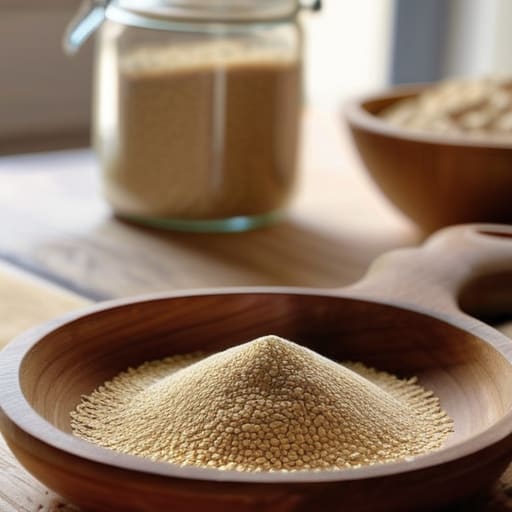
Now, if you’re looking at a recipe that calls for fresh yeast—the kind that comes in a little block and smells like a damp cellar—and you only have the granules from a packet, you can’t just swap them one-for-one. Fresh yeast is about 70% water, so if you try to use the same weight of dry yeast, you’ll end up with a dough so stiff it’ll feel like you’re kneading a brick. To get the ratio of fresh to dry yeast right, you generally want to use about one-third the weight of the fresh yeast in its dry form. If the recipe asks for 30 grams of fresh, you’re looking at 10 grams of dry.
But don’t just dump that powder into your flour and hope for the best. You need to consider whether you’re dealing with active dry yeast vs instant yeast. If it’s active dry, you’ll need to perform a proper yeast activation process—what some call blooming—by dissolving it in a bit of warm water first to wake it up. Instant yeast is more impatient; it likes to go straight into the flour. Just remember, when you’re substituting yeast in bread recipes, you’re adjusting the hydration and the timing, not just the weight.
The Truth About Baking With Different Yeast Types
Now, here is the thing people forget: yeast isn’t just a powder you toss into a bowl; it is a living, breathing thing that reacts to its environment. When you are baking with different yeast types, you aren’t just swapping ingredients, you are changing the rhythm of your kitchen. Fresh yeast is moist and temperamental, like a well-fed sourdough starter, whereas the dried varieties are essentially dormant travelers waiting for a reason to wake up. If you treat them exactly the same, you’ll find your dough either sluggish or racing ahead before you’ve even finished shaping your boules.
The real difference lies in how they wake up. If you’re working with active dry yeast, you must respect the yeast activation process; it needs that warm, slightly sweet water to bloom properly, or it simply won’t perform. Instant yeast, on the other hand, is more impatient—it’s ready to go the moment it hits the flour. I’ve seen many a beginner get frustrated because their dough didn’t rise on schedule, only to realize they skipped the essential step of hydration or misjudged how much life was actually in their packet.
Five Things the Recipe Won't Tell You
- Watch your water temperature like a hawk; if you’re using instant yeast, it’s much more aggressive than the fresh stuff, so if your water is even a few degrees too warm, you’ll kill the life out of it before the flour even touches the bowl.
- Don’t go expecting the same rhythm; fresh yeast is a slow, steady heartbeat that gives you a predictable rise, whereas dried yeast can act like a teenager—sudden bursts of energy followed by a crash—so keep a close eye on your bulk fermentation.
- Remember that when you swap to dried, you’re essentially removing a bit of moisture from the equation; I always tell people to keep a tiny splash of extra water nearby, because a dough that feels too tight is a dough that won’t breathe.
- If you’re using active dry yeast, you must give it its proper moment of respect by blooming it in warm water first; skipping this step because you’re in a rush is a recipe for a heavy, lifeless loaf that no amount of kneading will fix.
- Trust your hands more than the clock; because different yeasts behave differently depending on the humidity in your kitchen, stop looking at the timer and start feeling for that pillowy, aerated tension that tells you the yeast has actually done its job.
The Baker's Essentials
Forget the measuring cups; if you’re swapping fresh for dried, always calculate based on the weight of your flour to keep your hydration and fermentation timing where they belong.
Dried yeast is a bit more stubborn and sluggish than the fresh stuff, so if you find your dough isn’t moving as fast as you’d like, don’t poke and prod it—just give it a warm spot and some extra time to wake up.
Success isn’t about following a conversion chart to the letter, it’s about watching the dough; if it hasn’t doubled or feels too tight, it’s telling you it needs more warmth or more time, regardless of what the packet says.
Trust Your Hands, Not Just the Math
At the end of the day, whether you are using a block of fresh yeast from the butcher or a little packet of granules from the supermarket, the goal remains the same: you are feeding a living thing. We’ve talked about the math—remembering that you’ll need about a third of the weight in dried yeast to match your fresh—but don’t let the numbers paralyze you. If you use active dry, just give it a little warm water to wake it up, and if you’re using instant, toss it right in with the flour. The most important thing to remember is that yeast is a living organism, and it responds to the environment you provide. If your kitchen is drafty, your dough will take longer; if your water is too hot, you’ll kill the very magic you’re trying to harness. Watch the dough, not the clock.
I spent decades staring at dough through the dim light of a four a.m. kitchen, and I can tell you that the most beautiful loaves didn’t come from following a manual to the letter, but from learning to listen to the fermentation. Don’t be afraid of a substitution gone slightly awry; a dough that rises a bit slower or a crust that’s a touch different is just a lesson you haven’t finished learning yet. Baking isn’t about achieving a sterile, photographic perfection; it is about the rhythm of the rise and the smell of the oven. So, grab your scale, trust your senses, and remember to be patient with yourself as much as you are with your starter.
Frequently Asked Questions
If I'm using instant yeast instead of active dry, do I still need to bloom it in warm water first, or can I just toss it straight into the flour?
You can toss it straight into the flour. That’s the whole point of instant yeast—it’s been processed so finely that it doesn’t need that warm bath to wake up. Just whisk it in with your flour and salt before adding your liquids. However, if your kitchen is particularly drafty or cold, I still like to dissolve it in my water first; it gives me a little peace of mind that the life is actually in there.
My kitchen is particularly chilly this morning; will using dried yeast instead of fresh mean I need to extend my bulk fermentation time to get the same rise?
Oh, a chilly kitchen? That changes everything. Yes, you’ll absolutely need to give that dough more time. Dried yeast is essentially “sleepy” compared to the lively, wet punch of fresh yeast, and cold air only makes it sleep harder. Don’t just watch the clock; watch the dough. Wait until it looks aerated and feels pillowy, even if the recipe says it should be done an hour ago. Let it take the time it needs.
Does the fat content in my dough—say, a rich brioche—change how I should calculate the substitution ratio between fresh and dry?
Now you’re asking the right questions. When you’re working with something like a brioche, those fats—the butter, the eggs—are heavy. They act like a blanket, making it harder for the yeast to move and breathe. Because of that, don’t be afraid to lean toward the higher end of your substitution ratio. If the dough feels sluggish or heavy, it’s likely the fat slowing things down; just give it a little extra encouragement.