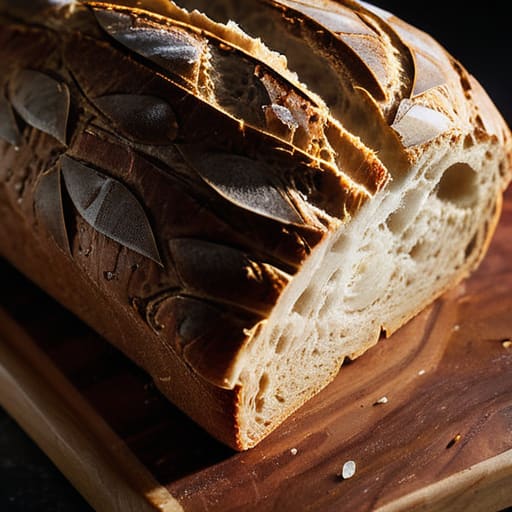
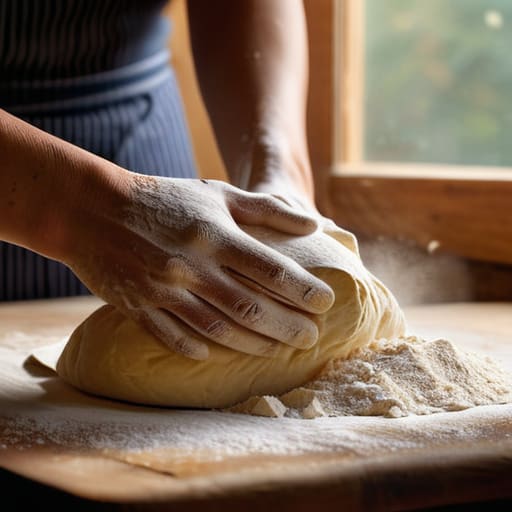
I remember standing in my shop at four in the morning, flour dusting my eyelashes and my shoulders aching, staring at a tray of sourdough that had come out looking more like flat pancakes than loaves. I had followed my recipe to the letter, but the dough had been temperamental, and I couldn’t for the life of me remember if the kitchen had been five degrees too cold or if I’d been too heavy-handed during the folds. That was the day I realized that if you don’t learn how to keep a baking notebook, you are simply gambling with your flour and your time. Most people think a journal is just a place to scribble down ingredients, but that is a waste of good paper.
I am not here to tell you to buy some expensive, leather-bound planner or download a fancy app that will just glitch when your hands are covered in sticky dough. Instead, I’m going to show you how to record the things that actually matter: the ambient temperature, the hydration percentages, and the way the dough felt under your palms. I will teach you how to track the variables that actually change the bread, so you can stop guessing and start knowing exactly why your loaves are behaving the way they are.
Beyond the Recipe a Baking Recipe Log Template for Truth
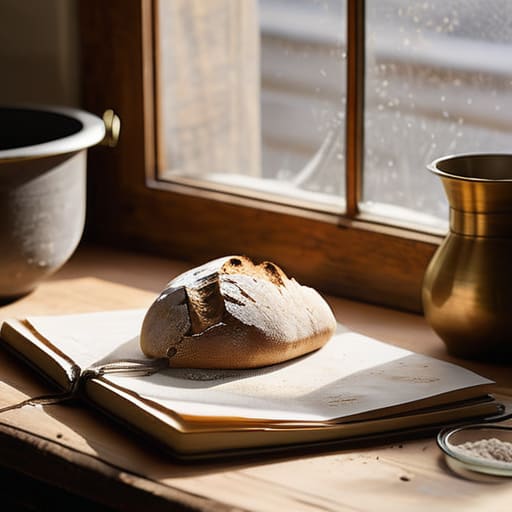
If you just copy a recipe into a notebook, you aren’t keeping a journal; you’re just making a list. To actually learn, your baking recipe log template needs to capture the things the cookbook author forgot to mention. I want to see the flour weight, yes, but I also want to see the ambient room temperature and the exact water temperature you used to hit your desired dough temperature. If you aren’t tracking ingredient measurements alongside the conditions of your kitchen, you’re just guessing.
When a loaf comes out of the oven looking like a pancake instead of a boule, don’t just shrug and blame the yeast. This is where your baking troubleshooting notes become your best friend. Write down if the dough felt tight and stubborn during the folds, or if it seemed to lose its strength too quickly. Did the oven run hot? Were you recording oven temperature variations? A notebook tells you the “why” behind the “what.” It turns a failed bake from a heartbreak into a lesson, and that is the only way you’ll ever truly master the craft.
Tracking Ingredient Measurements Before the Lies of Cups Take Hold
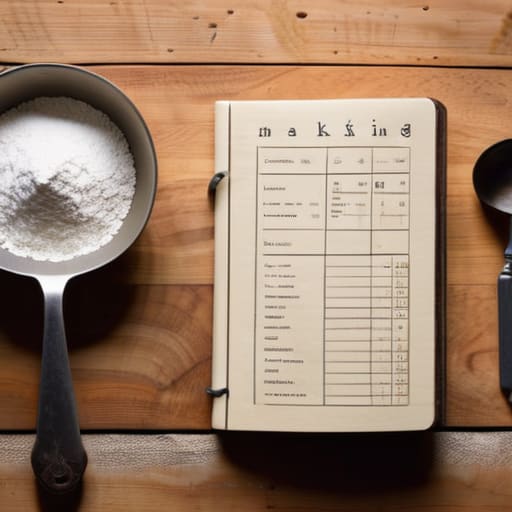
If you’re still measuring your flour by the cup, you aren’t actually baking; you’re just guessing. I spent my first decade in the bakery thinking a cup was a reliable tool, until I realized that one person’s “cup” of flour is a light, airy cloud, and another’s is a packed, heavy brick. When you start tracking ingredient measurements by the gram, the mystery of why your dough is suddenly a sticky mess or a dry crumb disappears. You need to see the numbers clearly on the page so you can see the math.
In your journal, don’t just write “flour” and “water.” Write the exact weight and, more importantly, the hydration percentage. If you’re aiming for a 75% hydration sourdough and you end up with something that won’t hold a shape, you need to know if you actually added the water you thought you did. This level of detail is the foundation of improving pastry consistency; it turns a lucky batch into a repeatable skill. If the math is right and the loaf still fails, then you know you can stop blaming the recipe and start looking at the room temperature instead.
The Five Truths They Don't Teach You in Baking School
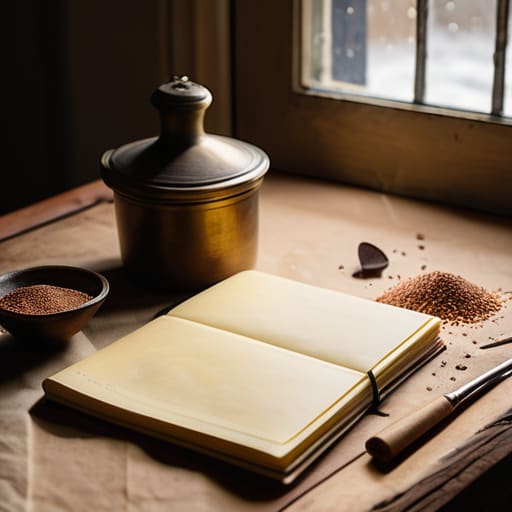
- Record the room temperature and the dough temperature, not just the oven setting. If your kitchen was a drafty five degrees colder than yesterday, your sourdough isn’t “stubborn”—it’s just waiting for warmth that you didn’t account for.
- Write down the hydration percentage as your primary metric. A recipe might call for a certain amount of water, but I want to see 75% or 80% written in bold so you can see exactly how much “slack” you’re working with when the flour brand changes.
- Note the “feel” of the dough at every stage, from autolyse to final proof. Use words like supple, tight, bubbly, or slack; a photograph can’t tell you if a dough felt like a soft pillow or a piece of wet clay, but your notes can.
- Document the timing of your folds and bulk fermentation with a stopwatch, not a clock. “Two hours” means nothing if you started at noon and finished at four; I want to know exactly how long those gases were allowed to stretch the gluten.
- Leave a margin for your failures and your frustrations. If a loaf came out of the oven looking like a brick, don’t just cross it out—write down that you rushed the shaping or that the oven floor felt cold. Those “mistakes” are actually your most honest teachers.
The Three Truths of Your Notebook
Stop writing down just the ingredients; if you don’t record the ambient temperature of your kitchen and the exact hydration percentage, you’re only telling half the story of why that loaf rose—or didn’t.
Treat your notebook as a map of your mistakes, because a failed bake isn’t a reason to throw the recipe away, it’s a reason to look at your notes and see if your hands were too rough or your proofing was too rushed.
Use grams, not cups, for every single entry, because the moment you start guessing with volume is the moment you lose the ability to replicate your own success.
The Notebook is Your Second Set of Hands
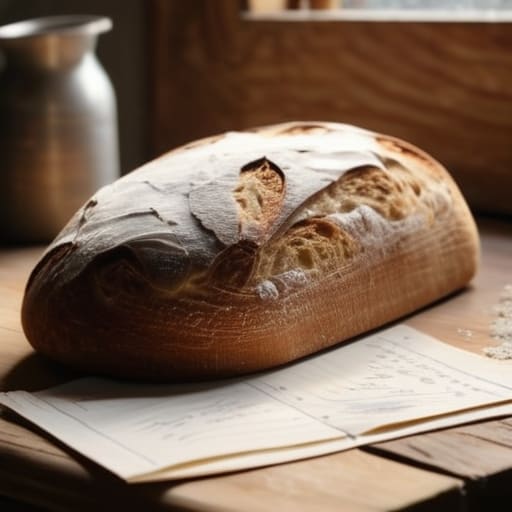
At the end of the day, that notebook isn’t just a collection of scribbles; it is your most honest teacher. By recording your hydration percentages, the ambient temperature of your kitchen, and the exact weight of your salt, you stop guessing and start actually seeing what the dough is doing. You’ll stop blaming a “bad recipe” when a loaf comes out dense and realize, through your own notes, that your kitchen was simply four degrees too cold for that specific yeast activity. When you track the variables—the time, the handling, and the math—you transform from someone who follows instructions into someone who understands the living chemistry of the bake.
Don’t let the fear of a messy notebook stop you from starting. Your first entries might be nothing more than a list of failures, but those failures are the only way to find your rhythm. A notebook isn’t about achieving perfection on every single bake; it is about building a map of your own intuition so that one day, you won’t even need to look at the page. Trust the weights, respect the clock, and remember that patience is the only ingredient you can’t buy in a shop. Now, get your pen ready—there is a loaf waiting to tell you its story.
Frequently Asked Questions
If I'm recording my dough's hydration and temperature, do I really need to write down every single little thing, or is there a limit to how much detail actually matters?
Listen, if you’re only writing down the flour and water, you aren’t keeping a log; you’re just copying a recipe. You need the things that change: the ambient temperature of your kitchen, the temperature of that water, and how long that dough sat on the counter before you touched it. Those “little things” are exactly why your sourdough was a brick last Tuesday but a cloud today. Write down the variables, or stop bothering.
Should I be keeping one notebook for every different type of bread, or is it better to have everything in one place so I can compare how a sourdough behaves differently from a lean baguette?
Keep it all in one place. If you start splitting your notes into separate books, you’ll lose the ability to see the patterns. I want to see how my sourdough behaves on a damp Tuesday compared to a lean baguette on a dry Friday. You need that context. One notebook, one continuous history of your kitchen, your hands, and your flour. It’s not about the bread type; it’s about the environment they all live in.
How do I know when a note in my journal is actually a "lesson learned" versus just a one-time fluke caused by a drafty window or a bad batch of flour?
You look for the pattern, not the incident. If a loaf collapses once because you left the window cracked, that’s just a drafty afternoon. But if you notice your fermentation is sluggish every time the ambient temperature drops below twenty degrees, that’s a lesson. A fluke is a single data point; a lesson is a trend in your numbers. Don’t chase ghosts; chase the repetitions in your weights, timing, and dough strength.