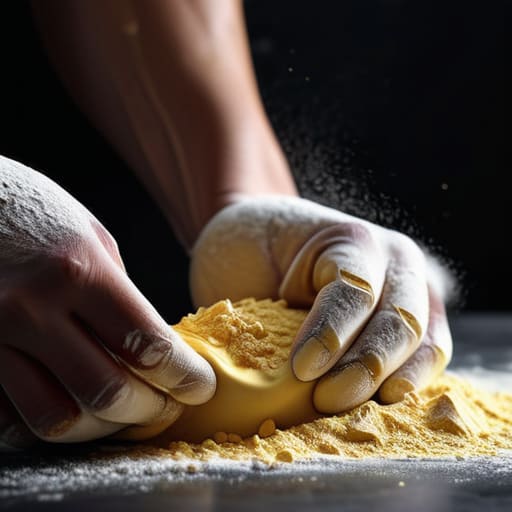
I remember standing in my shop at five in the morning, thirty years ago, staring at a tray of brioche that looked more like heavy, yellow bricks than airy clouds. I had followed every fancy “expert” instruction to the letter, but my dough was stubborn, greasy, and utterly lifeless. Most people will try to sell you a complete guide to enriched doughs that focuses on expensive European butter or specialized machinery, but they forget to mention that fat is a bully; it wants to coat your flour particles and prevent them from ever seeing a drop of water. If you don’t understand how that butter interferes with gluten, all the high-end ingredients in the world won’t save you from a dense, heavy loaf.
I’m not here to give you a list of luxury substitutions or pretty pictures of braided loaves. Instead, I’m going to give you the unvarnished truth about how fat, sugar, and eggs actually behave inside a fermenting mass. We are going to talk in weights and percentages, focusing on how temperature and timing dictate whether your dough rises or simply sits there sulking. By the time we’re done, you won’t just be following a recipe; you’ll be reading the dough with your own hands.
The Truth About Fat Content in Bread Making
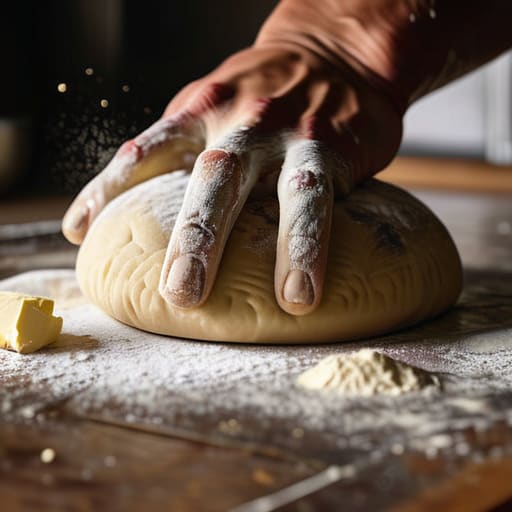
Everyone wants to talk about the crumb, but nobody talks about the struggle that fat brings to the bowl. When you start playing with the fat content in bread making, you aren’t just adding flavor; you are fundamentally changing how that dough behaves. Fat is a lubricant. It coats the flour particles and gets in the way of the gluten strands trying to link up. If you’re used to a lean, snappy sourdough, an enriched dough will feel like a different animal entirely—it’s more stubborn, more slippery, and it won’t fight you the same way.
You have to understand that adding butter, oil, or heavy cream is essentially asking the yeast to work harder. Those fats act as a bit of a buffer, slowing down the yeast fermentation in enriched dough because the yeast has to navigate through all that richness to get to its food. If you rush it, you’ll end up with a heavy, greasy brick. Don’t panic if it feels sluggish; it isn’t broken, it’s just busy. You have to give the dough the time it needs to find its strength through all that interference.
Mastering Egg and Milk Dough Ratios With Precision
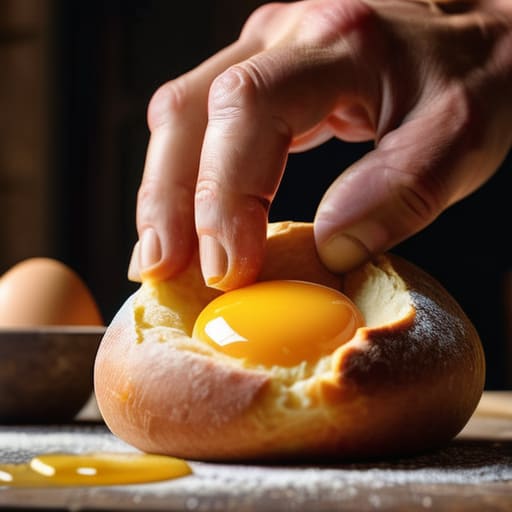
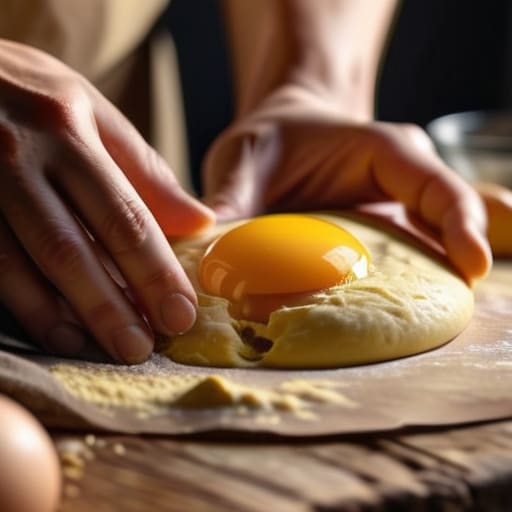
Now, let’s talk about the liquid gold: eggs and milk. When you move away from simple water, you aren’t just changing the flavor; you are fundamentally altering the structure of the crumb. I always tell my students that eggs are the architects of an enriched dough. The proteins in the yolk provide structure, while the fats ensure that soft bread texture science actually works in your favor rather than leaving you with a gummy mess. If you’re looking for a tight, brioche-style crumb, you lean into the yolks. If you want something lighter, you might use more whites, but be warned—whites can make a dough feel stubborn and difficult to stretch.
As for the milk, it’s all about the sugars and the temperature. Milk contains lactose, which doesn’t ferment as easily as the sugars in flour, meaning you won’t see that explosive rise you get with a lean dough. You have to be mindful of your egg and milk dough ratios because too much liquid at once can turn your dough into a sticky, unmanageable soup. I prefer to add my liquids in stages, watching how the flour absorbs the moisture. If the dough feels tacky but doesn’t stick to your skin, you’re on the right track.
Five Things Your Recipe Won't Tell You About Enriched Dough
- Watch your dough temperature like a hawk. When you add butter, eggs, and milk, you’re adding a lot of thermal mass; if your liquids are even slightly too warm, you’ll over-proof that dough before you’ve even finished the first fold. Aim for a final dough temperature of about 24°C to 26°C—anything higher and you’re just inviting the yeast to run a race it can’t finish.
- Stop looking at the clock and start looking at the bubbles. Enriched doughs are heavy; they don’t rise with the same frantic energy as a lean sourdough. If the recipe says “let rise for one hour” but your kitchen is drafty and the dough still feels dense and tight, leave it alone. It’s not ready until it has actually expanded, not when the timer dings.
- Respect the gluten struggle. Adding fat is essentially a way of coating the flour proteins and making it harder for them to bond. If you try to dump all your butter in at the start, you’ll never get the strength you need. Develop your gluten structure with just the flour, water, and yeast first—until it passes the windowpane test—then introduce your fats. It’s a conversation, not a collision.
- The “Touch Test” is better than any photograph. An enriched dough should feel supple and slightly tacky, like a soft earlobe, but it should never feel greasy or limp. If it feels like it’s sliding through your fingers, you’ve likely over-handled it or added too much fat for the flour strength you’re using.
- Don’t fear the slow ferment. Because enriched doughs are so rich, they can handle—and actually benefit from—a long, cold retard in the fridge. This slows down the yeast but allows the flavors of the milk and fats to deepen. It’s the difference between a loaf that just tastes like bread and one that tastes like a memory.
Lessons from the Bench
Forget the clock and watch the dough; enriched doughs are heavy with fat and sugar, which means they move slower and need more warmth and time than a simple lean loaf ever will.
Stop measuring by volume and start measuring by weight, because a “cup” of flour can vary by twenty grams depending on how much you’ve packed it, and in an enriched dough, that’s the difference between a pillowy brioche and a dense, greasy brick.
Trust your hands over your eyes, especially when incorporating butter or eggs; you aren’t looking for a smooth surface, you’re looking for that specific, elastic tension that tells you the gluten has actually woken up despite all that fat trying to hold it back.
The Baker’s Final Word
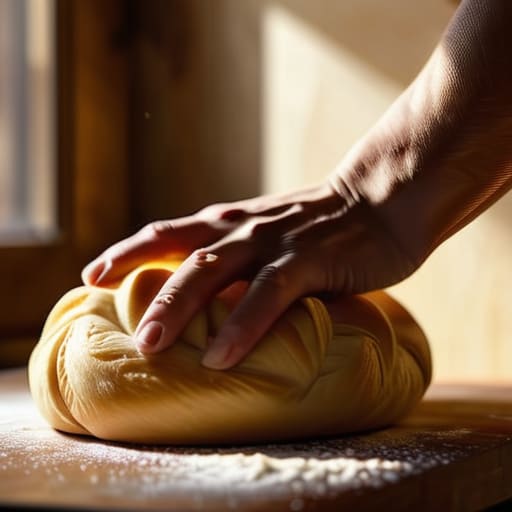
If you’ve followed along, you know that enriched dough isn’t just a recipe; it’s a delicate negotiation between ingredients. We’ve looked at how fat slows down the yeast, how milk provides that soft crumb, and why you must respect the math of your percentages. Remember, when you increase your fat or sugar, you are essentially asking the dough to work harder and slower. If your loaf comes out dense or heavy, don’t go hunting for a new recipe; instead, look at your ambient temperature and the warmth of your hands. Most “failures” are simply the dough telling you it wasn’t quite ready to be shaped, or that your kitchen was a few degrees too chilly for that extra butter to play nice.
At the end of the day, once you’ve mastered the weights and the ratios, you have to learn to let go of the scale and actually listen to the dough. There will be days when the humidity makes the flour act temperamental, or your eggs are a bit smaller than the math intended, and that is perfectly fine. Baking enriched breads is a lifelong conversation between you and the grain. Don’t be afraid to get your hands messy or to start a batch over if the tension doesn’t feel right. Patience is your most reliable tool, so give your dough the time it asks for, and it will eventually reward you with a crumb that no photograph could ever truly capture.
Frequently Asked Questions
If my kitchen is particularly cold, how much extra time should I allow for the dough to actually wake up before I start shaping?
If your kitchen is shivering, your dough is shivering too. Don’t look at the clock; look at the dough. A cold room can easily double your bulk fermentation time, sometimes even more. If it’s sitting at 15°C, you might be waiting two hours longer than a recipe suggests. Don’t rush it just to meet a deadline. Wait until it looks aerated and feels alive under your palm. Patience is free; ruined dough is expensive.
I’m using a high-protein bread flour, but will the extra fat in an enriched dough make the crumb too heavy or dense?
It’s a common worry, but don’t let the flour intimidate you. High protein is actually your friend here; that extra strength is exactly what you need to lift the weight of the butter and eggs. If you’re at 65% hydration or higher, you’ll find the dough wants to fight you. Just don’t rush the bulk fermentation. Give that gluten time to build its structure before you try to shape it, or you’ll end up with a brick.
When I’m adding butter to a dough that’s already started fermenting, am I going to ruin the structure if I don't incorporate it perfectly?
You won’t ruin it, but you’ll certainly test your patience. If you’re adding fat mid-fermentation, you’re essentially performing a delicate surgery. The goal is to coat the gluten strands without tearing them. If you’re too aggressive, you’ll deflate the gas you’ve worked so hard to build; if you’re too timid, you’ll end up with greasy, unintegrated streaks. Don’t look for a smooth dough immediately—look for the moment the fat feels part of the tension.