I remember standing in my bakery at five in the morning, watching a young apprentice weep because her profiteroles had collapsed into sad, wet puddles the moment they left the oven. She had followed a recipe to the letter, but she hadn’t understood that choux isn’t about following instructions—it’s about managing steam and temperament. Most people will search for a “complete guide to choux” and find themselves buried under lists of expensive silicone molds or complicated French techniques that don’t actually matter. They’ll tell you that you need a specific brand of flour or a professional-grade mixer, but they won’t tell you that if your pan isn’t hot enough when the flour hits the butter, you’ve already lost the battle.
I’m not here to sell you on fancy equipment or a dozen unnecessary steps. What I am going to give you is a complete guide to choux built on the reality of the stovetop and the heat of the oven. We are going to talk about hydration percentages, the precise moment the dough pulls away from the pan, and why patience is the only way to ensure those shells stay crisp. I’ll teach you to feel the weight of the paste in your spatula so you stop guessing and start knowing.
The Physics of Steam in Pastry Baking
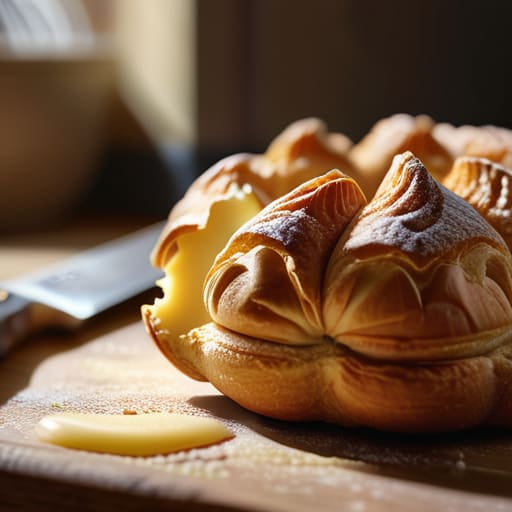
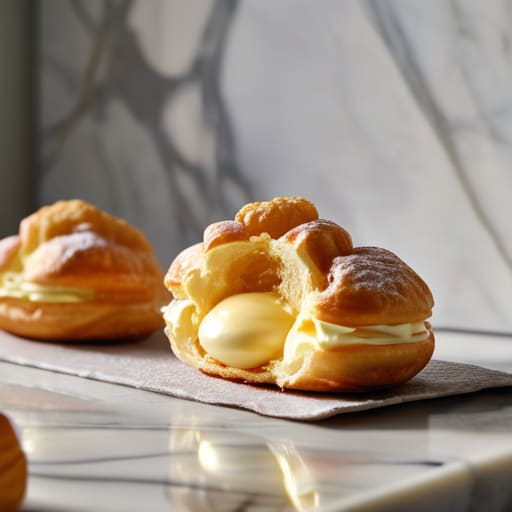
You have to understand that choux isn’t a dough that rises because of yeast or a chemical leavener like baking powder; it rises because you are essentially trapping a storm inside a shell. When that high-moisture dough hits a hot oven, the water turns to steam instantly. That steam is what pushes the walls of the pastry outward, creating that hollow center we all want for our éclairs. If your oven is too dry or your temperature is too low, that steam escapes before it can do its job, leaving you with a heavy, dense lump instead of a light shell.
This is where most people stumble in their eclair pastry making. They focus so much on the look of the dough that they forget the environment. If you don’t provide enough initial heat to convert that moisture into pressure, you’ll find yourself deep into cream puff troubleshooting, wondering why your puffs are flat. You aren’t just baking a pastry; you are managing a pressure vessel. You need enough moisture in the dough to create the lift, but enough heat to set the structure before the steam vanishes.
Achieving the Perfect Choux Pastry Consistency
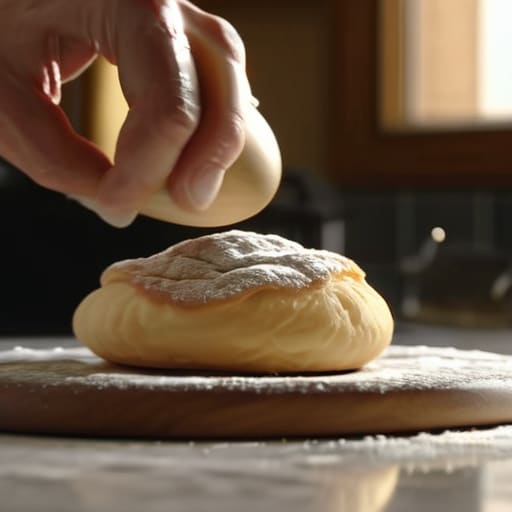
Now, listen closely, because this is where most people lose their nerve. You aren’t looking for a specific number on a scale when you add your eggs; you are looking for a feeling. I always work with a 100% flour base to 75% liquid ratio as a starting point, but your kitchen humidity and how much you dried out that pan on the stove will change everything. If you dump all your eggs in at once, you’ll end up with a soup that will never hold its shape in the oven. Instead, add them one by one, watching how the dough responds. You want a texture that is glossy and smooth, falling off your wooden spoon in a slow, heavy “V” shape.
If your dough is too stiff, it won’t expand; if it’s too loose, your éclairs will flatten into pancakes. This is the heart of proper pâte à choux technique. Don’t let the recipe tell you “use four eggs.” It might take three, or it might take five. You have to read the dough with your hands and your eyes. If it looks like it wants to move, it’s ready.
Five Ways to Stop Your Choux From Giving Up the Ghost
- Stop measuring your flour by the scoop. A cup of flour can weigh anywhere from 120 to 160 grams depending on how much you’ve packed it down, and that’s the difference between a hollow shell and a heavy, leaden lump. Always use a scale; I aim for 100% flour to roughly 80-85% liquid by weight, but you’ll know the real number when you see how the dough pulls away from the pan.
- Don’t be afraid of the pan. When you’re cooking your flour and liquid—the panade—you need to see a thin film form on the bottom of the pot. That’s the starch gelatinizing. If you don’t cook it long enough to drive off that excess moisture, your dough won’t have the structural integrity to hold the steam, and you’ll end up with a puddle instead of a pastry.
- The egg rule is a suggestion, not a law. I tell people to add eggs by weight, but even then, you have to watch the texture. You’re looking for the “V” shape—when you lift the spatula, the dough should fall in a smooth, slow ribbon that leaves a distinct V-shaped tail. If it’s too stiff, add a teaspoon more egg; if it’s too runny, you’ve gone too far and you’ll need to start over.
- Patience in the oven is non-negotiable. I’ve seen too many people crack the oven door ten minutes in because they’re anxious. If you let that steam escape before the protein structure has set, the whole thing will collapse like a house of cards. Keep the door shut tight until the pastry is golden-brown and feels firm to a light touch.
- Temperature is your silent partner. If your eggs are straight from a cold refrigerator, they’ll shock the warm dough and break your emulsion. Let them sit on the counter for an hour; a warm, unified dough incorporates much more smoothly and creates a much more stable structure for the rise.
Three Things to Remember When the Oven Door Closes
Stop looking for a specific color and start listening for the sound of the steam; if you pull them out while they still feel soft or heavy, they’ll collapse into sad, wet puddles the second they hit the cool air.
Forget the measuring cups and trust the eggs; I don’t care what the recipe says, your dough should fall off a wooden spoon in a slow, silken V-shape, not sit in a stiff lump or run like soup.
Heat is your partner, not your enemy, so don’t you dare peek through the glass in those first twenty minutes—every time you crack that door, you’re letting out the very steam that’s doing the heavy lifting for you.
The Final Proof
At the end of the day, choux isn’t about following a list of instructions like you’re assembling furniture; it’s about understanding the relationship between the moisture in your pan and the heat in your oven. You’ve learned that the hydration must be exact, that the starch needs to be properly gelatinized through vigorous stirring, and that the steam is what does the heavy lifting for the rise. If your pastry feels too heavy or refuses to hollow out, don’t go hunting for a new recipe in a glossy magazine. Most likely, you either under-dried the dough on the stovetop or you opened the oven door a second too early and let the temperature plummet. Trust your hands to feel that glossy, cohesive pull, and trust your oven to hold its heat.
Don’t let a collapsed profiterole or a soggy éclair discourage you from reaching for the saucepan again tomorrow. I spent decades staring at doughs that refused to behave, and I can tell you that the best bakers aren’t the ones who never fail, they are the ones who aren’t afraid to look at a flat pastry and ask themselves why the steam didn’t do its job. Baking is a conversation between you and the ingredients, and sometimes the ingredients just need a little more time to find their voice. So, keep your weights precise, keep your oven door shut, and remember that patience is the only ingredient you can’t buy in a shop.
Frequently Asked Questions
Why does my choux pastry collapse into a flat puddle the second I take it out of the oven?
You’ve pulled them too soon. It’s the most common heartbreak, and it’s almost always a matter of moisture. If the insides are still wet, that steam has nowhere to go but out, and the structure will cave like a house of cards. You must bake them until they feel light and sound hollow when tapped. Don’t trust a golden color alone; they need to be dried out through the heat, or they’re just hollow promises.
I’m using a scale, but how do I know if I’ve added too much egg if the dough still feels too stiff?
If your dough feels stiff but you’ve already added the calculated egg, stop. Don’t just keep pouring. You’re likely fighting the flour’s thirst; if your kitchen is cold or you’re using a high-protein bread flour, it’ll drink more than a standard recipe expects. Add your egg one tablespoon at a time, whisking thoroughly between. You aren’t looking for a liquid; you’re looking for a glossy, heavy ribbon that holds its shape but falls with a certain grace.
Can I use a sourdough starter or any kind of fermented dough to add flavor to the choux base, or will that ruin the steam rise?
You can certainly use a bit of starter for flavor, but don’t go overboard. I’d treat it like a flavoring agent, maybe 5% to 10% of your total flour weight. If you dump in too much, you’re introducing extra acidity and moisture that disrupts the protein structure. Choux relies on a precise balance of fat and water to trap that steam; too much fermentation and you’ll lose the strength to hold the rise.