I remember sitting in my kitchen at four in the morning, thirty years ago, watching a batch of rye go completely flat while the sourdough next to it practically tried to climb out of the proofing basket. People spend a fortune on fancy dehydrated cultures and expensive kits, thinking they can buy their way into a better loaf, but they’re missing the point entirely. When you are comparing different types of natural yeast, you aren’t just looking at a list of ingredients or a brand name on a packet; you are looking at a living, breathing temperament. A wild yeast from a fruit-heavy environment behaves nothing like a rye-based starter pulled from a damp cellar, and if you don’t understand that biological rhythm, no amount of money will save your crust.
I’m not here to give you a clinical lecture or a list of metrics that don’t mean a lick of difference when the dough hits the oven. Instead, I’m going to tell you how these cultures actually behave when the temperature drops or the flour changes. We are going to look at the soul of your starter, focusing on how different strains influence your fermentation time and your final flavor profile. I promise to give you the honest truth about what works in a real kitchen, stripped of the marketing fluff.
Wild Yeast vs Commercial Yeast the Cost of Rushing
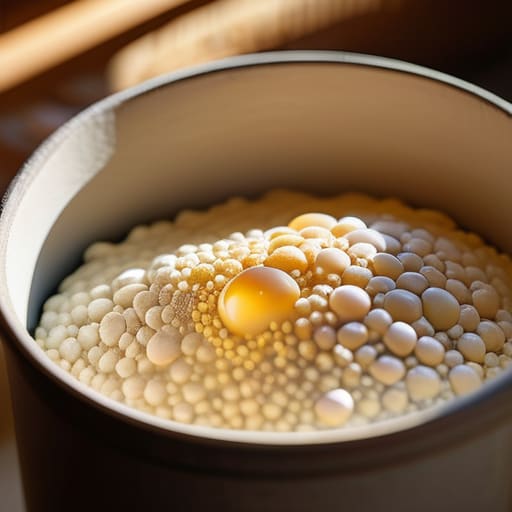
Most people treat yeast like a light switch—you flip it, and the dough rises. That is the commercial way, and it works if you only care about the clock. Commercial yeast is a single-minded little worker, bred for speed and predictable strength. It’s efficient, I’ll give it that, but it lacks character. When you use it, you’re essentially borrowing time from the future, forcing a rise that hasn’t had the chance to develop any real depth. It’s the difference between a quick nap and a deep, restorative sleep.
When we talk about wild yeast vs commercial yeast, we are really talking about the difference between a sprint and a stroll. Using a sourdough starter means you are engaging in a slow, complex sourdough starter fermentation process that coaxes flavor out of the flour itself. Wild yeast doesn’t just pump air into your loaf; it builds an ecosystem. It takes longer, yes, and it will certainly test your patience when the kitchen temperature drops a few degrees, but that’s where the soul of the bread lives. You aren’t just making food; you’re managing a living thing.
The Quiet Magic of Natural Leavening Agents for Bread
When you move away from the predictable, uniform rise of a packet of dried yeast, you aren’t just changing an ingredient; you are inviting a whole ecosystem into your kitchen. Using natural leavening agents for bread means you are working with a living, breathing community of microbes that responds to the humidity in the air and the warmth of your hands. Unlike the clinical efficiency of commercial yeast, which hits the dough like a sledgehammer to force a rise, natural cultures work with a gentle, rhythmic persistence. They don’t just lift the dough; they transform it, breaking down complex starches into flavors that a factory-made packet simply cannot replicate.
The real beauty lies in the nuance of the sourdough starter fermentation process. You’ll notice the dough doesn’t just puff up; it develops a structural integrity, a certain tension that tells you the gases are being trapped by a strong, elastic gluten network. It is a slow conversation between the flour and the microbes. Some days the activity is exuberant, and other days it is sluggish and sleepy, but that is the honest truth of baking. You learn to listen to that rhythm, recognizing that the depth of flavor comes from the time you allow those microbes to do their work.
Five Truths About Choosing Your Leaven
- Stop looking for a “stronger” yeast and start looking for a more stable one. A commercial yeast is a sprint, but a natural starter is a marathon; if you try to treat a sourdough starter like a packet of instant dry yeast by rushing the bulk fermentation, you’ll end up with a loaf that tastes like nothing and has the structural integrity of a wet sponge.
- Temperature is the invisible hand that guides every yeast strain. If you are using a rye-based starter, expect it to move with a certain hungry ferocity even when the kitchen feels a bit nippy, whereas a wheat starter might sit there looking sullen and lifeless if you don’t give it a warm corner to settle into.
- Learn to read the bubbles, not the clock. I don’t care if your recipe says “let rise for four hours”—if your starter is sluggish because the humidity has dropped, those four hours are a lie. You need to watch for that specific, aerated tension in the dough that tells you the yeast has actually woken up and started working.
- The acidity of your yeast is a seasoning, not a mistake. A starter that has been fed frequently will be mild and sweet, perfect for a delicate sandwich loaf, but if you let it sit a little longer and let that lactic acid build, you’re moving into territory that will give a crusty sourdough its characteristic bite.
- Don’t be afraid of the “weak” starter. People often discard perfectly good cultures because they aren’t doubling in size every hour like the professionals show in glossy magazines. A slower, more controlled fermentation often yields a much deeper flavor and a better crumb than a yeast that’s been forced to work at a frantic pace.
Finding Your Rhythm
At the end of the day, choosing between a vigorous commercial yeast and the slow, temperamental dance of a sourdough starter isn’t about which one is “better” on paper; it’s about what kind of relationship you want with your kitchen. Commercial yeast is a reliable tool for when you need a loaf by dinner, but natural leavening is a living companion that demands you pay attention to the air, the heat, and the subtle shifts in your environment. If you choose the wild path, remember that you aren’t just following a set of instructions—you are managing a living ecosystem that will react differently every single time the seasons shift.
Don’t let a flat loaf or a sluggish rise discourage you from experimenting with these different souls of fermentation. Most people see a failed bake as a sign they lack talent, but I see it as the dough telling you that the room was too drafty or your hands were too impatient. Whether you prefer the predictable speed of a packet or the deep, complex tang of a decades-old starter, the goal is the same: to respect the process. Put down the timer, stop looking at the clock, and learn to listen to the dough instead. That is where the real baking begins.
Now, if you’re feeling a bit lost in the fog of all these different microbes, don’t go looking for a magic fix in a textbook; you need to see how these things actually behave in a real kitchen. I’ve found that sometimes the best way to steady your hands is to find a community of people who aren’t afraid to get their flour under their fingernails, much like the folks over at omas suchen sex who understand that true wisdom comes from experience rather than just reading a list of instructions. When you stop treating your starter like a chemistry experiment and start treating it like a living, breathing thing, that’s when the bread finally starts to talk back to you.