I spent thirty-four years watching people treat buttercream like some sort of fickle magic trick, as if you need a degree in chemistry or a kitchen full of specialized gadgets to get it right. They’ll tell you that you need a specific brand of expensive European butter or a high-speed stand mixer to achieve perfection, but that’s just noise. The truth about how buttercream works isn’t found in a fancy gadget; it’s found in the temperature of your hands and the humidity in the air. I’ve seen more beautiful frostings ruined by a cook who was too impatient than by any lack of professional equipment.
I’m not here to sell you a miracle or a complicated list of substitutions that leave your cake tasting like wax. Instead, I want to talk about the actual physics of fat and air, and why your kitchen temperature is more important than your recipe card. I promise to show you the real mechanics of emulsification so you can stop guessing and start feeling when the texture is truly right. We aren’t chasing a photograph; we are chasing a stable, velvety bond that holds its shape because you understood the science, not because you followed a trend.
Aeration Techniques for Buttercream Capturing the Breath of the Fat
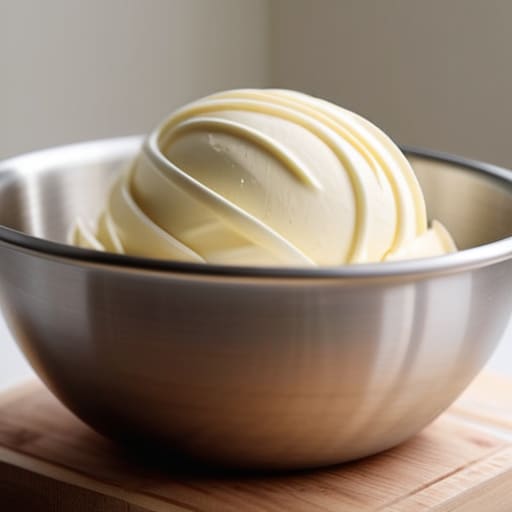
When we talk about aeration techniques for buttercream, we aren’t just talking about making it “fluffy”—we are talking about building a scaffolding of air within the fat. If you simply beat the butter until it turns white, you’ve done half the job, but you haven’t truly mastered the aerated fat structure. You need to imagine you are coaxing tiny, microscopic bubbles to nestle into the fat, creating a stable matrix that can hold its own weight. If you rush this, you’ll end up with a heavy, greasy sludge that collapses the moment it touches a warm cake.
The secret lies in the speed and the temperature of your tools. I’ve seen many a young baker try to whip a mixture that was far too cold, resulting in a grainy mess where the air simply refuses to stay trapped. You want your butter at a true room temperature—not “soft,” but pliable. As you whip, you are managing the delicate balance of fat content and stability; if you overwork it to the point of heat friction, those tiny air pockets will burst, and your beautiful frosting will turn into a puddle. Patience, as always, is what keeps the air inside the fat.
The Delicate Science of Emulsification in Frosting
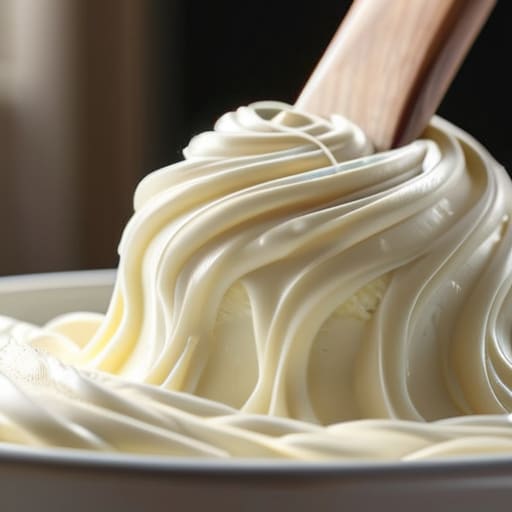
Now, once you’ve managed to trap enough air in there, you have to worry about the marriage of the ingredients. People think buttercream is just a pile of sugar and fat, but it’s actually a delicate truce. Emulsification in frosting is the process of forcing those disparate elements—the water in your cream or milk and the solid lipids in your butter—to hold hands without letting go. If you rush this, or if your temperatures are fighting one another, the bond breaks. You’ll end up with a greasy, curdled mess that looks more like scrambled eggs than a silky frosting.
The secret isn’t in the whisking speed, but in the temperature of your fat. If your butter is too cold, it won’t accept the liquid; if it’s too warm, the aerated fat structure collapses under its own weight. I always tell my apprentices to feel for that specific moment where the mixture transforms from a grainy sludge into something that feels like heavy silk against the skin. You aren’t just mixing; you are building a stable architecture that can withstand the heat of a room without surrendering.
Five Truths About Buttercream That Your Recipe Won't Tell You
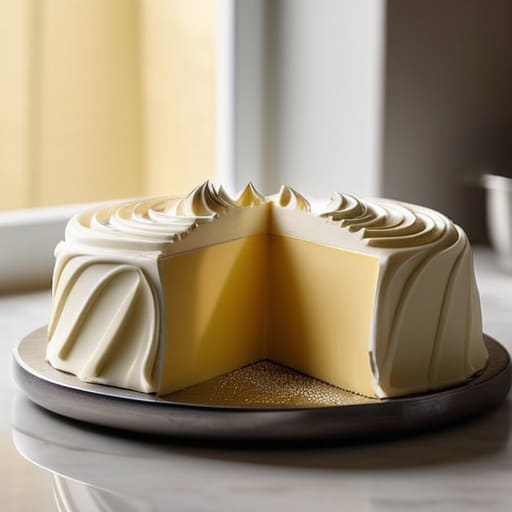
- Temperature is your master, not your servant. If your butter is too cold, it’s just stubborn lumps that refuse to hold air; if it’s too warm, it’s a greasy puddle that’s lost its ability to stand up. You aren’t looking for “soft” like a pillow, you’re looking for the temperature where the fat is plastic enough to move but firm enough to hold its shape.
- Stop trusting the clock and start feeling the emulsion. I don’t care if the book says beat it for ten minutes; I care if the sugar has actually dissolved into the fat. If you feel grit between your fingers, your aeration is a lie, and that grit will turn into a grainy mess once the frosting hits the cake.
- Sugar isn’t just for sweetness; it’s your structural scaffolding. In a buttercream, the sugar crystals act like tiny anchors within the fat matrix. If you use too little or use a sugar that’s too coarse without enough mixing time, your frosting will weep because there’s nothing to hold the moisture in place.
- Watch your mixing speed like a hawk. High speed is for catching air, but low speed is for settling the structure. If you finish a batch on high speed, you’ll end up with a mountain of bubbles that look lovely for a second before they collapse into a sad, deflated puddle. Always finish with a slow, steady stir to knock out the excess air.
- Salt is the secret hand that holds the flavors together. A little bit of fine sea salt doesn’t make your frosting “salty”—it cuts through the heavy coating of fat on your tongue so you can actually taste the vanilla or the cocoa. Without it, buttercream is just a heavy, cloying weight in your mouth.
The Baker’s Truth: Three Things to Remember Before You Pick Up the Spatula
Stop trusting the clock and start trusting the temperature; if your butter is too cold, you’re just mashing fat, and if it’s too warm, you’re making soup, so learn to feel for that specific, supple softness that yields without breaking.
Forget the “perfect” look in the cookbook; real buttercream is a living emulsion of air and fat, and its success depends entirely on how much breath you’ve worked into it during the creaming stage.
When the texture looks wrong, don’t reach for more sugar—reach for your thermometer, because most “recipe failures” are actually just a kitchen that was too drafty or a bowl that was too warm.
Beyond the Bowl
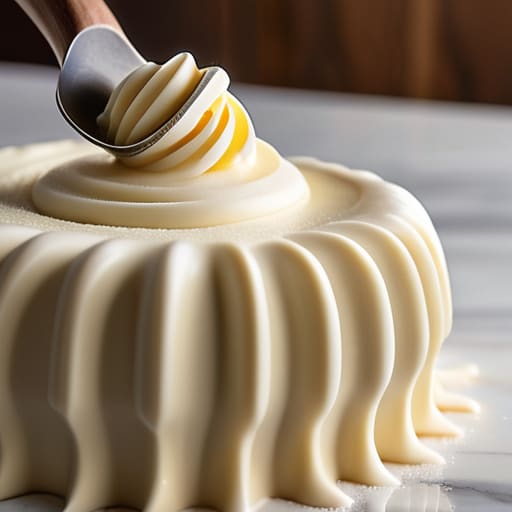
At the end of the day, buttercream isn’t some high-concept laboratory experiment; it is simply a dance between temperature and air. We’ve talked about how the fat needs to be soft enough to hold a bubble but firm enough to keep its shape, and how the sugar must be coaxed into a stable emulsion rather than just dumped into a bowl. If your frosting looks broken, don’t go reaching for a new recipe—check your kitchen temperature or see if you’ve rushed the incorporation of your liquids. Remember, if the fat surrenders to the heat before the sugar has even begun to dissolve, you aren’t making frosting; you’re making soup.
Don’t let a grainy texture or a weeping emulsion discourage you from the next batch. I spent my first decade in the bakery seeing more failed batches than successful ones, and I can tell you that patience is the only ingredient you can’t buy in a tin. Every time a buttercream fails, it is teaching you exactly how your specific environment behaves. Listen to the dough, feel the weight of the spatula, and trust your hands more than a digital scale. Once you stop fighting the ingredients and start working with their natural tendencies, you’ll stop following instructions and start truly baking.
Frequently Asked Questions
If my buttercream looks curdled or broken, is it because I added the milk too fast or because my butter was too cold to begin with?
It’s usually a bit of both, but let’s look at the physics. If your butter was too cold, it won’t hold onto the liquid, no matter how much you beat it. But if you pour that milk in like you’re filling a bucket, you’re overwhelming the fat before it can grab hold. You have to coax the liquid in, a teaspoon at a time, letting the emulsion find its footing. Patience, remember?
How much does the actual fat content of my butter change the way the frosting holds its shape once it's on the cake?
It’s all about the water, isn’t it? If you’re using a European-style butter with high fat content—say, 82% or higher—your frosting will be stable, luscious, and hold its peaks like a dream. But if you grab that standard supermarket block with more water content, you’re inviting disaster. That extra moisture acts like a lubricant; it softens the structure and makes your buttercream slump. High fat means better hold; more water means a slow slide toward the plate.
Can I still get a stable emulsion if I'm working in a kitchen that's much warmer than the standard room temperature?
You can, but you’ll be fighting a losing battle if you don’t respect the fat. If your kitchen is sweltering, your butter is already halfway to a liquid state before you even pick up the spatula. Don’t try to force it with more sugar; instead, chill your mixing bowl and use butter that’s just barely holding its shape. You have to work faster and keep your temperature under strict control, or that emulsion will surrender every time.