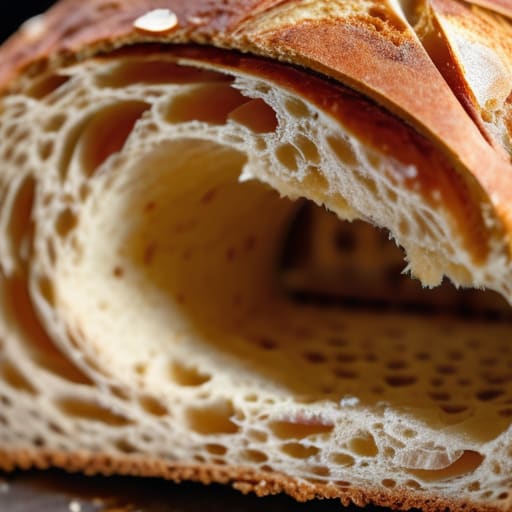
I remember standing over a flour-dusted bench at four in the morning, thirty years ago, watching a young apprentice try to “invent” a sourdough by following a glossy magazine photo. He was measuring everything by the cup, sweating over a recipe that promised perfection but delivered nothing but a dense, gummy brick. People think learning how to develop your own recipe requires a chemistry degree or a kitchen full of expensive gadgets, but they couldn’t be more wrong. Most of those fancy culinary books are just hiding the truth behind flowery language: they tell you what to do, but they never tell you what the dough is actually trying to say to you.
I’m not here to sell you a magic formula or a proprietary blend of expensive grains. If you want to truly understand how to develop your own recipe, you have to stop trusting the printed word and start trusting your hands. I am going to teach you how to work with ratios and percentages so you can actually predict how a change in hydration will affect your crumb. We are going to focus on the variables that actually matter—temperature, timing, and tension—so that when you finally sit down to write your own masterpiece, you aren’t just guessing. You’ll be knowing.
Mastering Culinary Flavor Profiling Through Intuition
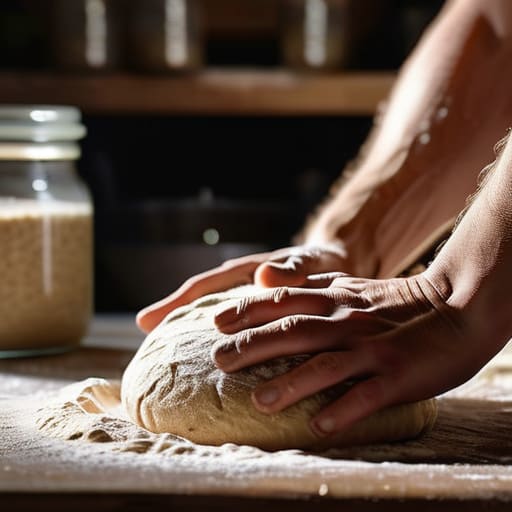
You can’t find the soul of a loaf in a spreadsheet, no matter how much you obsess over the math. Once you have your base hydration and your salt percentage locked in, you have to stop thinking like a mathematician and start thinking like a cook. This is where true culinary flavor profiling begins—not with a spoon, but with your nose and your palate. I spent decades learning that a sourdough isn’t just “sour”; it’s a conversation between the lactic acid of a long, cool ferment and the sharp, acetic bite of a warmer proof. You have to taste your starter, taste your dough after the first fold, and even taste the crumb once it’s cooled.
If a loaf feels heavy or tastes flat, don’t just throw more yeast at it. Start balancing acidity and fat or looking at how your grains interact with the water. Perhaps your rye is too aggressive, or your honey is masking the delicate toasted notes of the crust. You aren’t just following instructions; you are performing a continuous sensory evaluation of everything in that bowl. If it tastes dull, it’s likely lacking the bright spark of salt or the depth of a well-timed fermentation. Trust your tongue more than your notebook.
The Rigor of Standardizing Kitchen Measurements
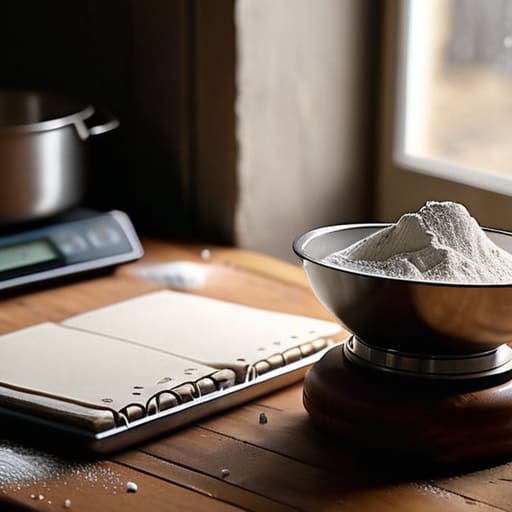
If you want to move from “making a nice loaf” to actually knowing why that loaf came out the way it did, you have to stop playing guessing games with your equipment. I spent half my youth watching my mother reach for a scoop, and I spent the next thirty years realizing that a “cup” of flour is a lie told by people who don’t care about consistency. When you are standardizing kitchen measurements, you aren’t just being fussy; you are creating a map. If you don’t record your work in grams, you aren’t developing a recipe, you’re just documenting a lucky accident.
The real magic happens during the recipe documentation process, where you stop being a cook and start being a scientist. I don’t care if your kitchen was drafty or if your hands were cold—those are variables you must note. When you start scaling recipe ingredients by weight and percentage, you finally see the skeleton of the bread. You’ll realize that a 75% hydration dough behaves one way in July and quite differently in January. Once you have the numbers down, you can actually begin to control the outcome instead of just praying to the oven gods.
Five Truths to Keep You From Guessing
- Stop thinking in “amounts” and start thinking in Baker’s Percentages. If you want to scale a recipe up for a crowd or down for a quiet Tuesday, you need to know that your salt is 2% of your flour weight, not “a pinch” or “a tablespoon.” Once you know the ratio, the recipe becomes a living thing you can stretch without breaking.
- Watch the clock, but listen to the dough. A recipe might say “rise for two hours,” but if your kitchen is a drafty stone room in January, that dough is going to sit there like a lead weight. You don’t bake by the timer; you bake when the dough has actually doubled and feels aerated and alive under your palms.
- Keep a notebook that records the failures as clearly as the successes. If a loaf comes out dense, don’t just write “bad bread”—write down that the water was too cold or you over-handled the dough during the shaping. The recipe didn’t fail you; your environment did, and you need to know why so you don’t repeat the mistake.
- Master the “feel” of your hydration levels. I tell people my dough is 75% hydration, but what I’m really saying is that it should feel tacky and supple, not sticky and unmanageable. You can follow a percentage to the gram, but if the flour is thirsty because of the humidity in the air, you’ll need to adjust by feel until it behaves.
- Control your variables before you blame the ingredients. If you’re developing a new pastry, make sure you’re using the same temperature of butter and the same brand of flour every single time. You can’t find your own “perfect” recipe if you’re constantly changing the foundation you’re building it on.
The Baker’s Essentials for Recipe Development
Stop trusting your eyes and start trusting your scale; a recipe is nothing more than a set of ratios, so master your percentages first so you can actually predict how a dough will behave when the temperature in your kitchen shifts.
Learn to read the dough, not the clock; a recipe might tell you to ferment for four hours, but if your kitchen is drafty and the dough feels tight and stubborn, you wait until it feels alive and aerated, regardless of what the paper says.
Treat every failure as a lesson in physics rather than a mistake in ingredients; if your loaf collapses, don’t blame the flour, look at your handling, your heat, or your timing, because the math is usually right even when the execution is rushed.
The Baker’s Final Lesson
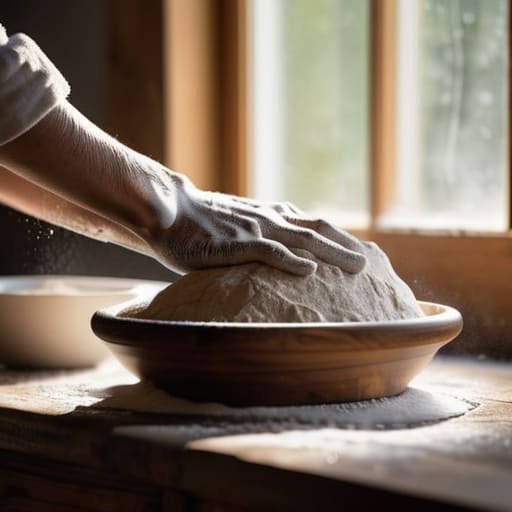
At the end of the day, developing a recipe isn’t about following a map someone else drew; it’s about learning to read the terrain yourself. We’ve talked about why you must ditch those lying measuring cups for a scale, why understanding your hydration percentages is the only way to find consistency, and why your intuition is just as vital as your math. If you can master the balance between the rigor of your measurements and the sensory feedback of the dough under your palms, you stop being a person who follows instructions and start being a person who understands food. Remember, when a loaf comes out heavy or a sponge collapses, don’t blame the ingredients—look at your temperature, your timing, and your hands.
Don’t be afraid to make a mess or a mistake, because a failed batch is often just a very loud way of teaching you exactly what went wrong. I spent thirty-four years starting my days in the dark, and I can tell you that the most beautiful recipes weren’t born from perfection, but from the stubborn refusal to stop experimenting. Put your scale on the counter, trust your senses, and give yourself permission to fail. That is where the real magic lives—not in a printed book, but in the quiet, patient space between the flour and the fire.
Frequently Asked Questions
If I change my hydration percentage to fix a dough that's too stiff, how much flour should I actually take out to keep the balance right?
You don’t take flour out; you add water in. If your dough is stiff, your hydration is too low. If you’re sitting at 65% and want 70%, you calculate that extra 5% based on your original flour weight. If you have 1000g of flour, that’s an extra 50g of water. Don’t go chasing a “perfect” number on paper—just add water in small increments until the dough stops fighting you and starts feeling supple.
When I'm experimenting with new flavors, how do I know if I've gone too far with a spice before it ruins the structural integrity of the bread?
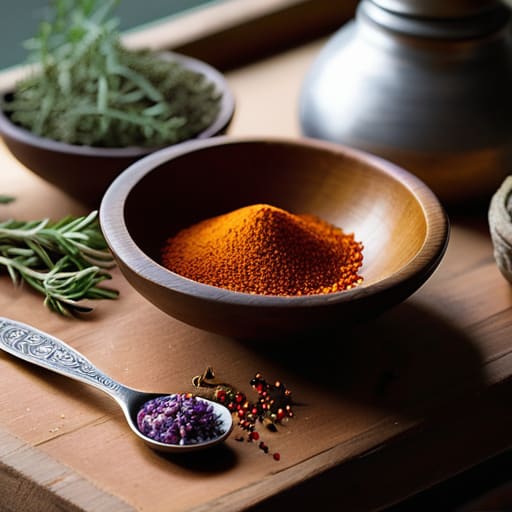
You’re worrying about the wrong thing. Spices won’t collapse your crumb unless you’re dumping in handfuls of heavy, oily seeds, but they’ll certainly ruin your palate. Treat spices like salt: start at 0.5% of your total flour weight. If you’re using something potent like cardamom or cloves, keep it under 1%. If the dough feels gritty or starts to smell “off” during bulk fermentation, you’ve overdone it. Trust your nose, not just your scale.
How do I keep track of my successful tweaks without ending up with a notebook full of measurements that don't actually make sense?
Stop writing down every single gram you move; you’ll end up with a mess of numbers that tell you nothing. Instead, track your deviations by percentage and environment. Write down: “Increased hydration by 3% because the flour felt thirsty,” or “Extended bulk fermentation by forty minutes due to a cold kitchen.” If you record the why alongside the math, you aren’t just collecting measurements—you’re building a map of how your dough actually behaves.