I spent thirty-four years watching people treat frosting like it was some kind of magic trick you could buy in a colorful tub or achieve by following a list of ten impossible-to-find ingredients. They see a picture of a perfectly smooth, piped rose on a blog and think they’ve failed because their buttercream looks like curdled milk, but they’re looking at the wrong thing. Most of these “expert” tutorials are missing the point entirely; they give you the measurements but they never tell you about the ambient temperature of your kitchen or the way your hands feel when the fat is too warm. If you’re looking for a complete guide to frostings that promises perfection in five minutes with a handheld mixer and a prayer, you’ve come to the wrong place.
What I am going to give you instead is the truth about sugar, fat, and temperament. I won’t waste your time with fancy garnishes that hide a broken emulsion; I want to teach you how to read the texture under your spatula. We are going to talk about why your frosting is weeping, why it’s gritty, and how to fix it without starting over. This isn’t about following a recipe blindly—it’s about understanding the science of the spread so you can finally stop fighting your cake and start enjoying the sweetness.
Mastering Chocolate Ganache Ratios and the Truth of Texture
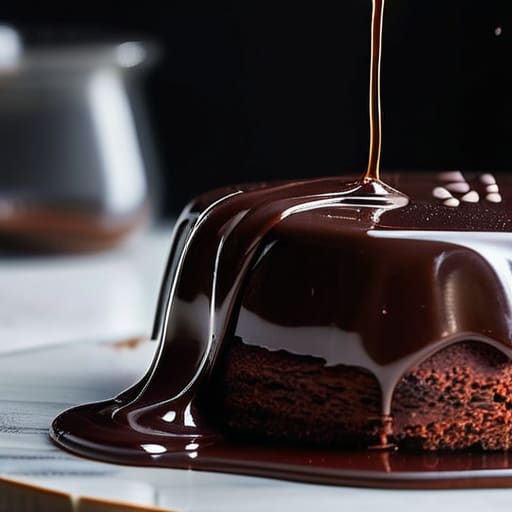
Now, if you want to talk about a frosting that doesn’t hide behind heaps of powdered sugar, we have to talk about ganache. Most people treat it like a magic trick, but it’s actually just a simple matter of chocolate ganache ratios. If you want a pourable glaze to coat a cake, you’re looking at a 1:1 ratio by weight—that’s 50% hydration if we’re being precise. But if you’re trying to use it for something more substantial, like a filling or a sturdy coating, you need to lean heavier on the chocolate, perhaps a 2:1 ratio.
The mistake I see most often isn’t the math; it’s the heat. If your ganache looks grainy or split, you’ve likely scalded the cream or rushed the emulsion. You cannot bully chocolate into behaving. You have to let the residual heat of the cream do the work, stirring from the center outward until it finds its soul. If you are looking for the best frosting for cake decorating that offers both elegance and structural integrity, a properly emulsified ganache is your best friend, provided you have the patience to let it set at the temperature the room dictates.
A Frosting Temperature Guide for the Patient Baker
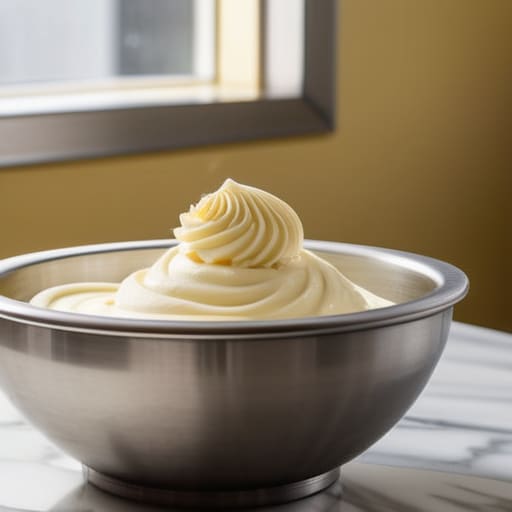
If you’ve ever stared at a bowl of buttercream that looks more like soup than frosting, don’t go blaming the brand of butter you bought. Most of the time, you’ve simply ignored the thermometer. A frosting temperature guide isn’t about being precious; it’s about understanding that fat is a temperamental creature. If your butter is too warm, it won’t hold air, and you’ll end up with a greasy mess that slides right off the sponge. Conversely, if you’re working with chilled ingredients, you’ll find yourself fighting a losing battle against lumps that no amount of whipping will ever smooth out.
When it comes to stabilizing buttercream for piping, temperature is your only true ally. You want that butter to be just soft enough to yield to a finger—about 18°C (64°F)—but firm enough to hold a sharp edge. If you’re struggling with frosting consistency troubleshooting, stop adding more sugar to “fix” it. Sugar adds weight and grit, not structure. Instead, check your room temperature. If your kitchen feels like a sauna, your frosting will behave like a liquid, no matter how many stabilizers you throw at it.
Five Things Your Frosting Wants You to Know (But You’re Too Rushed to Hear)
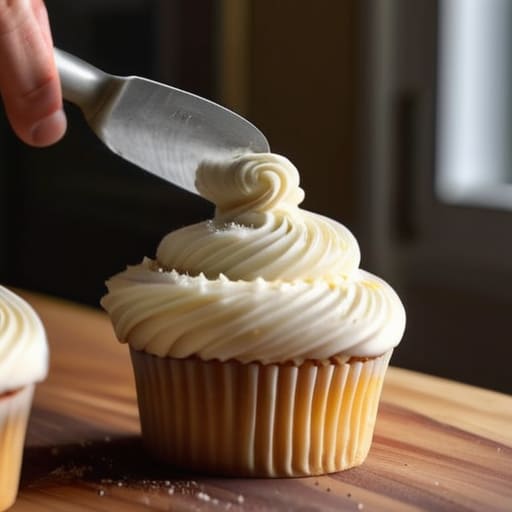
- Stop trusting your eyes and start trusting your thermometer; a buttercream that looks “ready” might still be a degree too warm to hold its shape, and a degree is the difference between a sharp edge and a puddle.
- If your emulsion breaks and looks like curdled milk, don’t throw it out in a huff—it’s usually just a temperature war between the fat and the liquid, and a little bit of warmth or a vigorous whisking can often bring it back to heel.
- Never, and I mean never, attempt to frost a cake that is even slightly warm to the touch; I’ve seen many a novice ruin a perfectly good sponge because they couldn’t wait twenty minutes for the crumb to settle and cool completely.
- Weight your ingredients, even the sugar; if you are making a Swiss meringue, a “cup” of sugar is a suggestion, but 200 grams is a fact, and facts are what keep your frosting from being a gritty, undissolved mess.
- Learn to feel the resistance of the spatula; a proper frosting shouldn’t feel like you’re fighting heavy clay, nor should it be so thin it runs like water—it should feel like a soft, heavy silk that holds its own weight.
Three Things to Remember Before You Pick Up the Spatula
Forget the volume; if you aren’t weighing your sugar and fats, you aren’t making frosting, you’re making a guessing game.
Temperature is your invisible ingredient—if your butter is too cold, it won’t emulsify, and if it’s too warm, your hard work will turn into a puddle.
Trust your hands over your eyes; a frosting should feel supple and aerated, not stiff like clay or heavy like sludge just because a photo told you so.
The Final Fold
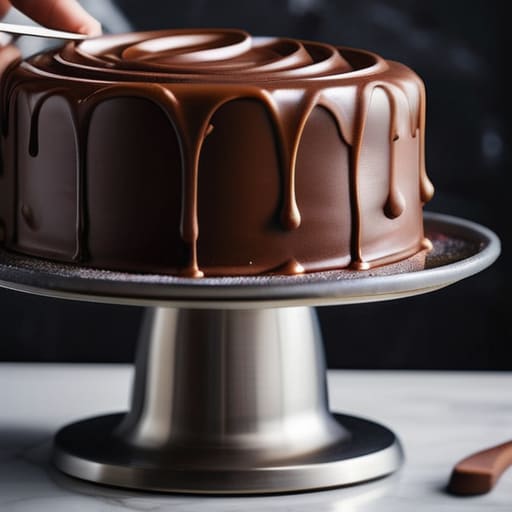
If you’ve taken anything away from this, let it be that frosting is never just a topping; it is an exercise in chemistry and restraint. We have talked about why your ganache needs the right fat-to-chocolate ratio to hold its shape, and why your buttercream will fail you if you treat temperature like a suggestion rather than a rule. Remember that a frosting that breaks or separates isn’t a tragedy—it’s just a sign that the environment was out of sync with your ingredients. Whether you are working with a high-percentage cocoa or a delicate Swiss meringue, the secret remains the same: watch the texture, respect the thermometer, and never trust a recipe that doesn’t account for the heat in your kitchen.
At the end of the day, I want you to stop staring at the pictures in your cookbooks and start feeling the bowl. There is a moment when a frosting goes from being a heavy, stubborn mass to something silky and alive, and you can only find it if you are actually present in the kitchen. Don’t let the fear of a broken emulsion keep you from trying something new. Even if you end up with a mess, you’ll learn more from that failed batch than you ever would from a perfect one. So, turn off the bright lights, trust your hands, and remember that patience is the only ingredient you can’t buy in a tin.
Frequently Asked Questions
If my buttercream looks curdled or like it's separating, is it a bad recipe or did I just lose my temper with the temperature?
It isn’t your recipe, darling; it’s your thermometer. If your buttercream looks curdled or separated, you’ve lost the battle with temperature. Usually, your butter was either too cold to emulsify or far too warm, causing the fat to break away from the sugar and liquid. It’s just a matter of physics, not a failure of ingredients. Warm the bowl slightly or pop it in the fridge for ten minutes—don’t panic, just find the balance again.
Can I actually use a scale for frosting, or do the weights change too much once I start whipping in air?
Of course you use a scale. You use a scale for the ingredients before they ever touch the whisk. Once you start whipping air into a buttercream or a meringue, the weight will change—it’ll get lighter, fluffier, and more voluminous—but that’s not a failure of measurement; that’s the physics of aeration. Measure your fat, your sugar, and your liquids with precision first. If the base is right, the air will do its job.
How do I know if my frosting is "ready" by feel rather than just waiting for it to look like the picture in a book?
Stop looking at the book; the picture is a lie told by a photographer, not a baker. To know if your frosting is ready, use your hands—or better yet, a spatula. For a buttercream, you’re looking for “holding power.” Drag your spatula through it; if it leaves a clean, sharp trail that doesn’t slump or weep, it’s ready. It should feel aerated, like a heavy cloud, not like greasy sludge or stiff lard.