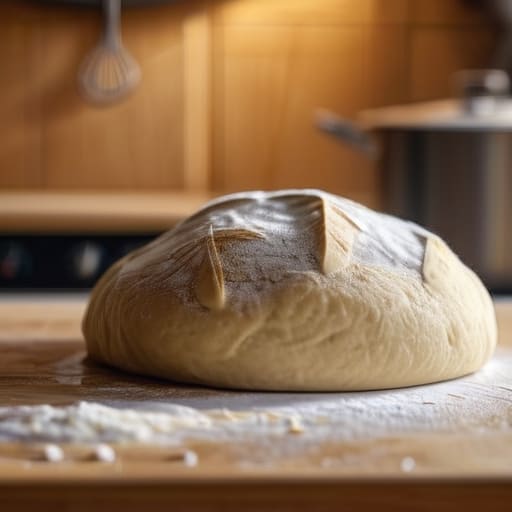
If you’ve spent any time scrolling through those glossy recipe sites, you’ve likely been told that learning how to make puff pastry requires a degree in pastry arts or a kitchen full of expensive, specialized equipment. They make it sound like some mystical, unreachable alchemy, often burying the truth under a mountain of “pro tips” that involve nothing more than making your life difficult for the sake of a pretty photograph. Let me tell you something: puff pastry isn’t a secret, it’s just a matter of temperature and discipline. Most people fail not because they lack talent, but because they treat the dough like a chore to be rushed rather than a living thing that needs to stay cold.
I’m not going to give you a list of fancy gadgets or tell you to buy imported butter that costs more than your electricity bill. Instead, I’m going to show you the actual mechanics of lamination—the way the fat should feel between your fingers and why your kitchen temperature is more important than your oven settings. We’ll work in weights and percentages so you actually know what you’re doing, and I’ll tell you exactly when to stop rolling and start waiting. We aren’t chasing perfection; we’re chasing those distinct, shattering layers that only come from patience.
Mastering the Flaky Pastry Dough Technique Through Weight
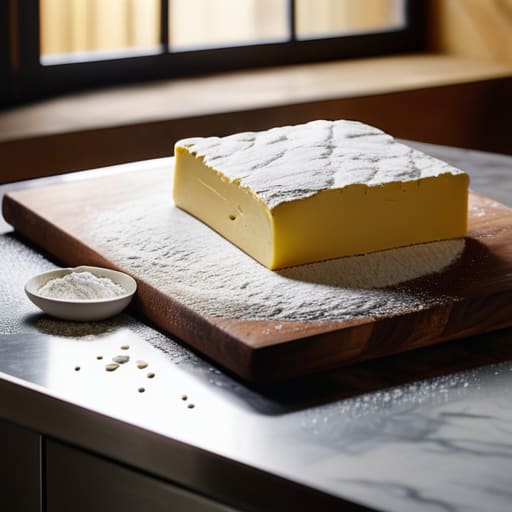
If you’re still using a measuring cup to scoop flour, please, put it back in the drawer. You cannot build a thousand microscopic layers of lift with guesswork. To master the flaky pastry dough technique, you have to think in ratios. I work with a base of 100% flour, and my fat content—that beautiful, cold butter—is usually sitting around 50% to 60% of the flour’s weight. If you don’t weigh your butter, you’ll either end up with a crumbly sand that won’t hold together, or a heavy, greasy slab that refuses to rise.
The secret isn’t just the math, though; it’s the pastry dough temperature control. You aren’t just mixing ingredients; you are managing a thermal battle. As you move through the dough folding process, your goal is to keep those chilled butter layers distinct. If you feel the dough getting soft or tacky under your palms, stop. Walk away. Put it in the fridge for twenty minutes. If that butter melts into the flour before it hits the oven, you haven’t made puff pastry; you’ve just made a greasy mess.
The Absolute Necessity of Chilled Butter Layers
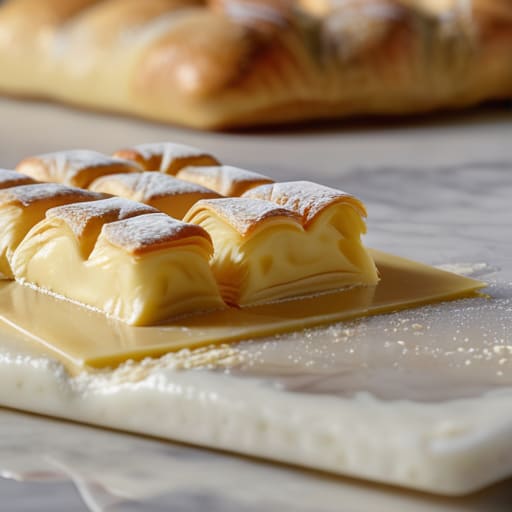
If you find yourself staring at a puddle of yellow grease on your marble slab instead of distinct, square chunks of fat, you’ve already lost the battle. The whole point of this process is to maintain chilled butter layers that stay separate from the flour until the very moment the heat of the oven hits them. When those layers hit the heat, the water trapped inside the butter turns to steam, forcing the dough to lift and create those beautiful, shattering shards we’re after. If your butter has softened or melted into the flour during the dough folding process, you aren’t building layers; you’re just making a very expensive, heavy shortcrust.
Temperature isn’t a suggestion here; it is the entire foundation. I’ve seen too many beginners try to rush through the turns because their hands are warm or their kitchen feels stuffy. If the dough feels even slightly tacky or pliable, put it back in the fridge. You cannot negotiate with the fat. Proper pastry dough temperature control means respecting the cold, even when your impatient mind wants to keep rolling. If the butter is too soft, the lamination is dead before it even reaches the oven.
Five Things the Recipe Won't Tell You About Your Dough
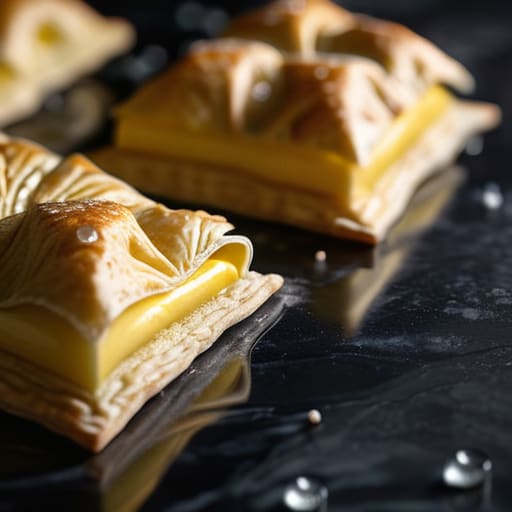
- Watch your hands, not the clock. If you feel the butter softening or getting tacky under your palms, stop immediately. You aren’t “working the dough”; you’re melting your hard work into a useless, greasy lump. Wrap it, put it in the fridge, and walk away until it’s cold again.
- Don’t fear the rest. People think they can rush lamination by rolling faster, but you can’t outrun physics. If the gluten gets tight and starts snapping back like a rubber band, your dough is angry. Give it thirty minutes in the cold to relax, or you’ll spend the whole afternoon fighting a losing battle.
- The flour is a tool, not a shield. I see so many beginners dumping heaps of flour on the bench to stop sticking, and then they wonder why their dough is dry and tough. Use just enough to keep it moving, and remember that too much flour between those layers will kill the lift.
- Listen to the temperature of your kitchen. If you’re baking in a room that feels like a sauna, your puff pastry is going to struggle. If the air is warm, your dough needs more time in the fridge between turns than the book suggests. You have to bake with the room you’re in, not the one you wish you had.
- Precision is your only friend. I don’t care if you think you can “eyeball” the butter block, but if that fat isn’t a consistent thickness compared to your dough, your layers will be uneven. One side will be a heavy, sodden mess and the other will be paper-thin and burnt. Use your scale and get it right the first time.
The Three Truths of a Proper Laminate
Forget your measuring cups; if you aren’t weighing your flour and butter to the gram, you aren’t making puff pastry, you’re just guessing, and guessing leads to a heavy, greasy slab instead of flakes.
Temperature is your silent partner or your worst enemy; if you feel the butter softening under your palms, stop immediately, wrap the dough, and put it back in the cold, because once that fat melts into the flour, the layers are gone forever.
Respect the rest periods between your turns; dough isn’t something you bully into submission, it’s something you guide, and those rests in the fridge are what allow the gluten to relax so you don’t tear the very layers you’ve worked so hard to build.
The Final Fold
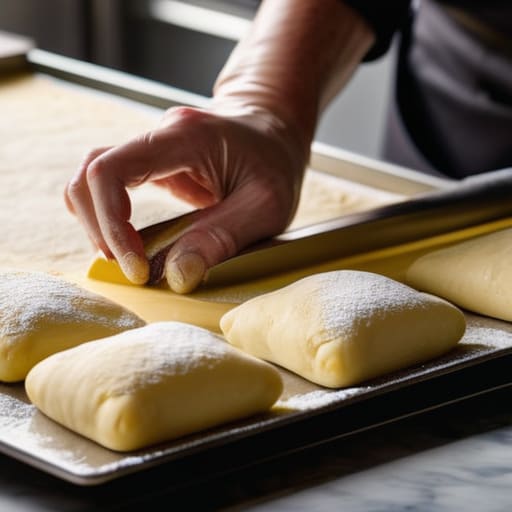
If you’ve followed the weights and kept your hands from warming the dough, you’re already ahead of most. Remember, puff pastry isn’t a science experiment; it’s a battle against heat. You’ve learned that the hydration must be precise, the butter must stay in distinct, cold sheets, and any sign of a softening block means you must stop everything and put it back in the fridge. Don’t be tempted to push through a soft dough just to finish the task. If you rush the lamination, you aren’t making layers; you’re just making a heavy, laminated biscuit. Respect the rest periods, because that is when the gluten relaxes and the butter settles into its place.
There will be days when your kitchen is too humid or your butter was just a fraction too soft, and your pastry won’t rise into those glorious, towering shards you see in magazines. Don’t throw the dough away. Even a “failed” puff pastry is delicious when it’s warm and buttery, and every messy attempt is just your hands learning the language of the dough. Baking is a conversation between you and the ingredients, and sometimes the dough needs to tell you to slow down. So, take a breath, trust your scales, and remember that patience is the only ingredient you can’t buy in a shop. Now, get it in the oven.
Frequently Asked Questions
My dough feels like it's getting too soft and greasy halfway through the turns; should I keep going or put it back in the fridge?
Stop right there. If it feels greasy, you’ve already lost the battle of temperature. That butter isn’t layering anymore; it’s melting into the flour, and once that happens, you’re just making a very expensive, heavy shortcrust. Wrap that dough tight and put it back in the fridge for at least thirty minutes. It needs to be firm again before you even think about picking up the rolling pin. Patience wins every time.
Can I use a different kind of flour if I want a sturdier pastry, or will that ruin the lamination?
You could, but you’ll be trading flake for toughness. If you swap my pastry flour for something with more protein, like bread flour, you’re increasing the gluten strength. That makes for a sturdier dough, certainly, but it also makes it harder to roll and much more prone to shrinking in the oven. You’ll lose those delicate, shattered layers we’re working so hard for. Stick to a low-protein flour unless you’re making a heavy tart base.
How do I know if I've actually achieved enough layers, or am I just overworking the butter into the flour?
You’ll know you’ve gone too far when the dough loses its structure and starts feeling greasy or heavy under your hands. If the butter is smearing into the flour rather than staying in distinct, flat sheets, you’ve overworked it. You aren’t looking for a smooth, uniform dough; you’re looking for a laminated one. You should still see those tiny, visible flecks of fat. If it looks like a cohesive paste, stop. You’ve lost the layers.