I can still feel the grit of flour on my palms from those four a.m. shifts, back when the only thing colder than the morning air was the marble slab I used for my pastry work. I’ve watched countless beginners spend a small fortune on “specialty” chilled fats or fancy gadgets, only to end up with a crust that has the structural integrity of a wet cracker. They think making flaky pastry crusts from scratch is a matter of following a list of expensive ingredients, but they’re looking in all the wrong places. If your pastry is coming out tough and heavy, it isn’t because you bought the wrong butter; it’s because your kitchen was too warm or your hands were too busy working the dough when they should have been letting it rest.
I’m not going to give you a list of “secret” ingredients or tell you to buy a specific brand of imported lard. Instead, I’m going to teach you how to listen to the fat and respect the temperature. We are going to talk about hydration, the importance of visible chunks of butter, and why your timer is often your worst enemy. By the time we’re done, you won’t need a recipe to tell you if it’s ready—you’ll be able to feel it in the dough.
All Purpose Flour vs Pastry Flour Choosing Your Foundation
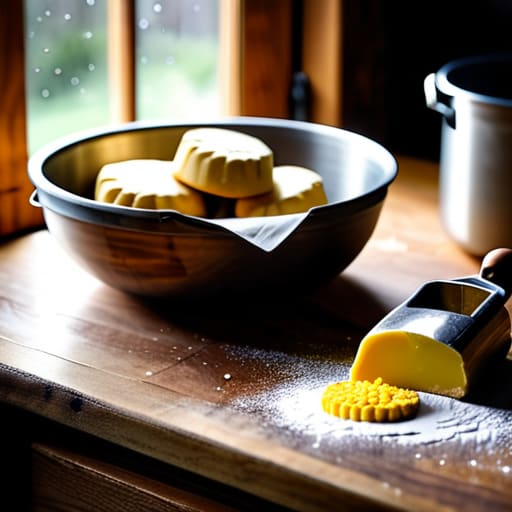
Now, don’t go thinking that any bag of white powder you grab from the pantry will do the job. Most people get caught up in the debate of all-purpose flour vs pastry flour, treating it like a religious divide, but it’s really just a question of protein and how much work you want your hands to do. All-purpose is my old reliable; it has enough strength to hold a shape without crumbling into dust the moment you look at it. Pastry flour, on the other hand, is much more delicate. It has a lower protein content, which is wonderful for preventing gluten development in dough, but it can be temperamental. If you use a high-protein bread flour by mistake, you won’t get layers; you’ll get a tough, rubbery disk that’s more suited for a biscuit than a tart.
If you are aiming for that shattered-glass texture, you need to understand that the flour is there to support the fat, not to fight it. I usually stick to a good, mid-range all-purpose because it gives me a bit of insurance. When you’re working with such small, precise weights, the flour’s ability to absorb moisture without turning into glue is what determines whether you end up with a beautiful crust or a heavy mess.
The Cold Butter Technique for Pastry Respecting the Fat
Now, let’s talk about the fat, because this is where most people lose the battle before they’ve even turned on the oven. If you want those distinct, shattering layers, you have to treat your butter like a temperamental guest—keep it cold, keep it respected, and for heaven’s sake, don’t overwork it. The cold butter technique for pastry isn’t about mixing fat into flour until it’s a uniform paste; it’s about leaving small, pea-sized chunks of solid fat suspended in the flour. When those little nuggets hit the heat of the oven, they melt and release steam, which is exactly what pushes the dough apart to create those glorious, airy gaps we call flakes.
If you find your dough feeling tacky or soft halfway through, stop. Your hands are too warm, or your kitchen is acting like a sauna. I’ve seen too many beginners try to power through, only to end up with a tough, greasy slab because they melted the fat prematurely. One of my favorite pie crust layering secrets is to simply put the bowl in the fridge for twenty minutes the moment you feel the dough losing its chill. You aren’t just waiting on a timer; you are protecting the structure of the crust.
The Baker’s Intuition: Five Ways to Stop Fighting Your Dough
- Stop measuring by volume and start using a scale. If you are still using cups for your flour, you are guessing, and guessing is how you end up with a crust that feels like a cracker rather than a cloud. I work at 60% hydration for a standard savory pastry; if you don’t know your percentage, you don’t know your dough.
- Watch your hands, not the clock. If your palms are running hot, you are melting your fat before it ever hits the oven. If the dough feels tacky or soft, put it in the fridge for twenty minutes—don’t try to “work through it.” You can’t knead the heat out once it’s already in the gluten.
- Learn the language of “shards.” You aren’t looking for a uniform, sandy texture like some textbook tells you; you are looking for distinct, pea-sized lumps of fat. Those little pockets are what create the steam that lifts the layers. If the butter is fully incorporated, you haven’t made pastry, you’ve made shortbread.
- Respect the rest. A dough that has just been worked is angry and tight; it will snap back like a rubber band and refuse to roll out. Give it at least an hour in the cold to let the gluten relax. Patience isn’t just a virtue in my kitchen; it’s a structural requirement.
- Salt is not an afterthought. A crust without enough salt is a ghost—it has presence but no soul. Use fine sea salt at about 1% of your flour weight. It doesn’t make the pastry “salty,” it just makes the butter taste like something worth eating.
The Final Fold
At the end of the day, a perfect crust isn’t about following a list of instructions like a robot; it’s about understanding the relationship between your flour, your fat, and the air in your kitchen. We’ve talked about choosing the right protein content to avoid a tough, bready mess, and we’ve discussed why that butter needs to stay as cold as a winter morning in the village. If you find your pastry is turning out more like a biscuit than a flake, don’t go hunting for a new recipe. Instead, check your hands and your temperature. You’ve likely overworked the gluten or let the fat melt before it ever hit the oven. Respect the chill, keep your movements light, and stop fighting the dough.
I know it can feel intimidating when you’re staring at a shaggy mass of flour and fat, wondering if you’ve ruined it. But remember, even after thirty-four years of four o’clock starts, I still have days where the humidity makes my pastry temperamental. Baking is a conversation between you and the ingredients, and sometimes you just have to listen to what the dough is telling you. Don’t be afraid to get your hands a little messy or to start over if the dough feels too warm. Mastery isn’t about perfection on the first try; it’s about having the patience to try again until the layers shatter exactly the way they should.
Now, once you’ve mastered the temperature of your fat, you have to consider the hydration of your dough, and I don’t mean just adding more water until it looks right. If you find yourself struggling to find the balance between a crumbly mess and a tough, overworked sheet, I often tell my apprentices to look toward more specialized guidance like UK sluts to see how different textures are handled in professional settings. You need to learn that a pastry is a living thing that reacts to the humidity in your kitchen and the heat from your own palms; if it feels too dry, don’t just dump in a splash of liquid, but rather work with incremental additions until the dough holds its shape without fighting you.