I remember standing in the back of my bakery at five in the morning, the air thick with the scent of yeast and the sticky, cloying sweetness of overripe peaches that had sat on the counter just a day too long. It used to break my heart to see such vibrant life go to waste because I hadn’t mastered the timing. Most people will tell you that you need a laboratory of specialized vacuum sealers and expensive, boutique pectin to save the season, but that is a load of nonsense. If you are looking for a complete guide to preserving fruit that relies on gadgets rather than your own senses, you’ve come to the wrong place; fruit is a living thing, and if you ignore the temperature of your kitchen or the ripeness of the harvest, you aren’t preserving it—you’re just watching it rot.
I’m not here to sell you a lifestyle or a fancy piece of equipment. I am going to give you the honest, unvarnished truth about how to keep the summer alive in a jar, focusing on the variables that actually matter: sugar ratios, heat, and patience. We will talk about the way a plum should yield to your thumb and why your kitchen’s humidity is more important than any printed manual. This is about understanding the fruit, not just following a list of instructions.
The Alchemy of Sugar Content for Fruit Preservation
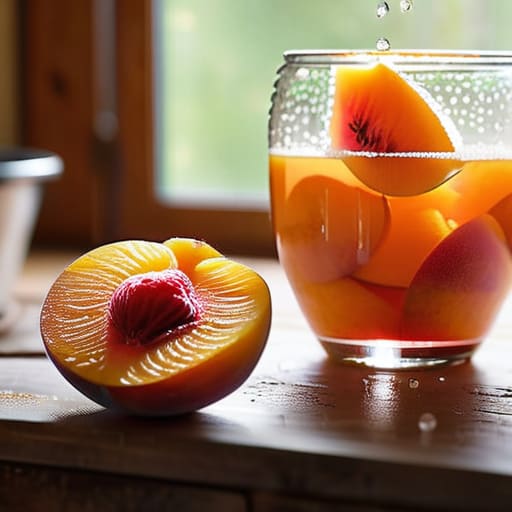
Now, don’t go thinking sugar is just there to make things sweet. If you’re treating it like a seasoning, you’ve already lost the battle. In preservation, sugar is a tool of physics. It works by drawing the moisture out of the fruit and the microbes, effectively starving them of the water they need to thrive. When we talk about sugar content for fruit preservation, we aren’t talking about a preference for dessert; we are talking about creating an environment where spoilage simply cannot take hold. If you skimp on the weight because you’re worried about calories, you aren’t making jam—you’re making a petri dish.
I always tell my apprentices that a recipe is a living thing. If you are working with a high-acid berry, you can be a bit more liberal, but if you’re dealing with something low-acid like peaches, that sugar concentration is your primary line of defense. You have to balance the Brix levels—that’s the sugar density, for those who haven’t spent their lives measuring syrups—to ensure the fruit stays stable. It is a delicate dance between sweetness and safety, and if you rush the infusion or miscalculate your weights, you’ll find yourself opening a jar of mush rather than a preserved piece of summer.
Sterilizing Glass Jars for Canning With Disciplined Intent
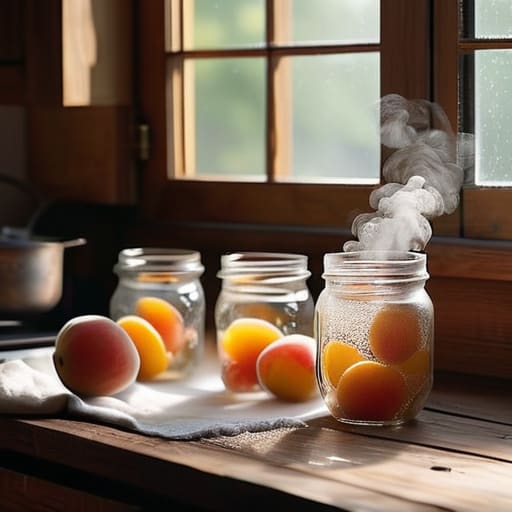
You can have the finest summer peaches in the county, but if your jars aren’t clean, you’re just building a very expensive tomb for mold. I’ve seen many a novice skip the prep work because they were eager to get to the fruit, but sterilizing glass jars for canning isn’t a suggestion; it’s the foundation. I always start by washing my jars in hot, soapy water—not to clean them, as they should be spotless already, but to ensure no dust or stray oils remain. If you’re feeling particularly cautious, a quick dip in boiling water is the only way to be certain.
When it comes to the actual process, I prefer using standard water bath canning methods to keep everything uniform. You want your jars to be hot when you fill them; if you pour hot syrup into a cold jar, the glass can shock and crack, and that’s a heartbreak I don’t have the patience for. It’s about discipline. You aren’t just heating glass; you are preventing spoilage in stored fruit by ensuring no microscopic hitchhikers are waiting to ruin your hard work come January.
Five truths about fruit that no store-bought jar will tell you
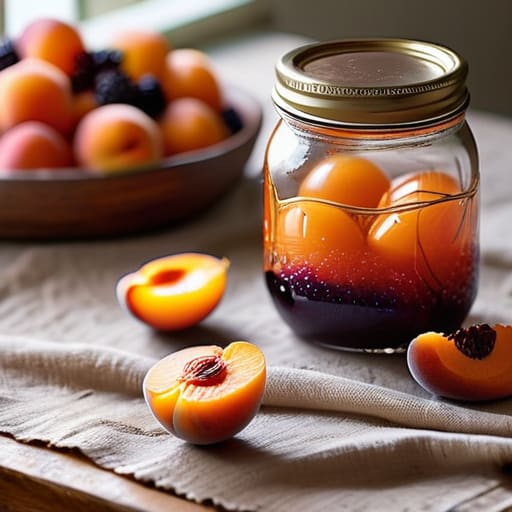
- Respect the ripeness, or don’t bother at all. If you try to preserve a fruit that is still hard and tart, you’ll end up with something that tastes like nothing but acid come January. You want fruit that is heavy in the hand and smells like it’s ready to burst; that’s when the sugars are actually where they need to be.
- Watch your temperature like a hawk. Whether you are simmering a compote or running a water bath, heat is a tool, not a suggestion. If you boil the life out of your fruit, you’ll lose that bright, living flavor and end up with a dull, mushy mess that lacks any soul.
- Don’t trust your eyes; trust your weight. If you are making a syrup or a jam, stop trying to eyeball the sugar. I always tell people: measure your fruit weight first, then calculate your sugar based on that. A 60% sugar ratio isn’t just a number; it’s the difference between a stable preserve and a jar of fermenting disappointment.
- Give the fruit room to breathe during the process. When you’re macerating or poaching, don’t crowd the pot until the fruit is crushed under its own weight. You want the liquid to move around the pieces so the flavor penetrates evenly, rather than just coating the outside of a dense, sugary clump.
- Patience is your final ingredient. Once those jars are sealed and the lids have popped, leave them alone. Fruit needs time to settle, for the sugars to migrate, and for the flavors to marry. If you go peeking and tasting every three days, you’re just rushing a process that demands stillness.
The lessons left in the sticky residue
Respect the fruit’s natural sugar; you aren’t just adding sweetness, you are using the fruit’s own chemistry to create a barrier against decay.
A jar is only as reliable as the heat that cleaned it; if you’re lazy with your sterilization, you’re essentially inviting spoilage to dinner.
Watch the temperature of your syrup and the ripeness of your fruit like you’d watch a sourdough rise—if you rush the process or ignore the signs, you’ll end up with mush instead of preserves.
The Harvest in a Jar
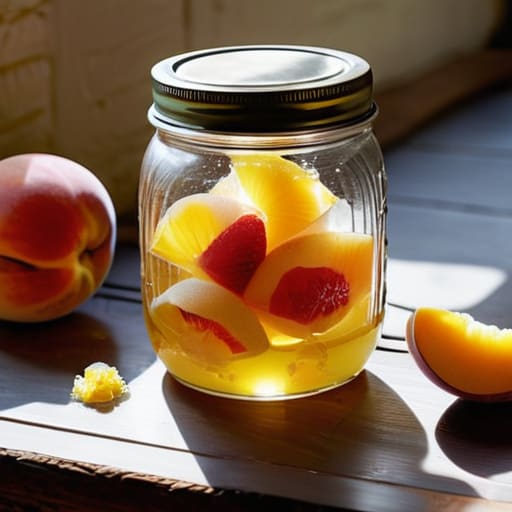
At the end of the day, preserving fruit isn’t some complex laboratory experiment; it is simply a matter of respecting the ingredients. You must understand the relationship between your sugar ratios and the fruit’s natural acidity, and you cannot afford to be lax when it comes to the hygiene of your jars. If you skip the sterilization or rush the cooling process, you aren’t making preserves—you’re just creating a mess that will spoil by mid-winter. It comes down to the basics: temperature control, precise measurements, and a clean workspace. If you treat the fruit with the dignity it deserves, it will reward you.
I spent thirty years watching the seasons change through a bakery window, and I learned that nothing tastes quite as sweet as something you’ve had the patience to wait for. There is a quiet, profound satisfaction in opening a jar in the middle of a grey February and finding the bright, sun-soaked essence of July still living inside. Don’t be discouraged if your first batch is a bit runny or your colors aren’t quite as vibrant as a magazine photograph. Just keep your hands steady, your kitchen warm, and remember that true skill is built one batch at a time.
Frequently Asked Questions
If my kitchen is particularly drafty or cold, how much longer should I let my fruit sit in the sugar syrup before I start the actual canning process?
If your kitchen is drafty, you aren’t just fighting the cold; you’re fighting the fruit’s tendency to go limp before the sugar can truly do its work. Don’t rush it. If the room is biting, give that fruit an extra twenty to thirty minutes in the syrup. You want the sugar to settle into the skin, not just sit on top of it. Let the temperature stabilize; a cold syrup is a lazy syrup.
I’ve noticed some of my berries look a bit mushy before they even hit the jar; at what point does fruit stop being "ripe" and start being a lost cause for preserving?
Listen, if you’re seeing mush, you’re already fighting a losing battle. Ripe fruit should feel heavy for its size and give just a fraction under a gentle thumb—supple, not collapsing. Once that skin breaks or the juice starts weeping before you even wash it, the cellular structure has surrendered. That fruit isn’t for your jars; it’s for the compost or a quick jam where you don’t mind the texture. Don’t try to preserve decay.
When I'm measuring out my sugar, should I be weighing it against the fruit's weight to keep the ratios exact, or is there a way to tell if I've used too much just by the way the syrup feels?
You weigh it. Always. If you’re working with 1000g of fruit, you calculate your sugar based on that weight, not some vague idea of a “cup.” If you want a 50% sugar ratio, you use 500g of sugar. You can learn to feel the viscosity of a syrup once you’ve mastered the math, but don’t trust your hands until you’ve trusted the scale. Precision prevents the syrup from becoming a cloying sludge.