I remember standing in my bakery kitchen at five in the morning, the air thick with the scent of yeast and cooling stone, watching a young apprentice try to fix a curdled crème anglaise with a whisk and a prayer. He was following a printed guide to the letter, yet his custard looked like scrambled eggs. People think they need a complete guide to custards filled with fancy French terminology and expensive stabilizers to get it right, but that’s nonsense. You don’t need more equipment or “secret” ingredients; you need to understand that custard is simply eggs, milk, heat, and restraint.
I’m not going to waste your time with glossy photographs of perfect puddings that don’t tell you why the texture failed. Instead, I’m going to give you the truth about how temperature and movement actually dictate the outcome. This isn’t just a list of ingredients; it is my personal roadmap to mastering the science of the set. I will teach you to feel the thickening and listen to the steam, ensuring you never again mistake a broken sauce for a bad recipe.
Mastering Egg Yolk Emulsification and Dairy Ratios for Custard
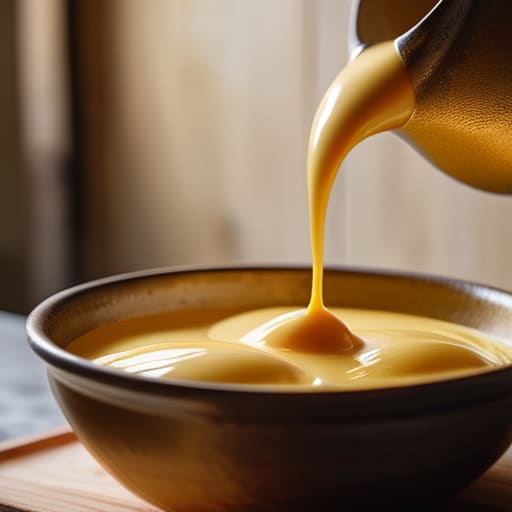
If you want a custard that actually holds its shape without turning into scrambled eggs, you have to stop looking at the clock and start looking at your yolks. Successful egg yolk emulsification isn’t some magic trick; it’s just about the marriage of fat and liquid. When I was running the bakery, I’d tell my apprentices that the dairy is the stage, but the yolks are the performers. If your dairy ratios for custard are off—too much milk and not enough yolk—the structure will be weak and weep. Conversely, if you’re too heavy on the yolks without enough liquid to temper them, you’ll end up with a texture that feels more like a heavy paste than a silky cream.
The real danger, though, is the heat. Whether you are practicing stovetop vs oven baked custard, the principle remains: heat is a tool, not a weapon. If you pour hot milk into your yolks too quickly, you’ll shock them, and you’ll be staring at a grainy mess. You must temper the mixture slowly, adding just a splash of warm liquid at a time to wake those proteins up gently. It’s about patience, not speed.
The Science of Custard Thickening Agents and Temperature Control
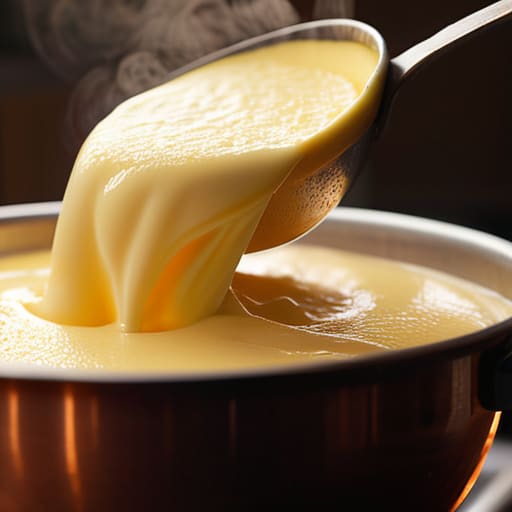
Now, let’s talk about what is actually happening inside your saucepan, because if you don’t respect the physics, the physics will punish you. Most people think custard thickens just because you added eggs, but it is really a delicate dance of protein coagulation. When you apply heat, those egg proteins begin to uncurl and then bond together, trapping the liquid in a web. If you go too fast, they bond too tightly and squeeze the moisture out, leaving you with something that looks more like scrambled eggs than a silky cream. This is why custard temperature control is the difference between a professional finish and a kitchen disaster; you aren’t just heating liquid, you are managing a structural transformation.
Whether you are practicing pastry cream techniques for a tart or making a simple crème anglaise, you have to decide on your method early. A stovetop custard requires constant, vigilant movement to distribute heat evenly, whereas an oven-baked custard relies on the gentle, ambient warmth of a water bath to prevent the edges from seizing before the center is set. If you find yourself staring at a grainy mess, don’t panic—you likely bypassed the slow build-up of heat. It isn’t magic; it’s just patience and steady hands.
Five things your thermometer won't tell you
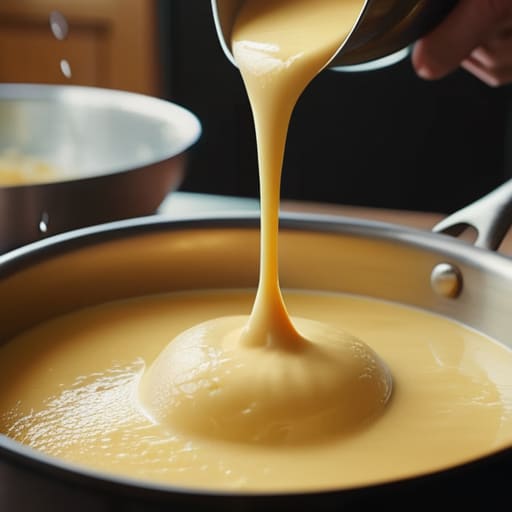
- Don’t trust a recipe that asks for “cups of milk” if you want a consistent set; I always work with a 3:1 ratio of dairy to egg yolks by weight, because once you understand the percentage of fat and protein, you stop guessing and start knowing.
- If you see tiny bubbles forming on the surface of your custard while it’s heating, stop stirring immediately; you’ve already pushed the temperature too high and you’re about to turn a silky cream into a grainy mess of scrambled eggs.
- Temper your yolks like you’re introducing two old friends who don’t quite trust each other—slowly, one ladle of warm liquid at a time—otherwise the shock of the heat will seize the proteins before they even have a chance to dance.
- A custard needs a moment to settle; if you pour it into a ramekin and expect it to be perfect instantly, you’re mistaken, because the residual heat continues to work long after you’ve taken the pan off the flame.
- If your custard breaks and looks curdled, don’t throw it in the bin just yet; often, a vigorous whisking with a splash of cold cream or passing it through a fine sieve can save it, provided you haven’t completely scorched the proteins.
The Baker's Essentials for a Perfect Custard
Forget the measuring cups; if you want a custard that actually holds its shape without turning into scrambled eggs, you must work in weights. A custard is a balance of fats and proteins, and a few grams too much cream or a heavy-handed pour of milk will change the entire structure of your set.
Temperature is your master, not your servant. If you see those tiny bubbles forming at the edge of the pan, you’ve already gone too far; you aren’t looking for a boil, you are looking for the gentle, steady thickening that comes from patience and a low flame.
If your custard breaks or curdles, don’t throw it out in a fit of frustration—usually, you just rushed the heat or lost your focus. Most “failed” custards are simply a matter of being too impatient with the thermal transition, and they can often be rescued if you catch them before the proteins tighten too much.
The Heart of the Custard
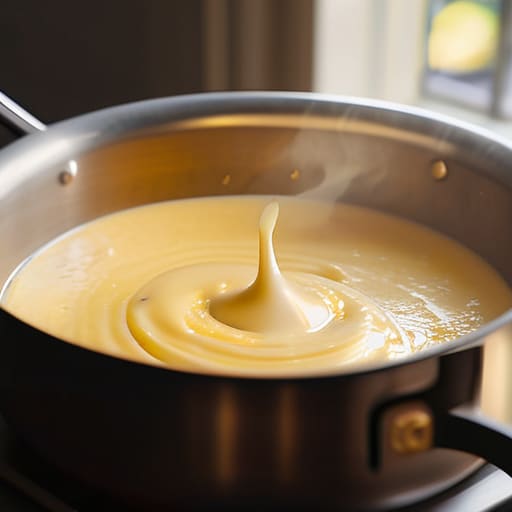
At the end of the day, making a proper custard isn’t about following a list of instructions like you’re reading a manual for a washing machine; it is about understanding the relationship between your fat, your proteins, and your heat. We have talked about why your ratios matter and why that thermometer is your best friend, but remember that a custard is a living thing. If you respect the emulsification and you don’t let the temperature run away from you, the ingredients will do the heavy lifting. You cannot force a custard to thicken by cranking up the flame; you can only invite it to set by being steady and observant. If it breaks, don’t throw the whole batch in the bin immediately—check your heat, check your whisking, and remember that temperature is the invisible ingredient that dictates whether you have a silky crème anglaise or a bowl of scrambled eggs.
I spent thirty-four years watching dough rise and custards thicken, and if there is one thing I have learned, it is that perfection is a moving target. You will have days where the texture is divine and days where you feel like you’ve failed entirely, but even a broken custard teaches you something about your own patience. Don’t be afraid to get your hands a little messy or to start over when the heat gets too aggressive. Baking and dessert-making are not about being perfect; they are about developing a feel for the craft. So, put the measuring cups away, trust your senses, and give yourself the grace to learn through the heat of the kitchen.
Frequently Asked Questions
My custard looks grainy and curdled—did I use the wrong type of milk, or did I simply lose my temper with the heat?
It wasn’t the milk, dear; it was your temper. Unless you’re using some strange, acidic concoction, your dairy is fine. That graininess is the sound of protein molecules clumping together because they got too excited by the heat. You rushed it. You let the flame climb too high or you stopped stirring when you should have been watching like a hawk. A custard needs a steady hand and a gentle heat, not a race to the finish.
If I want a richer, more stable custard, should I be adjusting my yolk-to-dairy percentage or looking at my thickening agents?
If you want richness, you lean on the yolks; if you want stability, you respect the temperature. Increasing your yolk percentage—say, moving from a 20% yolk-to-dairy ratio to 25%—will give you that deep, golden decadence that fat provides. But don’t go chasing starch or thickeners to fix a custard that feels flimsy. A custard isn’t a pudding; if it won’t hold, you likely rushed the heat or used dairy that was too thin.
How do I know when the custard is truly set by touch rather than just waiting for it to look thick in the pan?
Stop watching the pan; you’ll end up overcooking it while you’re squinting. Instead, take a spoon and dip it in. Lift it out and run your finger across the back of the spoon. If the custard holds that line—if it stays where you drew it without weeping or running back into the pool—it’s ready. It should feel like heavy cream, not like thick glue. If it wobbles like jelly, give it another minute.