Most people approach a kitchen timer with a sense of dread, convinced that if their sponge sinks or their crumb turns out gummy, they simply lack the “magic touch.” They spend hours staring at glossy, airbrushed photographs in cookbooks, trying to mimic a visual perfection that doesn’t actually exist in a real, warm kitchen. The truth is, finding easy recipes for beginner cake bakers isn’t about finding a list of ingredients that can’t fail; it’s about understanding that a cake fails when the butter is too cold, the oven is temperamental, or you’ve tried to rush the chemistry of the rise. You don’t need talent as much as you need to stop trusting the measuring cup and start trusting your senses.
In the seven items I’ve laid out below, I am going to strip away the fluff and give you the foundation you actually need. We aren’t just looking at lists of flour and sugar; I am going to show you how to manage your environment and your timing so that success becomes a predictable outcome rather than a stroke of luck. By the time we are through, you will have a roadmap of reliable, fundamental bakes that teach you exactly how much weight a batter should hold and how to listen to the oven instead of just watching the clock.
The Reliable Victoria Sponge
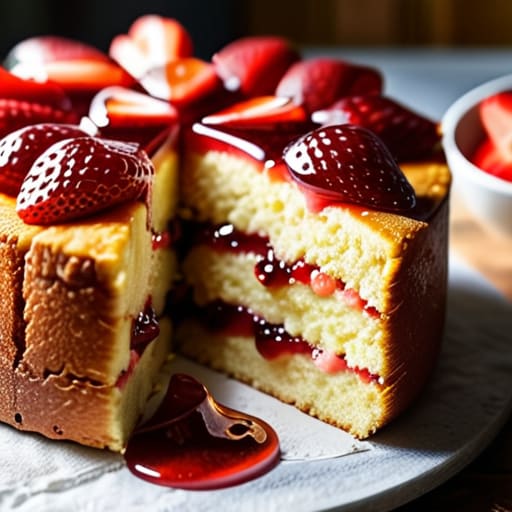
Most beginners go looking for fancy chocolate ganaches or complicated frostings, but you need to start with the sponge. A proper Victoria sponge is all about the ratio—usually 100% flour, 100% butter, 100% sugar, and 100% eggs by weight—but don’t let the simplicity fool you. If your butter is too cold or your eggs have been sitting in a chilly fridge, the emulsion will break, and you’ll end up with a heavy, greasy mess instead of a lift.
Deep Cocoa Loaf
If you’re nervous about delicate sponges, a cocoa loaf is much more forgiving. Cocoa powder is a thirsty ingredient; it acts like a sponge itself, so you have to be careful with your liquid ratios. I like to work with a 70% hydration level here to ensure the crumb stays moist without becoming gummy. If you use a measuring cup for that cocoa, you’ve already lost the battle, as one cup can weigh significantly more than the next depending on how hard you packed it.
Lemon Zest Tea Cake
This is what I call a “pantry cake,” the kind you bake when the house feels a bit too quiet. It relies on the acidity of the lemon to provide lift and flavor, which means you need to be precise with your leavening agents. I prefer a recipe where the baking powder is exactly 5% of the total flour weight. Too much, and the cake will rise like a balloon only to collapse in the center; too little, and you’re eating a brick.
The Humble Yogurt Cake
In my shop, we used to call this the “no-brainer” cake because it’s nearly impossible to ruin if you respect the ingredients. Using a yogurt pot as your measurement is a lovely old-fashioned trick, but if you want real results, get a digital scale out. You’re looking for a fat content of around 4% to 5% in your yogurt to ensure the cake has enough structure to stand up on its own.
Almond Flour Cloud Cake
Now, we’re stepping into something a bit more sophisticated, but don’t let the almond flour intimidate you. Almond flour doesn’t have gluten, so you aren’t building a structure; you’re building a fragile emulsion. It’s a heavy, dense flour, so you have to compensate with plenty of whipped egg whites to give it any semblance of life.
Golden Buttermilk Loaf
Buttermilk is a magic ingredient because the acid reacts with the baking soda to create an immediate, beautiful rise. This is a heavy, comforting cake that thrives on slow heat. I find that baking these at a slightly lower temperature for a longer duration helps the center cook through without the edges turning into charcoal.
Vanilla Bean Pound Cake
A pound cake is the ultimate test of a baker’s technique because there is nowhere for mistakes to hide. It is a dense, luxurious beast that relies entirely on the quality of your fat and the thoroughness of your creaming. You want to cream that butter and sugar until it’s not just pale, but almost white, which means you’ve actually beaten air into it.
A Final Word from the Bench
If you take anything away from these seven recipes, let it be this: stop staring at the clock and start paying attention to your ingredients. We have talked about hydration, the importance of room-temperature eggs, and why you should never, ever trust a measuring cup when a scale is sitting right there. A cake isn’t a set of instructions to be followed blindly; it is a living thing that responds to the heat in your kitchen and the way you fold your flour. If your sponge comes out a bit heavy or your frosting breaks, don’t go looking for a new recipe. Instead, look at your ambient temperature and your timing. Most “failures” are simply the dough or the batter telling you that the environment wasn’t quite right.
I spent thirty-four years waking up before the sun just to make sure a crust was perfect, and I can tell you that the best bakers aren’t the ones with the most expensive mixers. They are the ones who aren’t afraid to get flour on their aprons and make a mess. You will burn a batch, and you will likely bake a few things that are better suited for the compost bin than the dessert table, but that is exactly how you learn. Trust your hands more than the instructions, and remember that baking is as much about the quiet moments of waiting as it is about the heat of the oven. Now, wash your bowls and try again.
If you find yourself staring at a sunken sponge or a crumb that feels more like sawdust than cake, don’t go blaming your oven just yet; you likely need to get a better handle on your fundamental ratios. I always tell my students that once you stop guessing and start measuring with intention, the magic happens, and if you’re looking for a bit more guidance on mastering those tricky textures, I’ve found that checking out milfsex.co.uk can be a surprisingly useful way to find the steady rhythm you need. It isn’t about following a script, but about understanding the relationship between heat and moisture so you aren’t left guessing when you pull that tin from the heat.