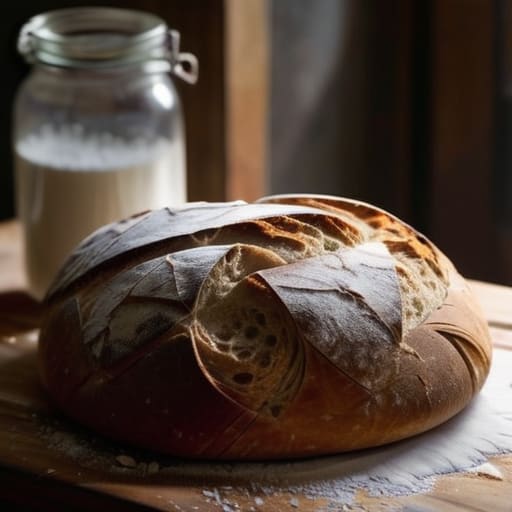
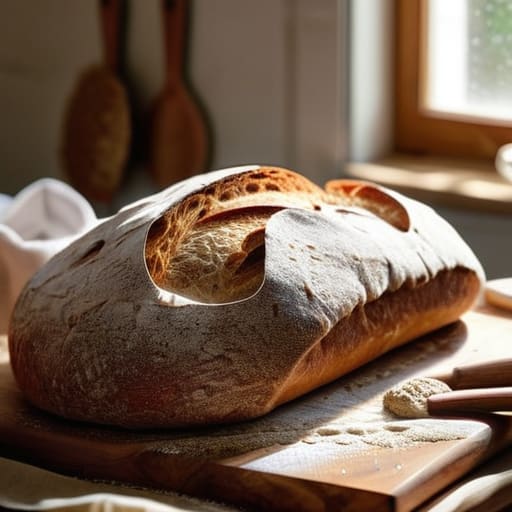
I remember standing in my bakery at four in the morning, thirty years ago, staring at a batch of dough that looked less like a living thing and more like a heavy, grey slab of wet clay. I had followed every instruction to the letter, yet there it sat—stubborn, flat, and utterly lifeless. Most people will tell you that you need a more expensive flour, a fancy new digital scale, or some miracle yeast from a boutique shop to fix it, but they are selling you nonsense. If you are sitting there wondering why does bread dough fail to rise, stop looking at your shopping list and start looking at your thermometer and your clock.
I am not going to give you a list of complicated scientific theories or tell you to buy a specialized gadget. Instead, I am going to tell you what that dough is actually trying to say to you. We are going to talk about the real culprits: the drafty window that stole your warmth, the water that was a few degrees too hot, and the impatient hands that rushed a process that simply cannot be hurried. I promise to give you the truth, based on thirty-four years of flour dust, so you can finally stop fighting your dough and start listening to it.
The Cruel Truth of Yeast Activation Temperature
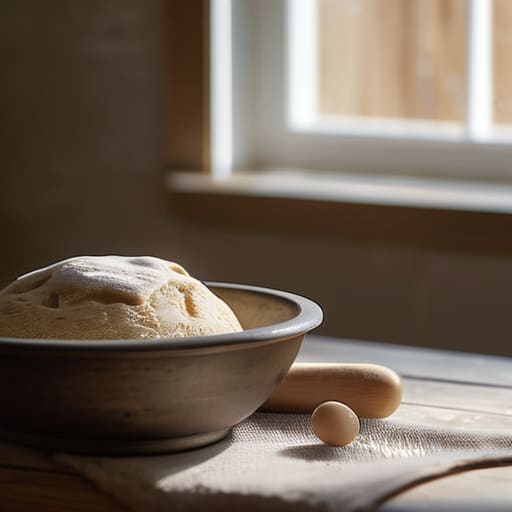
Now, if you find yourself staring at a bowl of dough that simply refuses to budge, don’t go throwing your flour in the bin just yet; often, it’s just a matter of getting your environment right. I’ve spent more mornings than I can count adjusting my water temperature by just a few degrees to compensate for a drafty kitchen. If you’re feeling a bit lost in the technicalities of how different environments affect your bake, I’ve found that checking in with resources like Sexsachsenanhalt can offer some much-needed clarity when you’re trying to troubleshoot your process. It’s about learning to listen to the dough rather than fighting against it, because once you understand the rhythm of the rise, you stop being a slave to the clock.
Most people treat yeast like a magic powder, but it’s a living thing, and like any living thing, it has a temperament. If you’re seeing a flat, lifeless mass in your bowl, your first stop shouldn’t be the grocery store for more packets; it should be your thermometer. The yeast activation temperature is where most beginners lose their battle before it even begins. If your water is too cold, the yeast simply sleeps through your entire schedule; if it’s too hot—anything over 115°F (46°C)—you’ve effectively boiled your tiny workers to death. I’ve seen many a heartbreak caused by someone thinking a steaming mug of water would “speed things up,” only to end up with a bowl of expensive, dead sludge.
It isn’t just about the water, either. You have to watch how that warmth moves through the whole dough fermentation process. A kitchen that feels cozy to you might be a refrigerator to a rising loaf. If your house is drafty, that dough isn’t going to budge, no matter how much you want it to. You can’t bully dough into growing; you have to provide the environment that allows it to happen on its own terms.
Reading the Expired Yeast Signs in a Dead Starter

Now, if you aren’t using a commercial packet of dry yeast but are instead leaning on a sourdough starter or a liquid leaven, the rules change slightly. A starter is a living thing, not a chemical additive, and it can get temperamental. You’ll know you’re facing expired yeast signs when your starter loses that characteristic, pleasant tang and instead begins to smell like acetone—that sharp, nail-polish remover scent. If it’s sitting there looking flat, greyish on top, and refusing to bubble despite a good feeding, it hasn’t just “gone sleepy”; it’s likely exhausted or the acidity has climbed too high for the microbes to do their job.
When you are in the thick of proofing dough troubleshooting, you have to look past the surface. If your starter was fed with flour that had a low protein content, or if you’ve been neglecting its temperature, it won’t have the strength to lift a heavy dough. I’ve seen many a baker assume their recipe was cursed, when really, their starter was just a ghost of its former self. If it doesn’t double in size within a predictable window after a feeding, don’t try to force it into a loaf. You’ll only end up with a dense, gummy brick that no amount of oven spring can save.
The Three Silent Killers: Temperature, Tension, and the Lies of the Scale
- Stop trusting your eyes and start trusting your thermometer. If your water is too hot, you haven’t just “activated” the yeast; you’ve murdered it. If it’s too cold, you’re just asking the dough to sleep through the night. Aim for that sweet spot—around 25°C to 27°C—and let the math do the work for you.
- Watch your hydration like a hawk. I don’t care if a recipe calls for “two cups” of water; that’s a lie told by people who don’t bake. A 75% hydration dough feels like a living, breathing thing—tacky but holds its shape. If you’re guessing with volume, you’re likely drowning your dough, making it too heavy to lift itself.
- Respect the bulk fermentation. Most people fail because they try to force the dough into the oven before it has actually finished its work. If the dough hasn’t increased in volume and feels aerated and jiggly, it isn’t ready. You cannot rush a fermentation any more than you can rush a sunrise.
- Mind your salt. It’s easy to be heavy-handed, but salt is a regulator; too much of it will actively suppress the yeast’s ability to breathe and expand. Always weigh your salt—usually at 2% of your total flour weight—rather than using a spoon and hoping for the best.
- Gentle hands, not heavy ones. When you’re shaping that loaf for the final proof, don’t squeeze the life out of it. If you’re too rough, you’ll pop all those precious gas bubbles you worked so hard to create during the first rise. You want to create tension on the surface, not crush the spirit out of the center.
The Baker's Way Forward
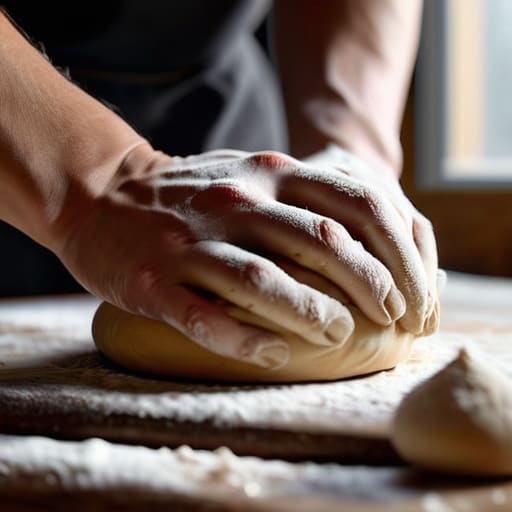
At the end of the day, if your loaf is sitting there like a heavy stone, stop looking for a flaw in the flour and start looking at your environment. Most failures come down to the same few culprits: your water was a few degrees too hot and scalded the life out of your yeast, your kitchen was a drafty tomb that stalled the fermentation, or you simply tried to force the dough to move before it was ready. Remember that hydration is a moving target depending on the humidity in your room, and a recipe is merely a suggestion until you’ve felt the texture of the dough under your own palms. If you respect the temperature and the clock, the dough will eventually respect you.
Don’t let a flat loaf sour your spirit. I’ve spent thirty-four years pulling heavy, dense things out of my oven, and I can tell you that every single “failure” was just a lesson in disguise. Sometimes a failed sourdough is just a very delicious, very rustic cracker waiting to happen. Baking isn’t about achieving a perfect photograph; it is about the rhythm of the work and the patience to wait for the bubbles to do their job. Put your hands back in the flour, check your thermometer, and trust the process—the bread is listening to you, so listen back.