I remember sitting in my shop office at five in the morning, the smell of proofing rye heavy in the air, staring at a ledger that made absolutely no sense. I had been selling loaves that felt like gold in the hand, yet my bank account felt like nothing but dry flour. I realized then that most people teaching you how to cost a bake are either selling you a fancy software subscription or they’ve never actually had to pay for a sack of rye when the price jumps overnight. They want you to focus on the glittery margins of a wedding cake, but they completely ignore the quiet leak of a few grams of salt here or a wasted liter of milk there.
I’m not here to give you a spreadsheet that requires a degree in mathematics to operate. Instead, I’m going to show you how to look at your ingredients through the lens of actual usage, not just what the receipt says. We are going to strip away the guesswork and talk about the real math of the kitchen—from the cost of your electricity to the way you account for the dough that sticks to the bowl. By the time we’re done, you’ll know exactly where your pennies are hiding before you ever preheat that oven.
Mastering the Baking Ingredient Unit Cost and the Lies of Convenience
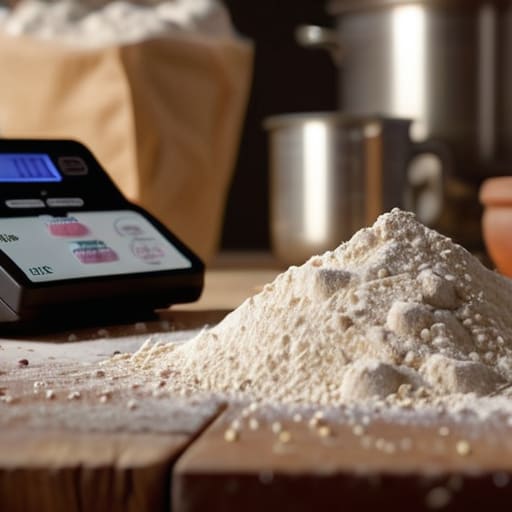
You’ll see people buying those little pre-measured bags of specialty flour or those fancy, pre-mixed spice blends because they think it saves time. It’s a trap. If you want to get your baking ingredient unit cost right, you have to stop thinking in packets and start thinking in grams. I’ve spent decades watching people lose money because they bought “convenient” ingredients that cost three times what the bulk equivalent would have, without ever actually weighing the difference. You cannot build a sustainable business—or even a hobby that doesn’t drain your bank account—on guesswork.
When you sit down to do your math, you must break every single ingredient down to its smallest part. If you use 500g of flour at a certain price per kilo, you use that exact figure, not a “rough idea” of what the bag cost. This is the foundation of any real pricing formula for small bakeries. If you don’t know exactly what a single gram of salt or a splash of oil costs you, your margins will vanish before the oven even preheats. Precision in your scales must be matched by precision in your ledger.
Calculating Food Cost Percentage to Protect Your Kitchens Future
Once you’ve wrestled with the price of every gram of flour and every pinch of salt, you have to look at the bigger picture. Most people think they’re making money because the till is full at the end of the day, but they aren’t actually calculating food cost percentage correctly. If your ingredients cost you two pounds to make a loaf, and you’re selling it for three, you haven’t made a pound in profit; you’ve barely covered the electricity it took to run that oven. You have to understand that your raw ingredients are just the beginning of the story.
To keep your kitchen from sinking, you need a reliable pricing formula for small bakeries that accounts for the invisible thieves: waste and shrinkage. I’ve seen too many young bakers forget that a spilled bag of flour or a batch of sourdough that over-proofed and went into the bin still has to be paid for. When you factor in your overhead costs for home bakers—the heat, the light, and the wear on your mixer—you realize that a recipe isn’t just a list of instructions, it’s a financial blueprint. If you don’t respect the math, the math won’t respect your time.
The Hidden Leaks in Your Flour Bin: Five Ways to Stop Losing Money
- Stop ignoring the “dusting flour.” You might think a handful of flour used to dust your work surface is free, but it isn’t. When you’re calculating the cost of a sourdough boule, you need to account for the flour that coats the banneton and the flour that flies through the air during shaping. It seems small, but over a month of four a.m. starts, those “invisible” grams add up to a significant hole in your pocket.
- Watch your waste like a hawk, especially with high-hydration doughs. If you’re scraping dough off the sides of a bowl or losing a bit of precious butter to the wrapper, that is money being thrown in the bin. I’ve seen bakers calculate their costs based on perfect yields, forgetting that reality involves sticky hands and a bit of leftover starter. Always factor in a small percentage for “loss” so your margins don’t evaporate.
- Don’t forget the cost of the energy that makes the heat. People love to obsess over the price of a kilo of rye, but they forget that the wood for the oven or the electricity for the deck oven isn’t free. If you aren’t adding a buffer for your utilities into your bake cost, you aren’t actually making a profit; you’re just paying for the privilege of working.
- Account for the “hidden” ingredients that don’t feel like ingredients. Salt, yeast, and even the water you use to steam your crust—these are part of the cost. I’ve seen many a novice baker forget to include the cost of the salt in their calculation because it feels too cheap to bother with. But salt is a precision ingredient, and precision requires accounting for every cent.
- Price your time, even if you aren’t paying yourself a wage yet. If you’re baking for a local market or a small shop, you have to realize that your labor is the most expensive ingredient in the room. If you only cost out the flour and the water, you aren’t running a business; you’re running a very expensive hobby. A bake isn’t truly “costed” until you’ve accounted for the hours spent kneading, shaping, and cleaning.
The Baker's Bottom Line: What to Carry Away From the Bench
Stop treating your ingredients like they’re free just because they’re staples; if you aren’t weighing every gram of flour and every pinch of salt into your costings, you’re essentially handing your profit to the local grocer.
Watch your waste as closely as you watch your oven spring, because a spilled bag of flour or a batch of dough left too long in a cold kitchen isn’t just a mistake—it’s money straight into the bin.
Remember that your time and your hands are part of the cost, too; if you aren’t accounting for the labor it takes to knead, shape, and bake, you aren’t running a bakery, you’re running a charity.
The Final Weigh-In
At the end of the day, costing your bake isn’t about being a bean-counter; it’s about respecting the craft enough to ensure you can actually afford to keep doing it. You’ve looked at the truth behind your ingredient weights, moved past the convenience of “eyeballing” costs, and you’ve mapped out your food cost percentages so your margins aren’t as thin as a poorly proofed crepe. Remember, if you aren’t accounting for every gram of flour and every drop of water, you aren’t just losing money—you are eroding the foundation of your kitchen. Accuracy in your books is just as vital as accuracy on your scale, because a recipe that doesn’t pay for itself is nothing more than an expensive hobby.
Once you have those numbers tucked away, stop staring at the ledger and get back to the dough. The math is there to give you freedom, not to weigh you down like a heavy, under-hydrated boule. Use that clarity to bake with confidence, knowing that your passion is backed by a solid, sustainable plan. Whether you are feeding a village or just your own family, treat your finances with the same patience and precision you give your sourdough starter. The numbers will settle, the oven will heat, and as long as you’ve respected the ingredients and the math, you’ll always find a way to rise.
Frequently Asked Questions
What do I do about the costs of things I can't easily weigh, like the salt for the dusting or the oil for the tins?
Listen, you can’t spend twenty minutes weighing out three grams of salt for dusting; you’ll go mad and the dough will suffer for it. For those little things—the oil for the tins, the dusting flour, the pinch of salt—I use a “buffer.” I add a flat 3% or 5% to my total ingredient cost. It covers the invisible bits and the occasional spill. It’s not perfect math, but it’s honest business.
If I have a batch of dough that fails because the kitchen was too cold and I have to bin it, how do I account for that lost money in my next bake?
You don’t hide that loss in the next batch; you face it. If a cold kitchen kills your dough, that’s a “waste cost.” In your books, you record the total weight of the ingredients lost and their cost. When you calculate your next batch, you must realize your actual food cost percentage has just spiked. You don’t raise prices for one mistake, but you do track it to see if your kitchen’s temperature is costing you your profit.
How much should I be adding to my ingredient costs to cover the electricity for the oven and the wear and tear on my equipment?
Don’t go looking for a magic number; it’s more about covering your overhead than finding a perfect formula. I usually add about 10% to my raw ingredient costs to account for the heat and the hum of the machines. It sounds small, but that electricity and the inevitable replacement of a worn-out mixer blade add up. If you aren’t accounting for the energy it takes to turn flour into bread, you aren’t running a business—you’re just running a charity.