Most people think that learning how to make sorbet is about finding the perfect, exotic fruit or owning a machine that costs more than my first oven. They spend a fortune on fancy stabilizers and chemical gums, convinced that the secret to a smooth texture is hidden in a laboratory. They are wrong. The truth is much simpler and far more stubborn: sorbet is nothing more than fruit, sugar, and the discipline to wait. I spent years watching people ruin perfectly good seasonal peaches because they tried to rush the freezing process or used too much sugar to compensate for a lack of patience.
I’m not here to show you a polished photograph of a frozen dessert; I’m here to tell you why your batch turned out like a block of flavored ice instead of something that melts on the tongue. I will give you the exact sugar percentages you need to prevent crystallization, because once you understand the science of the syrup, you stop guessing. We are going to focus on the temperature and the fruit’s natural character, stripping away the nonsense so you can finally master the craft.
Recipe Details
Ingredients
- 1 cup granulated sugar
- 1 cup water
- 1 cup fresh lemon juice
- 1 tablespoon lemon zest
- 1 pinch salt
Recipe Instructions
Step 1
First, we need to get your proportions right, and I’m not using a measuring cup for this. For a standard fruit base, you’ll want about 50% sugar relative to the weight of your fruit puree. If you’re using 500g of puree, you’ll need 250g of sugar. Dissolve that sugar into a small amount of warm liquid—or better yet, a simple syrup if you want a smoother mouthfeel—until it’s completely gone. If you can still feel grit between your thumb and forefinger, you haven’t gone far enough.
Step 2
Once your syrup is clear, stir in your fruit puree and any lemon juice you’ve decided to use. At this stage, the mixture should be quite thin, almost like a heavy juice. Don’t worry about it looking like a solid; it’s just a liquid waiting for its purpose. I always tell people to chill this mixture thoroughly in the icebox before it ever sees a machine or a freezer bowl. If you try to churn warm liquid, you’ll end up with a grainy mess of ice crystals instead of a silky sorbet.
Step 3
If you have an ice cream maker, pour the chilled base in and let it do the heavy lifting. You’re looking for the moment the liquid starts to thicken and lose its “slosh.” It should look like a soft-serve consistency—thick enough to hold a shape but still supple enough to move. If your machine is an older model, don’t panic if it takes a little longer; just watch the texture, not the clock.
Step 4
For those of you without a machine, you’ll need to use the old-fashioned method: the freezer and a sturdy spoon. Pour the liquid into a shallow metal pan—metal conducts the cold much faster than glass—and put it in the freezer. Every thirty minutes, you must get up, go to the kitchen, and scrape the edges vigorously toward the center. You’re breaking up those ice crystals before they have a chance to grow into shards. It’s tedious, yes, but that’s where the texture is earned.
Step 5
Finally, when the sorbet looks firm but is still slightly soft in the center, move it to a container and let it “ripen” in the freezer for a few hours. This is the part where most people fail because they want to eat it immediately. If you do, it will feel like eating flavored snow. If you let it sit, the structure will set, giving you that dense, luxurious scoop that makes all the scraping worth it.
The Fruit Puree Base Is a Matter of Integrity
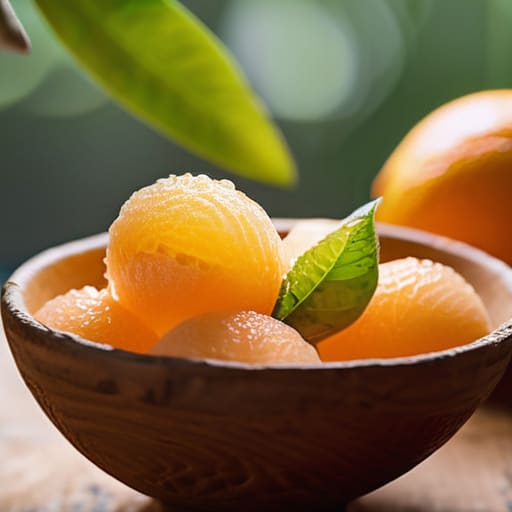
The fruit puree base is a matter of integrity. If you start with fruit that has been sitting in a plastic crate under fluorescent lights for a week, no amount of sugar will save you. I’ve always believed that a good sorbet should taste like the fruit was plucked from the branch ten minutes ago. When I was running the bakery, we never used canned pulps or those pre-sweetened syrups you see in the supermarket; they lack the acidity needed to balance the sugar. If you are making a citrus sorbet recipe, for instance, you must ensure the juice is bright and fresh. If the fruit is slightly overripe, that’s actually a blessing—it means the natural sugars are concentrated, allowing you to use fewer natural fruit sweeteners and letting the actual flavor take center stage.
Don’t get caught up in the debate of ice cream maker vs hand churned methods, either. Whether you use a machine or a whisk, the real work happens in the quality of that base. If your texture feels grainy, you haven’t failed the recipe; you’ve likely just missed the mark on your sugar-to-water ratio. A little extra glucose or a touch of honey can be the secret to preventing ice crystals in sorbet, creating that silky mouthfeel that makes a person stop talking mid-sentence.
Preventing Ice Crystals in Sorbet Through Thermal Discipline
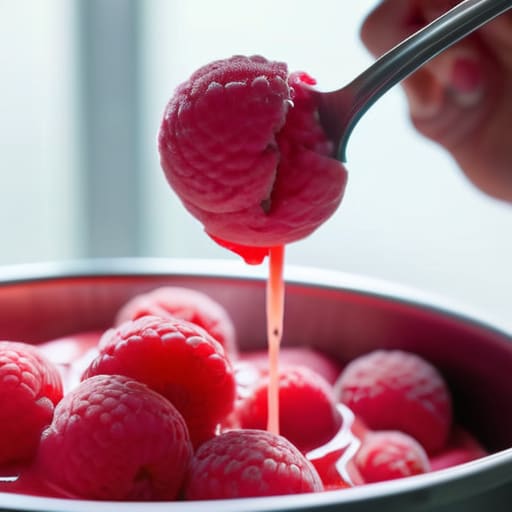
If your sorbet comes out of the freezer feeling like a block of flavored ice rather than a silk ribbon, you haven’t failed the recipe; you’ve likely lost the battle with temperature. Preventing ice crystals in sorbet is less about the fruit and more about how quickly you can force that liquid to surrender to the cold. If you are using an ice cream maker vs hand churned methods, the machine offers the advantage of constant motion, which breaks up those jagged crystals before they can anchor themselves. However, if you are working by hand, you must be diligent. Every time you open that freezer door to stir, you are letting in warm, humid air that invites large crystals to form.
The secret lies in the sugar and the speed. I always suggest using natural fruit sweeteners or a touch of glucose if you want that professional, pliable mouthfeel. Sugar isn’t just for sweetness; it lowers the freezing point, acting as a structural stabilizer. If you find yourself troubleshooting a grainy texture, check your fruit puree base for water content. Too much juice and not enough solids, and you’ll always be fighting a losing war against the frost.
Five things your cookbook won't tell you about the freeze
- Stop measuring by the cup and start by the weight; a sorbet’s success lives or dies by its sugar concentration, and if your Brix level is off, you’ll end up with a block of flavored ice rather than a scoopable silk.
- Don’t be afraid of a little acidity to balance the sugar, but remember that lemon juice is a tool, not a crutch—if you can’t taste the fruit through the citrus, you’ve gone too far.
- Watch your temperature like a hawk during the churn; if the mixture gets too cold too fast without enough agitation, you’re inviting ice crystals to move in and stay, and nobody wants to eat crunchy fruit slush.
- Give your puree a proper pass through a fine sieve before it ever touches the machine; any stray bit of pulp or fiber becomes a structural weakness that ruins the mouthfeel.
- Patience is your best friend during the hardening stage—let it set in the freezer, but if it gets too hard, don’t hack at it with a knife; let it sit on the counter for ten minutes to find its soul again.
Three things to remember when the scoop meets the bowl
Forget the fancy fruit labels and focus on the sugar-to-acid balance; if your puree is too tart, the freeze will feel sharp and aggressive rather than smooth and bright.
Stop treating your freezer like a magic wand and start treating it like a tool; the faster you move from liquid to solid, the less time those pesky ice crystals have to build a home in your sorbet.
Trust your palate over a thermometer every single time, because a recipe can tell you the sugar percentage, but only your tongue can tell you if the fruit has truly surrendered its soul to the syrup.
The Final Scoop
If you have followed the weights and kept your sugar levels precise, you should have something far better than a frozen block of flavored ice. Remember that the success of your sorbet relies on the marriage of a well-balanced puree and the discipline of temperature. You cannot cheat the physics of freezing; if you rush the churn or ignore the sugar-to-water ratio, you will end up with something that scrapes the bowl rather than melts on the tongue. It comes down to the integrity of your base and your refusal to let the fruit lose its character to excessive dilution.
At the end of the day, don’t let a slightly grainy texture or a stubborn scoop discourage you. Baking and freezing are both just long conversations between you and the ingredients. If it’s too hard, let it sit on the counter for ten minutes; if it’s too soft, give it more time in the cold. The most important thing is to trust your senses over any machine or timer. Once you stop looking for perfection in a photograph and start feeling the resistance of the spoon, you’ll realize that the best sorbet isn’t the one that looks prettiest, but the one that tastes exactly like the fruit it came from.
Frequently Asked Questions
My sorbet turned out as hard as a block of ice in the freezer; how do I stop it from becoming a brick the moment I take it out?
If your sorbet is a brick, you’ve missed the sugar. In my bakery, we don’t just balance flavor; we balance the freezing point. You likely have too little soluble solids. To fix this, you need to bump your Brix—your sugar content—up slightly. A bit more glucose or a touch of honey can work wonders. It’s not about making it sweeter; it’s about giving those water molecules something to hold onto so they don’t turn into ice.
I tried using a different fruit, but the texture feels gritty instead of smooth—is my sugar ratio off or is it something else?
It’s rarely the sugar, though a low Brix level won’t help. If it’s gritty, you’re likely feeling undissolved solids or large ice crystals. Different fruits carry different amounts of fiber and pectin; a peach behaves nothing like a raspberry. You must pass your puree through a fine-mesh sieve—don’t be lazy with the spoon—and ensure your sugar is fully dissolved in the liquid before it ever hits the cold. Smoothness is won in the straining.
Do I really need to use a machine, or can I get a decent result if I'm just stirring it in a bowl by hand?
You can certainly do it by hand, but don’t expect a silk finish. A machine uses constant motion to break those crystals before they can bond, whereas hand-stirring is a battle of attrition. If you go manual, you’ll need to be disciplined—scraping the frozen edges into the center every thirty minutes like you’re trying to keep a secret. It’ll be grainier, more like a granita, but it’ll still taste like honest fruit.