I spent thirty-four years watching people walk into my shop at dawn, and if there is one thing I’ve learned, it’s that most people are being lied to by glossy cookbooks. You see these photos of pancakes so thick and uniform they look like they were carved from foam, and you think you’re failing because yours don’t look like that. They tell you that you need expensive specialty flours or some magic chemical leavener to get it right, but that’s nonsense. When people ask me how to make pancakes and batters that actually taste like something, they don’t need a pantry full of expensive gadgets; they need to understand the relationship between your ingredients and the heat of your pan.
I’m not going to give you a list of “secret” ingredients or a recipe that requires a degree in chemistry. Instead, I’m going to teach you the actual physics of a good batter—the way the weight of the flour affects the lift, and why you must stop mixing the moment the lumps appear. We are going to talk in percentages and temperatures, because that is the only way to ensure consistency. My promise to you is simple: I will show you how to listen to your batter so that you stop guessing and start baking with confidence.
Mastering the Flour to Liquid Ratio for Pancakes
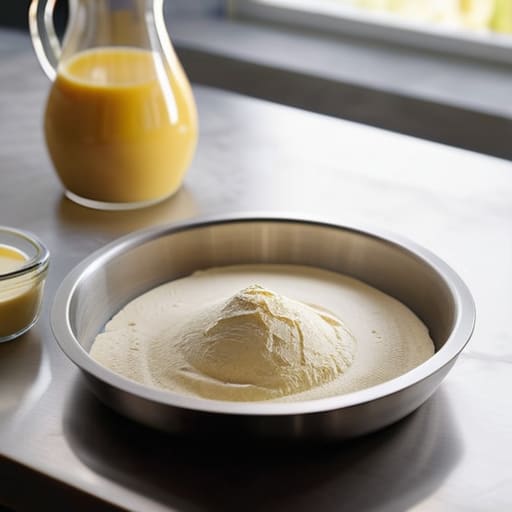
If you want to stop guessing, you have to stop using measuring cups. A cup of flour can weigh as much as a heavy stone or as little as a handful of feathers depending on how tightly you’ve packed it, and that is exactly how you end up with a pancake that’s either a rubbery puck or a puddle of yellow soup. I always work with a flour to liquid ratio for pancakes that sits around 125% hydration if I’m looking for something substantial, but for a true, airy breakfast, you want to aim for a thinner, more fluid consistency.
The secret to that elusive, fluffy pancake texture isn’t just about how much leavening agent you throw in; it’s about how you manage the relationship between the dry and the wet. When you hit that perfect pancake batter consistency, it shouldn’t be a thick, heavy paste you have to fight with a spoon. It should be a living thing—supple, slightly lumpy, and just heavy enough to hold its shape for a second before settling. If you see a few streaks of unmixed flour, leave them alone. Overworking the batter to make it “smooth” is the quickest way to develop gluten and turn your breakfast into a chewy disappointment.
The Hidden Role of Leavening Agents in Pancake Batter
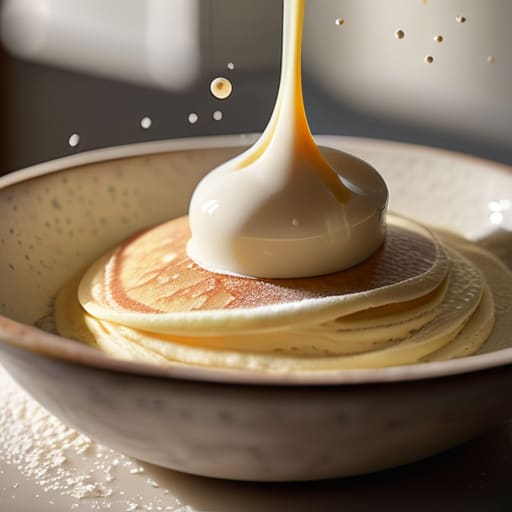
Most people treat baking powder like it’s just a magic dust that makes things rise, but it’s actually a chemical reaction waiting for a reason to happen. When you mix those leavening agents in pancake batter with your liquids, you’re essentially starting a clock. The moment that powder hits the moisture, it begins releasing carbon dioxide. If you spend ten minutes fussing over how perfectly you’ve whisked the lumps out, you’ve likely wasted half of your lift before the batter even touches the heat.
This is exactly why I always preach the importance of resting pancake batter. If you can find the patience to let that mixture sit for ten or fifteen minutes, you aren’t just letting the flour hydrate; you’re allowing the bubbles to stabilize. A rested batter is more forgiving. It gives you that fluffy pancake texture tips enthusiasts always chase, because the structure has had a moment to settle. If you rush straight from the bowl to the pan, you’ll find your pancakes are dense and heavy, no matter how much powder you threw at them. It isn’t a recipe problem; it’s a timing problem.
Five things your recipe won't tell you about the batter in your bowl
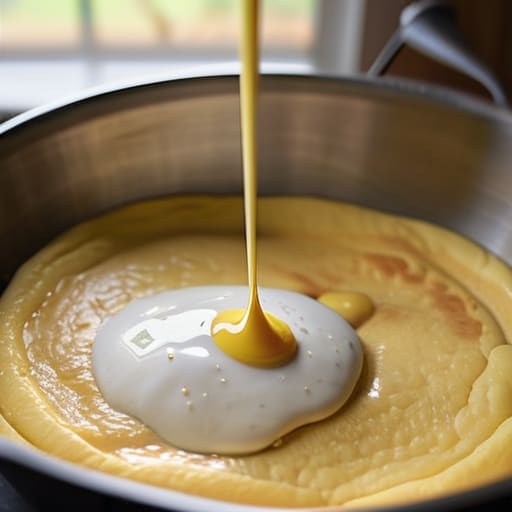
- Stop whisking like you’re trying to win a race. Once your flour meets the liquid, your job is to stir just until the streaks of white disappear. If you keep going until that batter is silky and smooth, you’ve developed too much gluten, and you’ll end up with something that feels more like a rubber ball than a pancake. A few lumps are your friends; they’re the secret to a light, airy bite.
- Watch your temperature, not just your timer. If your pan is screaming hot, the outside will char before the middle even thinks about setting. You want a steady, medium heat—the kind where a drop of water dances for a second before vanishing. If you’re using a heavy cast iron, remember it holds heat much longer than those thin, cheap pans, so give it a moment to settle down before you pour.
- Let the batter rest. I know, it’s tempting to get the griddle hot and start flipping immediately, but if you give that batter ten or fifteen minutes to sit on the counter, the flour fully hydrates and the leavening agents get to work. A rested batter is a more predictable batter; it’ll rise more evenly and won’t feel grainy on the tongue.
- Don’t crowd the pan or the heat. It’s tempting to squeeze as many circles as possible onto the surface, but if you pack them in, the temperature of the pan drops instantly. You’ll end up with pancakes that are greasy and heavy because they’re essentially steaming in their own moisture rather than searing. Give them space to breathe.
- Trust your eyes and your hands over the “flip” instruction. Most recipes tell you to flip when you see bubbles, but every kitchen has different humidity and every flour behaves differently. Wait until the edges look set and matte rather than shiny. If you try to flip too early because a book told you to, you’ll end up with a mess that requires a spatula to rebuild.
The baker's final word on the perfect pour
Stop chasing the “perfect” look in a cookbook photo; if your batter is 85% hydration, it should look thick and slightly heavy, not like a thin soup, and it certainly shouldn’t be perfectly smooth.
Your hands are better than any timer—if you’ve beaten the batter until it’s glossy and elastic, you’ve worked the gluten too hard and your pancakes will be tough as pucks instead of soft as clouds.
Respect the temperature of your pan and the stillness of your batter; if the pan is too hot, you’ll trap a raw center under a burnt crust, so let the heat settle before you commit the first ladle.
Trust Your Hands, Not the Clock
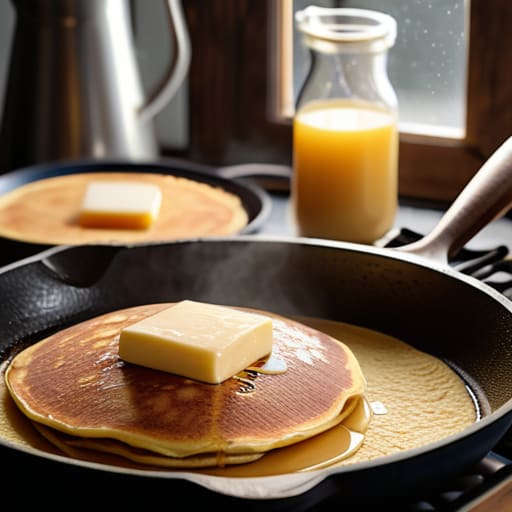
At the end of the day, a pancake is just a lesson in physics and patience. You’ve learned that the hydration percentage dictates whether you’re spreading a thin crepe or scooping a thick, pillowy disc, and you’ve seen how those leavening agents are doing the heavy lifting while you aren’t looking. Remember that if your batter feels too stiff, you haven’t failed; you just need a splash more liquid to find that perfect, pourable consistency. And if you overmix it until it looks like elastic glue, don’t blame the flour—just learn to stop while it still looks a bit lumpy. The science is in the weights, but the success is in the observation.
I spent thirty-four years watching dough rise and fall, and if there is one thing I know, it is that the kitchen is a living thing. You can follow every percentage to the gram, but you must still listen to the sizzle in the pan and the way the batter settles. Don’t get so caught up in the perfection of a photograph that you forget to actually taste the work. Cooking is meant to be felt, not just measured. So, turn off the timer, ignore the “perfect” influencers, and just trust your hands to tell you when it’s ready.
Frequently Asked Questions
My batter feels thick and heavy like paste instead of a pourable cream; did I use too much flour or is my milk too cold?
It’s almost certainly the flour, not the temperature. If your batter feels like paste, you’ve likely overshot your hydration. At 75% hydration, a pancake batter should flow like heavy cream; if it’s resisting you, you’ve gone too far. Cold milk won’t thicken it, though it might slow your leavening. Don’t panic—just whisk in a splash of milk a tablespoon at a time until the weight feels right. Stop before it’s thin.
Why are my pancakes coming out tough and rubbery even though I followed the measurements exactly?
You followed the measurements, but did you follow the movement? If your pancakes are rubbery, you’ve overworked the gluten. When you mix that batter, you aren’t trying to achieve a silky, smooth consistency like a cake; you’re looking for a lumpy, shaggy mess. Stop stirring the moment the flour disappears. If you beat it until it’s perfect, you’ve already turned your breakfast into a rubber band. Let the lumps stay.
If I'm making a batch for a crowd, can I leave the batter sitting on the counter for an hour, or will the leavening agents give up on me?
Leave it on the counter? No, don’t do that. If you’re using baking powder, those little bubbles are on a countdown the moment they hit the liquid. An hour is far too long; you’ll end up with heavy, sad little discs instead of clouds. If you must prep ahead, mix your dry ingredients and your wet ingredients separately. Only marry them when you’re actually ready to heat the pan. Patience is key, but don’t let your leavening die.