I remember a Tuesday morning back in ’94, standing over a massive trough of dough that had gone horribly, stubbornly wrong because I’d tried to double a batch using nothing but a handful of measuring cups and a prayer. I was exhausted, my shoulders were already aching, and I had forty hungry villagers waiting for their morning loaves. I had tried to figure out how to scale a recipe up or down by simply eyeballing the flour, and all I ended up with was a sticky, unmanageable mess that refused to hold its shape. It wasn’t that the recipe was broken; it was that I had ignored the fundamental math of the dough.
I’m not here to sell you on fancy calculators or complex kitchen gadgets that promise to do the thinking for you. Instead, I’m going to show you how to use baker’s percentages to master your ingredients, so whether you are making a single boule or a dozen loaves, the dough feels exactly the same in your hands. We are going to stop guessing and start measuring by weight, because once you understand the relationship between your flour and your water, you will never be intimidated by a change in volume again.
Mastering Recipe Math for Beginners Without the Lies of Cups
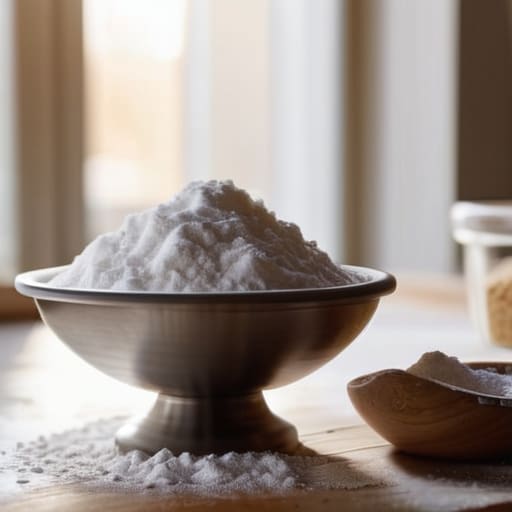
Now, if you’ve spent your life following a recipe that asks for “three cups of flour,” you’ve been living a lie. A cup of flour can weigh anywhere from 120 to 160 grams depending on how hard you packed it, and that’s enough to turn a light brioche into a heavy brick. To truly master recipe math for beginners, you have to stop thinking in volumes and start thinking in baker’s percentages. In my bakery, everything was relative to the flour. If your flour is 100%, your water is a percentage of that weight, your salt is another, and so on. This is the only way to ensure that whether you are making one single boule or scaling ingredients for large batches to feed a wedding party, the dough behaves exactly the same way.
Once you have your weights, the math becomes a simple matter of multiplication. If you want to double your yield, you don’t guess; you multiply every single ingredient by two. It sounds daunting, but once you understand the ratio, you aren’t just following a list—you are understanding the soul of the dough. If you get the math right, the texture will follow.
Scaling Liquid to Dry Ingredient Ratios With Absolute Precision
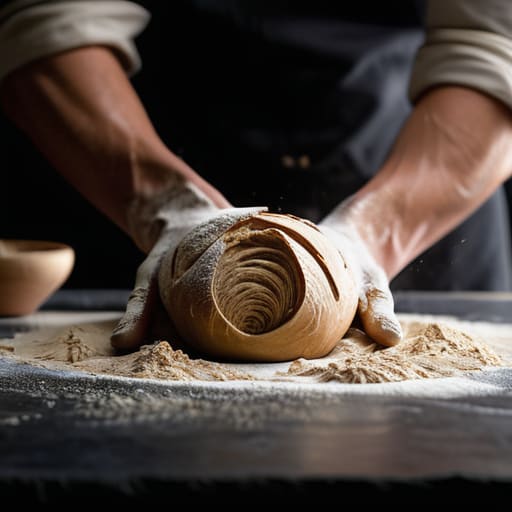
Now, this is where most people trip over their own feet. They think that if they double the flour, they just double everything else and call it a day. But if you aren’t looking at your hydration, you’re just guessing. When you are scaling liquid to dry ingredient ratios, you have to respect the relationship between the two. If I’m making a stiff rye loaf at 65% hydration and I decide to triple the batch, I don’t just eyeball the water. I calculate that 65% against my new flour weight every single time. If your dough feels like wet sand when it should feel like silk, you didn’t respect the ratio.
Precision is your only friend when you start scaling ingredients for large batches. If you’re moving from a single loaf to a dozen, a tiny error in your water calculation becomes a massive disaster by the time you reach the final fold. You’ll end up with a soup that won’t hold its shape or a crumb so tight it could break a tooth. Don’t trust your eyes; trust your scale. Once you have those percentages locked in, the dough will behave exactly as it should, whether you’re baking for your family or the whole village.
The Baker’s Rules for Not Ruining Your Batch
- Watch your salt; it’s easy to get carried away when you’re doubling a recipe, but if you miscalculate your salt percentage even slightly, you’ll end up with a loaf that either tastes like seawater or, worse, won’t ferment at all.
- Don’t assume the pan size stays the same; if you decide to triple your dough, you can’t just shove it into the same tin and hope for the best—you need to respect the volume, or your crumb will be dense and suffocating.
- Temperature is your invisible ingredient, and it doesn’t scale; if you’re making a massive batch of dough, that large mass is going to hold onto heat much longer than a single loaf, so you’ll need to adjust your water temperature downward to keep the fermentation from running away from you.
- Yeast is a living thing, not a mathematical constant; when you’re scaling down to a tiny amount, sometimes the math says use a fraction of a gram that your scale can’t even see, so you might need to rely on a bit more intuition or a more sensitive scale to keep the timing right.
- Give yourself more time for the big batches; a massive tub of dough has a different thermal inertia than a small bowl, and it won’t move through its stages at the same speed you’re used to, so stop looking at the clock and start looking at the dough.
The Baker’s Golden Rules for Scaling
Throw those measuring cups in the bin; if you aren’t using a scale to maintain your baker’s percentages, you aren’t scaling a recipe, you’re just guessing, and your dough will pay the price.
Watch your temperature like a hawk when you change the batch size, because a massive tub of dough holds heat far longer than a small one, and your fermentation will run away from you if you aren’t careful.
Remember that time is a variable you can’t simply multiply; just because you’ve doubled the flour doesn’t mean you double the proofing time, so trust your hands and your nose more than the clock.
The Baker's Final Word
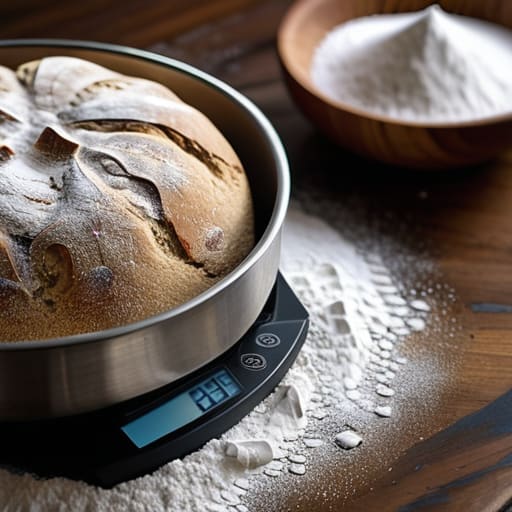
At the end of the day, scaling a recipe isn’t about being a mathematician; it’s about respecting the relationship between your ingredients. Once you stop squinting at measuring cups and start looking at your Baker’s Percentages, the math stops being a chore and starts being a tool. You’ll find that whether you are making a single boule for your own supper or twenty loaves for a village fête, the ratios remain your North Star. Remember that your hydration level is the heartbeat of the dough, and if you keep your weights precise, the dough will behave predictably every single time you touch it. Trust the scale, not your eyes.
Don’t let a bit of arithmetic intimidate you into staying away from the flour. There will be days when you scale a batch too large and find your kitchen counter suddenly too small, or days when the temperature drops and your math feels right but the dough feels sluggish. That is part of the craft. Baking is a conversation between you, the ingredients, and the environment, and scaling is just learning how to change the volume of that conversation. So, put your hands in the flour, keep your weights accurate, and remember that even if the math is perfect, it is your patience that will ultimately bring the bread to life.
Frequently Asked Questions
If I double the flour and water to make a larger batch, do I also need to double the yeast and salt, or will that make the dough act strangely?
You double everything. If you’re at 70% hydration and you double your flour, you double the water, the salt, and the yeast. If you skimp on the salt, the dough loses its structure and tastes like nothing; if you skimp on the yeast, you’ll be sitting around waiting for a rise that never comes. Stick to the percentages. The math doesn’t care about your intuition, so trust the scale, not your gut.
My kitchen is much colder than the one in the recipe; if I scale up the dough, will it take significantly longer to rise than the original amount?
Scaling the dough won’t change the biology, but your cold kitchen certainly will. A larger mass of dough holds its temperature differently than a small one, but if your room is chilly, those yeast cells are going to move like they’re stuck in molasses. Don’t just look at the clock; look at the dough. If it hasn’t doubled and feels tight and lifeless, give it more time or find a warmer corner.
When I’m scaling a recipe down to just a single loaf, how do I handle those tiny, awkward amounts of salt or yeast that are hard to weigh on a standard kitchen scale?
That is the exact moment where most people give up and just “eyeball it,” which is how you end up with a loaf that tastes like nothing or rises like a balloon. If your scale won’t budge, stop trying to weigh a single gram. Instead, scale your entire recipe up slightly—say, to a 1.5x batch—so the salt and yeast fall into a weight your scale actually recognizes. It’s better to have a little extra dough than a ruined loaf.