I remember a Tuesday morning, thirty years ago, when I stood over a batch of brioche that looked more like a pile of wet sand than a delicate dough. I had followed a recipe to the letter—or so I thought—using those dusty old nesting cups my mother passed down to me. It turns out, one person’s “level cup of flour” is another person’s “heaping mountain of flour,” and that tiny, invisible difference is exactly why weighing beats measuring cups every single time. I spent that entire morning scrubbing flour out of my fingernails, learning the hard way that a cup is just a suggestion, while a gram is a promise.
I’m not here to sell you a fancy new gadget or a complicated mathematical formula that requires a degree in engineering. I’m going to show you how to stop guessing and start listening to your ingredients. We are going to talk about the actual physics of the bowl—how hydration works and why your dough feels like lead instead of silk—so you can finally achieve consistent results without the heartbreak. I’ll give you the truth, straight from a kitchen that ran on grit and gravity, because once you master the scale, you’ll finally understand your bread.
The Cruel Math of Flour Density and Measuring Errors
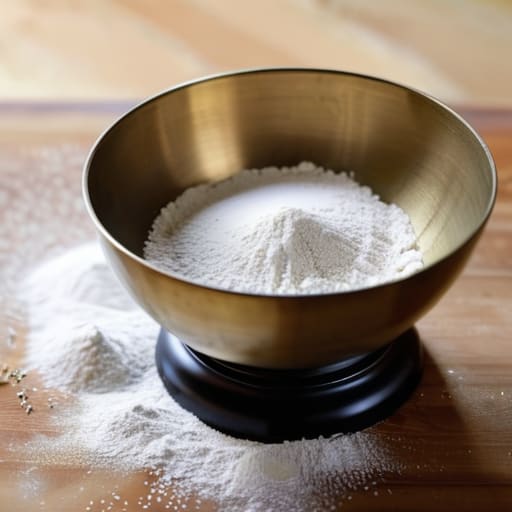
The problem is that flour is a living, breathing thing, not a static solid. If you scoop directly from the bag, you’re likely packing down the particles, squeezing extra air out of the space between them. One day you’ll scoop lightly and get a thin, soupy mess; the next, you’ll pack it tight and end up with a loaf so dry it could double as a doorstop. This is the fundamental trap of flour density and measuring errors. You aren’t actually measuring flour when you use a cup; you’re just measuring how much air you happened to trap in that little plastic vessel.
When I was running the bakery, I saw beginners struggle with the same thing every Tuesday. They’d follow a recipe to the letter, yet their hydration was all over the map. That’s because volume vs weight measurement accuracy isn’t even a contest. A cup of flour can vary by as much as twenty or thirty grams depending on whether the bag was shaken or sat still for a week. If you want real baking consistency, you have to stop guessing. You weigh the flour, you weigh the water, and you finally start to understand the actual relationship between the two.
Volume vs Weight Measurement Accuracy the Bakers Truth
If you’ve ever followed a recipe to the letter only to end up with a loaf that’s as dense as a brick, you weren’t failing the recipe—you were failing the measurement. When we talk about volume vs weight measurement accuracy, we aren’t just splitting hairs; we are talking about the difference between a supple, airy crumb and a heavy, lifeless sponge. A cup of flour can vary by as much as twenty percent depending on whether you scooped it straight from the bag or sifted it first. That kind of swing is enough to throw your hydration completely out of whack.
I spent decades watching people struggle with “one cup” of water versus “one cup” of flour, forgetting that one is a liquid that settles and the other is a powder that shifts. To achieve true baking consistency with digital scales, you have to stop thinking in space and start thinking in mass. A gram is a gram, whether it’s sitting in a bowl or a pile on your counter. Once you stop guessing how much space your ingredients occupy and start focusing on what they actually weigh, the dough finally starts to behave the way it’s supposed to.
Five Ways the Scale Saves Your Sanity (and Your Sourdough)
- Stop guessing your hydration; if you’re using a cup to measure water, you’re playing a guessing game with your dough’s structure that you’ll eventually lose.
- Learn to trust the scale over your eyes, because a cup of flour can weigh anywhere from 120 to 160 grams depending on how much you’ve packed it down, and that’s the difference between a supple boule and a brick.
- Use your scale to keep your workspace clean by nesting your bowls; I never waste a second washing a separate jug for water when I can just tare the scale and pour right into the flour.
- Watch your salt ratios like a hawk, because even a tiny error in a “teaspoon” can ruin the fermentation timing, whereas five grams is always five grams.
- Master the art of the “tare” button to understand your baker’s percentages, because once you know exactly what percentage of your flour is water, you stop following recipes and start actually baking.
The Baker's Bottom Line
If you aren’t using a scale, you aren’t following a recipe; you’re just playing a guessing game with your ingredients.
Stop chasing the “perfect” look in a photo and start focusing on the hydration percentage—it’s the only way to actually understand how your dough will behave in the oven.
Respect the variables of your kitchen, because even with perfect weights, a cold room or a heavy hand will ruin a loaf faster than a bad measurement ever could.
The Weight of the Matter
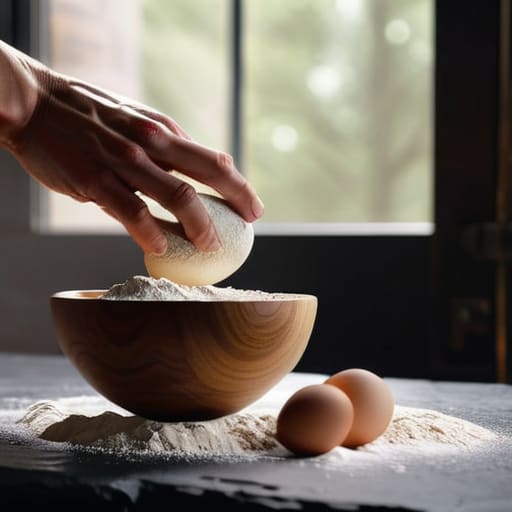
At the end of the day, it all comes down to the fact that flour is a living, shifting thing. It compacts in the bag, it settles in the cupboard, and it reacts to the humidity in your kitchen before you’ve even cracked an egg. When you use a cup, you are essentially playing a guessing game with your hydration levels, hoping that your “level scoop” is the same as the one the recipe writer used. But when you use a scale, you remove that variable entirely. You aren’t just following a list of ingredients; you are mastering the ratio. Once you start thinking in percentages rather than volumes, you stop being a person who follows instructions and start becoming a true baker who understands the soul of the dough.
Don’t let the digital scale intimidate you; it is simply the most honest tool you will ever own. It takes the guesswork out of the equation so that when a loaf comes out of the oven looking spectacular, you actually know why it happened. You’ll know it wasn’t luck or a lucky breeze from the window, but the result of precise math and careful handling. So, put those dusty measuring cups back in the drawer where they belong. Embrace the weight, trust the numbers, and most importantly, give your dough the time it deserves. The bread will thank you for it.
Frequently Asked Questions
If I start using a scale, do I still need to worry about the hydration percentage, or does the weight tell the whole story?
Oh, darling, the weight tells you what you have, but the hydration tells you what you’re doing. If I tell you I have 500g of flour and 350g of water, you know exactly what’s on the scale, but you don’t yet know the soul of the dough. That’s 70% hydration. That percentage is the map; the weight is just the terrain. You need both to understand how that dough is going to behave under your hands.
My scale is a bit old and finicky; is it better to trust a digital readout or just go by the feel of the dough?
Listen, I’ve seen scales that jitter like a nervous apprentice, but even a finicky one is your friend. Use the digital readout to get your hydration right—get those percentages locked in first. Once the ingredients are in the bowl, though? That’s when you stop looking at the numbers and start listening to the dough. If the scale says 70% but the dough feels tight and stubborn, trust your hands. The scale gets you started; your hands finish the job.
Once I've mastered weighing my ingredients, how do I know if my kitchen temperature is actually messing with my results?
If you want to know, stop looking at the thermometer on the wall and start feeling the dough. Your kitchen might say 70°F, but if that dough feels like a cold stone, your fermentation is going to stall. I always check my “Desired Dough Temperature.” You calculate it by looking at your water temp and the friction from your mixer. If the dough feels sluggish or lifeless, your room is stealing your time.