I remember standing in my bakery at five in the morning, flour dusting my forearms, watching a young apprentice try to rush through a sponge cake. He was cranking the mixer at top speed, thinking that more velocity meant a better bake, but all he was doing was melting the butter and bruising the sugar. People get so caught up in the gadgetry and the timers that they completely miss the point of how the creaming method works. It isn’t about how fast your machine can spin; it’s about the invisible architecture you are building between those granules of sugar and the fat. If you don’t understand that you are essentially carving tiny air pockets into the butter, you’re just making sweet grease, not a cake.
I’m not here to give you a clinical lecture or a list of fancy equipment you don’t need. Instead, I’m going to tell you what that mixture should actually feel like under your spatula and why your kitchen temperature matters more than any recipe card. We are going to strip away the nonsense and focus on the sensory reality of the bowl, so you can stop guessing and start knowing exactly when that aeration is complete.
The Secret Dialogue of Fat and Sugar Interaction
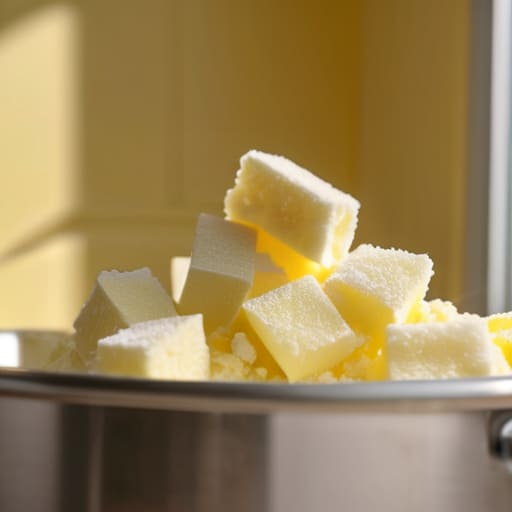
When you start beating that butter and sugar together, you aren’t just mixing ingredients; you are performing a bit of mechanical aeration in baking that most people underestimate. Think of the sugar crystals as tiny, sharp shovels. As you beat them into the fat, they carve microscopic pockets into the butter, creating a scaffolding of air. If your butter is too cold, those crystals can’t do their job; if it’s too soft, the structure collapses into a greasy mess. I always tell my neighbors that room temperature butter importance cannot be overstated—it needs to be pliable enough to yield, but still hold its shape, or you’ll never catch the air you need.
This isn’t just about volume, though. This specific fat and sugar interaction is what dictates the final crumb. Those tiny air pockets we’ve worked so hard to carve out will eventually expand when the heat hits the oven, providing the lift that prevents a heavy, dense sponge. If you rush this stage, you aren’t just saving time; you are sacrificing the very soul of the cake’s structure. You’ll know you’ve succeeded when the mixture looks pale and feels unusually light under your spatula, like a soft cloud rather than a heavy paste.
Mechanical Aeration in Baking Forging Structure Without Force
Now, don’t go thinking you can just crank your mixer to high speed and call it a day. That’s the fastest way to turn a delicate sponge into something tough and rubbery. Mechanical aeration in baking isn’t about brute strength; it’s about the controlled capture of air. When you’re creaming, you are essentially carving tiny, microscopic pockets into the fat. Each little bubble of air you trap becomes a structural scaffold that expands when the heat hits the oven. If you rush it, those bubbles stay too large or collapse entirely, leaving you with a heavy, greasy crumb instead of that sought-after lightness.
This is exactly why room temperature butter importance cannot be overstated. If your butter is too cold, it won’t yield to the paddle, and you’ll just be moving solid chunks around without catching any air. If it’s too soft—melted, even—the structure vanishes. You want that butter to be pliable, like a soft earlobe, so it can hold onto the sugar crystals as they scrape through it. It’s a delicate balance of building a foundation that allows the cake to rise on air rather than just heavy batter.
Five Ways to Stop Fighting Your Butter and Start Working With It
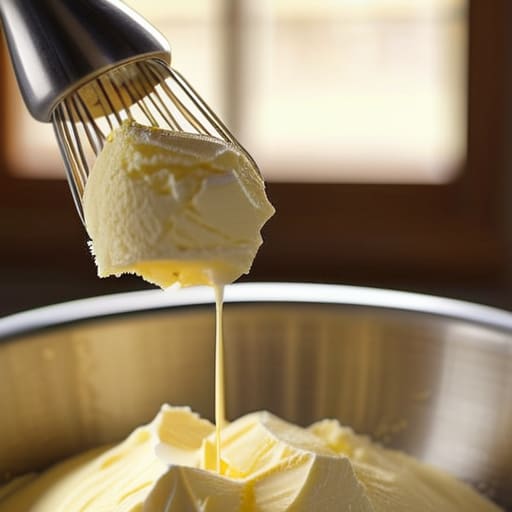
- Temperature is your silent partner. If your butter is too cold, it’s like trying to whip a stone; you won’t catch a single bubble. If it’s too soft—I’m talking greasy, melted-at-room-temperature soft—the structure will collapse under its own weight. You want it around 18-20°C, where it yields to a gentle thumbprint but still holds its shape.
- Don’t trust your eyes alone. A recipe might say “cream until pale and fluffy,” but that’s a suggestion, not a law. You need to feel the resistance change under your mixer or spatula. It should feel noticeably lighter, almost like a thick mousse, rather than a heavy, dense paste.
- Sugar isn’t just for sweetness; it’s your primary tool for mechanical aeration. Those granules act like tiny little chisels, carving microscopic air pockets into the fat. If you use superfine sugar, it happens faster, but if you use standard granulated, you’ll need to give it an extra minute of patience to get that lift.
- Watch your speed, not just your clock. It’s tempting to crank the mixer to high to get it over with, but that just forces air in too violently, creating large, unstable bubbles that pop in the oven. Medium speed is where the magic happens; it allows the air to be distributed evenly and held securely by the fat.
- The “over-mixing” trap usually happens once you add the eggs. Once those liquids hit your aerated fat and sugar, the clock starts ticking. Incorporate your eggs one by one, and once they’re in, stop the moment they’re combined. If you keep beating, you’ll break those delicate air pockets you worked so hard to build, and you’ll end up with a heavy, greasy cake instead of a light one.
What to Carry With You to the Mixing Bowl
Stop watching the clock and start feeling the bowl; the creaming method is finished when the mixture feels light and aerated under your spatula, not just when a timer dings.
Temperature is your silent partner, so ensure your butter is soft enough to hold an indentation but still possesses enough structure to trap those precious air pockets.
Remember that sugar isn’t just for sweetness—it is a mechanical tool that carves tiny rooms into your fat, and if you rush the process, those rooms won’t be there to hold your rise.
The Rhythm of the Bowl
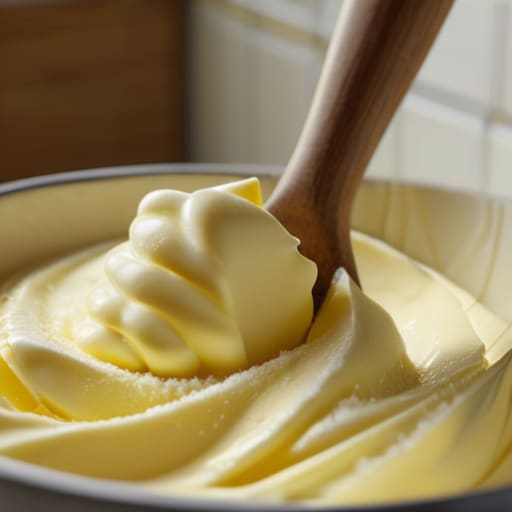
At the end of the day, the creaming method isn’t some complex laboratory procedure; it is simply the art of building a foundation. You aren’t just mixing ingredients; you are physically carving tiny pockets of air into your fat, using sugar crystals as your tools. Remember that if your butter is too cold, it will simply slide past the sugar without catching, and if it’s too warm, those precious air bubbles will collapse before they ever see the heat of the oven. Pay attention to that shift in texture—when the mixture moves from a heavy, greasy paste to something that looks pale, light, and feels almost like a cloud under your spatula, you’ll know you’ve done the work. Trust your hands over the timer, because the dough will tell you when it is ready.
Baking can feel like a series of rigid rules and unforgiving chemistry, but I want you to remember that there is a heartbeat inside every bowl. Don’t be discouraged if your first few cakes feel dense or heavy; it usually just means you were rushing the conversation between the fat and the air. Once you learn to feel the difference, you stop following recipes blindly and start listening to the ingredients. It takes a bit of time, and perhaps a few wasted batches, but that is exactly how a baker is made. Patience is the one thing you cannot buy, so take your time, keep your butter at the right temperature, and enjoy the process of building something beautiful from scratch.
Frequently Asked Questions
My butter is starting to look oily and greasy instead of fluffy; have I over-beaten it or is my kitchen just too warm?
If your butter is looking oily, you’ve likely hit the temperature wall. You haven’t over-beaten it; you’ve simply melted the structure. When the fat gets too warm, it stops holding those tiny air pockets we worked so hard to create and starts behaving like a liquid instead of a foam. Put the bowl in the fridge for fifteen minutes to firm up, then try again—but keep your hands off the bowl if you’re running hot.
If I use a higher fat percentage in my butter, does that mean I need to change how long I cream it with the sugar?
If you’re using a higher-fat butter, you’ll likely find the mixture reaches that pale, aerated state much faster—but don’t let that fool you into stopping early. Higher fat means less water to help create those tiny air pockets, so you actually have to work a bit harder to force the sugar crystals to carve out space. Watch the texture, not the clock; you want it feeling light and voluminous, not just greasy.
I've noticed my cakes feel heavy even when I cream the butter and sugar thoroughly—could the temperature of my eggs be sabotaging the emulsion?
You’ve hit the nail right on the head. If you take cold eggs from the fridge and drop them into that lovely, aerated butter and sugar, you’re essentially shocking the emulsion. The fat seizes, the air pockets collapse, and you end up with a heavy, greasy batter instead of a cloud. Always bring your eggs to room temperature first. You want them to marry into the fat seamlessly, not fight it.