
Sugar Does Four Jobs and Sweetness Is Only One
I remember standing over a cooling rack at four in the morning, staring at a batch of brioche that had turned out more like heavy, yellow bricks than the pillowy clouds I’d promised the village. I had followed a recipe to the letter, but I’d ignored the way the sweetness was fighting the yeast. People treat sugar like it’s just there to make things taste pretty, but if you don’t understand how sugar affects a bake, you’re essentially playing a guessing game with your oven. It isn’t just a sweetener; it’s a structural architect that can either lift your dough or weigh it down into a dense, sugary mess if you don’t respect its power. I’m not here to give you a list of fancy syrups or tell you to buy expensive extracts. I want to talk about the mechanics of the crumb and the chemistry of the crust. We…
Salt Slows Yeast and Strengthens Dough
I remember a young lad who came into my shop ten years ago, clutching a cookbook that promised “miracle rises” through some expensive, imported sea salt. He looked at me like I was speaking Greek when I told him he didn’t need a boutique brand, just a steady hand and a proper scale. He was so focused on the fancy packaging that he completely missed how salt affects dough on a structural level, treating it like an afterthought rather than the backbone of the entire loaf. People think salt is just there to make things taste less bland, but if you treat it like a seasoning instead of a functional ingredient, you’re going to end up with a sticky, unmanageable mess that lacks any real character. I’m not here to sell you on artisanal crystals or complicated science jargon that leaves you more confused than when you started. I’m going…
The Fridge Is a Flavour Tool
I remember standing in my shop at four in the morning, the air thick with the scent of yeast and the damp chill of a stone floor, watching a young apprentice try to “fix” a flat loaf by adding more flour and more frantic kneading. He thought he could force the bread to behave, but you can’t bully life into a dough. Most people think you need expensive specialty grains or high-tech proofing boxes to get that deep, complex tang, but they’ve missed the point entirely. The truth about how overnight fermentation improves flavour isn’t found in a grocery store aisle; it’s found in the quiet, slow magic that happens while you’re actually sleeping. I’m not here to sell you a complicated gadget or a list of obscure ingredients you can’t find at the local market. I’m going to show you how to work with time instead of against it,…
Proving in a Cold House Without Waiting All Day
I remember a Tuesday in mid-January, back when I was still running the shop, staring at a bowl of dough that felt more like a block of ice than a living thing. The radiator was clanking, my hands were numb, and the clock was mocking me because the recipe said the dough should have doubled by now. Most people will tell you to buy a specialized proofing box or a heated proofer to solve your problems, but that is just more expensive clutter for your counter. The truth about how to prove dough in a cold kitchen isn’t found in a gadget; it’s found in understanding that yeast is a living creature that reacts to its environment, not a timer on a machine. I am not going to give you a list of fancy tools you don’t need or tell you to follow a rigid schedule that ignores the reality…

Temperature Is Your Speed Dial
I remember a Tuesday in mid-November, back when the bakery was still mine and the wind was howling through the cracks in the window frames. I had followed a sourdough recipe to the gram, used the finest flour, and even gave the dough a gentle, respectful touch—yet when I went to score it, the loaf sat there like a heavy, lifeless stone. I didn’t need a new brand of flour or a fancy digital proofing box; I just needed to realize that my kitchen had dropped five degrees and my yeast had gone into hiding. Most people spend far too much money on gadgets when they should be learning how temperature controls fermentation by simply feeling the air on their skin. I am not here to sell you a specialized proofer or a complicated piece of software that promises perfection at the touch of a button. Instead, I’m going to…
Converting Between Fresh, Dried and Instant Yeast
I remember a Tuesday morning back in ’94, standing in my shop at four in the morning, staring at a delivery of fresh yeast that had arrived looking more like grey sludge than the creamy, pale blocks I needed. My apprentice was panicking, convinced we’d have to toss the whole day’s production because the supplier had botched the order. It’s that same panic I see in eyes today when someone realizes their recipe calls for fresh, but their pantry only holds a dusty jar of granules. People act like it’s a catastrophe, but learning how to substitute fresh and dried yeast isn’t some complex chemistry exam; it’s just about understanding that you’re working with different speeds of life. I’m not going to give you a list of complicated mathematical formulas that leave you more confused than when you started. Instead, I’ll show you how to adjust your timing and temperature…

What Yeast Is Doing While You Wait
I remember standing in my bakery at four in the morning, thirty years ago, watching a batch of dough sit perfectly still while the winter chill seeped through the window frames. I had followed the recipe to the gram, but the loaf came out of the oven looking like a deflated pancake. Most people would have blamed the yeast, assuming it was “dead” or “bad,” but that’s where they get it wrong. They treat it like a chemical powder you just dump in and forget, but if you want to understand how yeast actually works, you have to stop thinking about it as an ingredient and start treating it like a guest in your kitchen. I’m not here to bore you with biology textbooks or fancy scientific jargon that makes your head spin. Instead, I’m going to tell you what that living, breathing culture is doing inside your bowl and…
Gluten Develops With Time as Well as Work
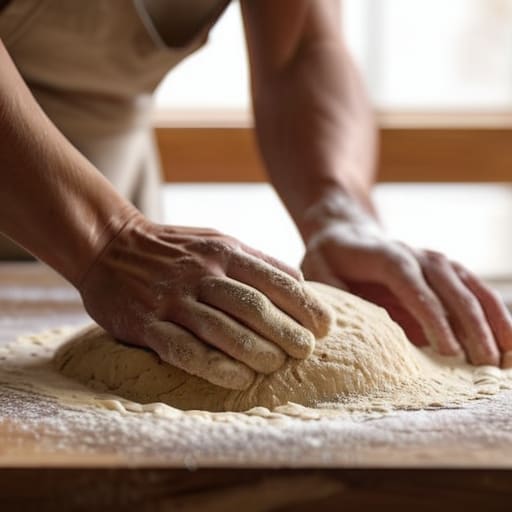
I remember standing over a flour-dusted bench at four in the morning, thirty years ago, watching a young apprentice try to “force” a dough into submission by punching it like it owed him money. He thought he was being efficient, but he was actually just tearing the very thing he was trying to build. People love to buy expensive, high-speed mixers and fancy gadgets, thinking that mechanical power is the secret to success, but they completely miss the point of how gluten develops. You can’t bully a protein network into existence; you have to coax it. It isn’t a violent struggle between man and machine, but a quiet, microscopic conversation between water and grain that happens one fold at a time. I’m not here to sell you a specialized machine or a complicated textbook theory that leaves you more confused than when you started. Instead, I’m going to tell you…
Protein Content Is the Only Number That Matters
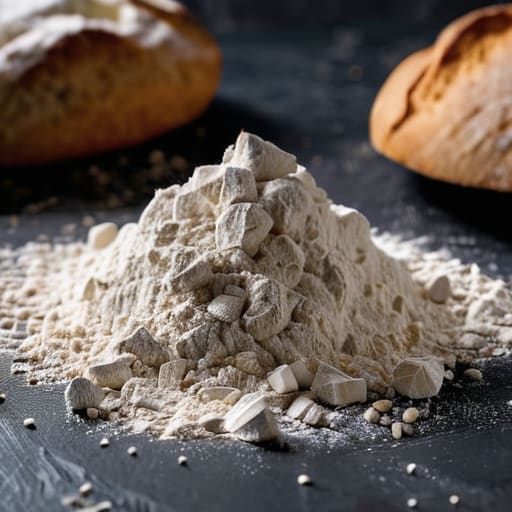
I remember standing in my shop at four in the morning, thirty years ago, staring at a batch of sourdough that looked more like a puddle of grey glue than a loaf of bread. I had followed a recipe to the letter, but I had used a weak, low-protein flour that simply didn’t have the backbone to hold the gas. People spend far too much money on “artisan” blends and fancy imported sacks, never realizing that the real secret to understanding how flour types differ isn’t found in a marketing brochure, but in the strength of the protein and how it reacts to the water you pour into it. I’m not here to sell you a subscription to a luxury mill or tell you that you need a professional-grade laboratory to bake a decent loaf. What I’m going to do is strip away the jargon and tell you exactly what…
Halving a Recipe Without Halving the Bake Time
I remember a Tuesday morning back in ’94, standing over a massive trough of dough that had gone horribly, stubbornly wrong because I’d tried to double a batch using nothing but a handful of measuring cups and a prayer. I was exhausted, my shoulders were already aching, and I had forty hungry villagers waiting for their morning loaves. I had tried to figure out how to scale a recipe up or down by simply eyeballing the flour, and all I ended up with was a sticky, unmanageable mess that refused to hold its shape. It wasn’t that the recipe was broken; it was that I had ignored the fundamental math of the dough. I’m not here to sell you on fancy calculators or complex kitchen gadgets that promise to do the thinking for you. Instead, I’m going to show you how to use baker’s percentages to master your ingredients, so…