I remember standing in my bakery at four in the morning, thirty years ago, watching a young apprentice cry because his sourdough looked like a puddle of grey sludge despite him following a recipe to the letter. He was using measuring cups, counting out scoops of flour as if he were measuring gravel for a driveway, and he couldn’t understand why his dough felt like wet sand one day and stiff clay the next. He didn’t need a new cookbook; he needed to stop treating his ingredients like static objects and start seeing them as a living ratio. If you want to stop guessing and start actually understanding the life inside your bowl, you need this complete guide to baker’s percentages to stop looking at numbers as math problems and start seeing them as the language of the dough.
I’m not here to give you a lecture filled with academic jargon or fancy, expensive kitchen gadgets you don’t need. My promise to you is simpler: I will teach you how to use weights and ratios to master the soul of the bread. We are going to strip away the lies told by measuring cups and focus on how a change in hydration or salt affects the crumb, the crust, and the feel under your palms. By the time we’re done, you won’t be following recipes—you’ll be speaking the language of flour and water.
Why Cups Lie and Flour Weight Calculation Never Does
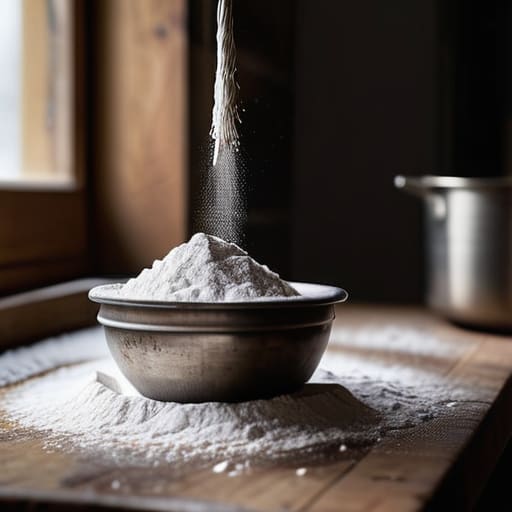
I’ve spent more time than I care to admit watching people scoop flour into a measuring cup, packing it down tight like they’re trying to build a sandcastle. They walk away frustrated because their dough is a stiff, unmanageable brick, blaming a “bad recipe” when the truth is much simpler: they just used too much flour. A cup of flour can weigh anywhere from 120 to 160 grams depending on how much you’ve agitated it, and that kind of guesswork is the quickest way to ruin a fermentation. When you rely on volume, you aren’t baking; you’re gambling.
If you want to actually master dough hydration levels, you have to stop thinking in volumes and start thinking in mass. Using a digital scale for your flour weight calculation removes the mystery and the heartbreak. When you use the baker’s math formula, you aren’t just following a list of instructions; you are understanding the relationship between the ingredients. Once you know that your water is exactly 75% of your flour weight, you can change the scale of the loaf without ever losing the soul of the bread.
Mastering the Bakers Math Formula for Consistent Loaves
Now, don’t let the term “math” scare you off; it isn’t about calculus, it’s just about respect. In a professional kitchen, we treat flour as the absolute truth—the 100% mark. Everything else, whether it’s your water, your salt, or your yeast, is measured as a fraction of that flour weight. This is the heart of the baker’s math formula. If you have 1000g of flour and you want a 70% hydration dough, you aren’t guessing; you are simply adding 700g of water. It sounds simple, but once you understand that every ingredient is tethered to the flour, you stop following recipes and start commanding the dough.
This is how you master scaling bread recipes without losing your mind. If you want to turn a small single loaf into a massive batch for a Sunday market, you don’t need a new recipe; you just scale your total flour weight up and let the percentages do the heavy lifting. It ensures that whether you are making one boule or fifty, the structural integrity and the crumb stay exactly the same. Once you find your rhythm with these ratios, you’ll realize that the math isn’t a chore—it’s your roadmap.
Five Truths to Carry From the Bench to the Oven
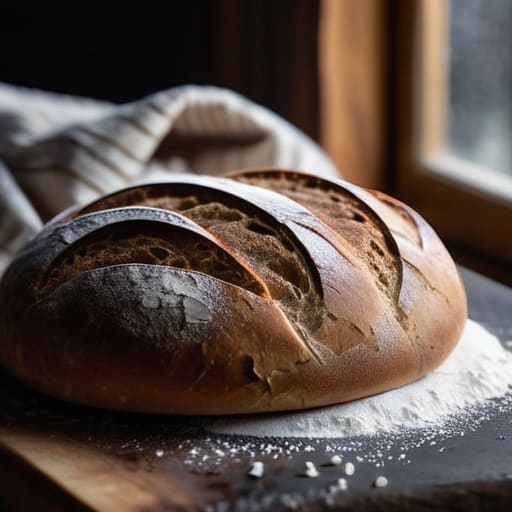
- Stop treating hydration like a fixed number. If your kitchen is drafty and cold, or if you’ve switched from a heavy bread flour to something more delicate, that 75% hydration is going to feel different every single time. You have to learn to feel the tension in the dough, not just trust the scale.
- Use your percentages to troubleshoot, not just to build. If your loaf comes out looking like a heavy brick, don’t go hunting for a new recipe; look at your salt or your water ratio. A tiny shift in the math changes the entire structural integrity of the crumb.
- Salt is never “extra”—it is a structural necessity. At 2%, salt doesn’t just make things taste better; it tightens the gluten and manages the fermentation. If you start eyeballing your salt because you’re in a hurry, you’ll find your dough behaving like a wild, unmanageable animal.
- Scaling is your best friend when you’re working in batches. Once you know your formula, you can decide if you want one massive boule or ten small rolls just by multiplying your base flour weight. It takes the guesswork out of the morning rush.
- Respect the “invisible” ingredients. Yeast and leaveners are often calculated as a percentage of the flour weight, too. If you’re scaling up a recipe for a crowd, don’t just double everything blindly; keep an eye on how much heat your friction is adding to the dough, or you’ll outrun your fermentation.
What to Carry Away from the Bench
Stop chasing the perfect recipe and start mastering the ratios; once you know your hydration percentage, you can adjust for a humid afternoon or a freezing kitchen without losing your mind.
Ditch the measuring cups for good, because flour is temperamental and packs down differently every single time you scoop it—if you aren’t using a scale, you aren’t actually baking, you’re just guessing.
Remember that math is just a tool to help you listen to the dough; the percentages tell you what the ingredients are doing, but your hands tell you when the work is actually done.
The Rhythm of the Dough
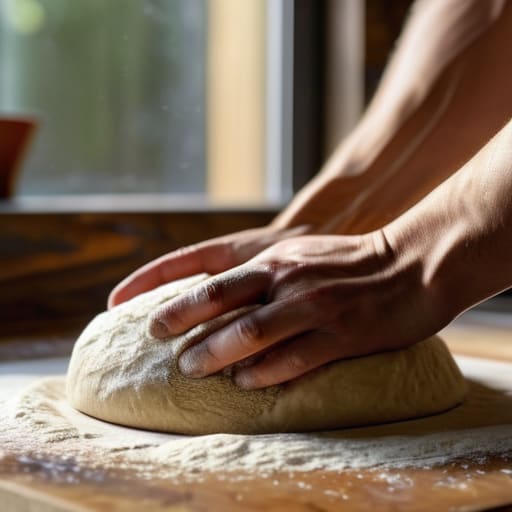
At the end of the day, mastering baker’s percentages isn’t about turning yourself into a walking calculator; it’s about gaining the freedom to stop guessing. Once you stop leaning on those fickle measuring cups and start seeing your ingredients as a mathematical relationship, the mystery of why one loaf rises like a cloud while the next sits like a brick starts to dissolve. You’ll understand that a 75% hydration dough isn’t just a number on a page, but a specific, tacky reality that requires a certain kind of touch. You’ll know how to adjust your salt, how to scale your starter, and most importantly, how to fix a mistake before it ever reaches the oven.
Don’t let the math intimidate you. I spent years staring at flour-dusted counters, learning that the most important part of any recipe isn’t the ink on the paper, but the intuition in your hands. The percentages give you the map, but you still have to walk the path. There will be days when the kitchen is too cold or your timing is off, and the dough won’t behave. When that happens, don’t blame the math—just look at your ratios, adjust your temperature, and try again. Baking is a conversation between you and the grain, and once you learn the language of weights, you finally start to listen.
Frequently Asked Questions
If I want to make a dough that's easier to handle for my first time, how much should I actually lower my hydration percentage?
If you’re feeling intimidated by a sticky mess, don’t go overboard. If your recipe calls for 75% hydration, drop it down to 65% or 68%. That 7% difference is the gap between a dough that fights you and one that behaves like a polite guest. It’ll feel firmer, easier to shape, and much less likely to leave your fingernails smelling of yeast for three days. Once you find your rhythm, we can talk about getting wet.
I understand the math, but how do I use these percentages to adjust a recipe when I realize my kitchen is freezing cold?
When the kitchen turns into a refrigerator, you don’t change the flour; you change the temperature. You need to adjust your water to compensate. If your dough is sluggish because it’s freezing, use warmer water to kickstart the yeast. I usually aim for a desired dough temperature of 25°C. If you’re starting with icy water, you’ll need to bump your hydration slightly or use a warmer liquid to hit that target. Don’t rush the fermentation; just give it the heat it’s asking for.
Does the baker's percentage change if I switch from a standard bread flour to something with a higher protein content?
The percentages themselves stay the same, but your hydration will likely need to move. If you switch to a high-protein flour, that flour is thirstier; it has more structure to build, but it demands more water to stay supple. If you keep your hydration at 70% with a stronger flour, the dough might feel tight and stubborn. Don’t be afraid to nudge that water up a few percent until the dough feels right under your hands.