I can still smell the singed sugar from my first decade in the bakery, a constant reminder of the times I thought a fancy new silicone mat or a high-tech convection setting would solve my problems. I used to spend hours scouring magazines, looking for some secret trick on how to stop a cake doming, thinking I just hadn’t bought the right pan or the most expensive thermometer. But after thirty-four years of pulling trays out of a wood-fired oven that had more personality than most people I know, I realized that all those expensive gadgets are just distractions from the physics of heat. A mountain in the middle of your sponge isn’t a mystery; it’s a conversation between your batter and your oven that you aren’t quite listening to yet.
I’m not going to sell you a specialized baking strip or a new way to measure your flour in cups—because we both know cups are liars. Instead, I’m going to tell you exactly what is happening inside that tin when the edges set too fast and the center panics. We are going to talk about temperature, leavening, and patience, the three things that actually matter. By the time we’re done, you won’t need a miracle; you’ll just need to understand how to respect the heat.
The Lie of the Dial Oven Temperature Calibration
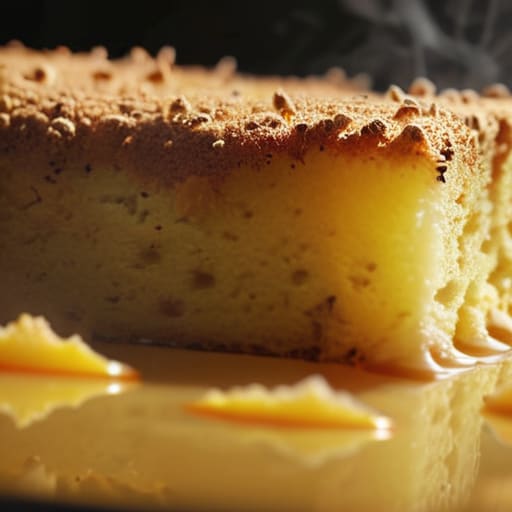
You can stare at that little digital number on your oven display all you like, but you’re essentially taking the word of a stranger who hasn’t been tested. Most home ovens are liars. They might claim they are sitting at a steady 175°C, but the reality is often a swinging pendulum of heat that leaves your edges parched and your center struggling to catch up. If your oven is running hot, the outside of the cake sets before the middle has finished rising, forcing the expanding center to burst through the crust like a slow-motion explosion. This is why you see those unsightly ridges.
To truly master oven temperature calibration, you need to stop trusting the dial and start using an independent oven thermometer. Place it right in the center of the rack and watch how it behaves. If the heat isn’t consistent, no amount of fancy cake leveling techniques will save a crumb that’s been cooked unevenly. You aren’t just looking for a number; you are looking for stability. When the heat is steady, the leavening happens at a predictable pace, allowing the cake to rise gracefully rather than fighting its own skin.
Baking Pan Heat Distribution and the Cruelest Edges
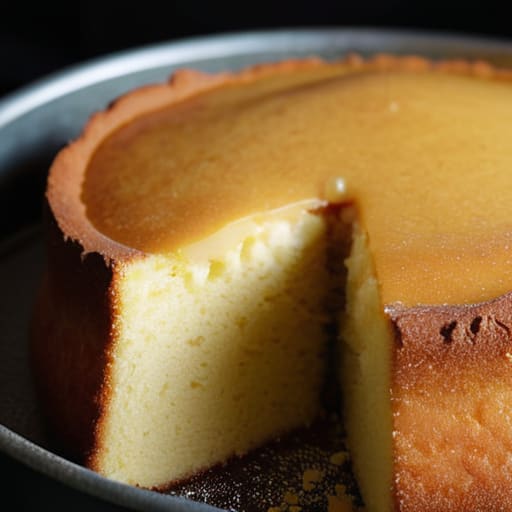
Even if your oven is behaving itself, you can still lose the battle at the edges of the pan. Most people forget that a metal tin is a heat conductor, not just a container. If you’re using a dark, heavy-duty pan, those sides are going to soak up heat far faster than the center of your batter. This creates a race: the edges set and crust over while the middle is still a liquid mess, desperately trying to expand. That pressure has nowhere to go but up, resulting in that unsightly, peaked mountain you’re trying to avoid.
To get better baking pan heat distribution, stop treating every tin like it’s the same. If you find your edges are always scorched while the center stays gummy, try using light-colored aluminum pans or even a cake strip—a damp cloth wrapped around the tin—to slow down that initial heat soak. It keeps the temperature more consistent across the whole surface, allowing the center to rise at the same rate as the perimeter. It’s about managing the heat, not just following the clock.
The Three Pillars of a Level Crumb: Beyond the Oven Walls
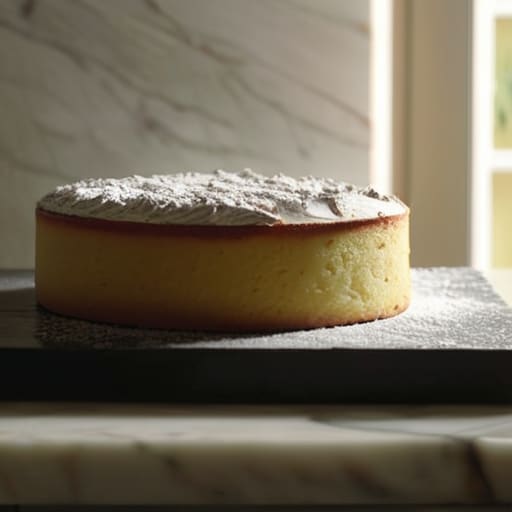
- Stop treating your batter like a liquid and start respecting its structure; if you over-beat those eggs or cream the butter until the air is frantic, you’re building a structural weakness that will inevitably buckle and peak under heat.
- Room temperature is not a suggestion, it is a requirement; a cold batter hitting a hot pan creates a thermal shock that forces the center to race upward while the edges are still trying to find their footing.
- Watch your leavening agents like a hawk because they are the most volatile players in the room; if your baking powder is old or you’ve measured it by a “teaspoon” rather than a precise weight, you’ll get a frantic, uneven lift that results in a mountain instead of a plateau.
- The weight of your batter matters more than the volume of your pan; if you’re filling a tin too high, the center simply has nowhere to go but up, and no amount of temperature control will save a cake that is suffocating under its own mass.
- Let the batter rest for a few minutes before it hits the heat; giving the flour a moment to fully hydrate ensures the crumb is stable enough to rise evenly rather than tearing and bulging in the middle.
Three Things to Remember Before You Close the Oven Door
Stop trusting the number on your dial; if your oven isn’t calibrated, you aren’t baking, you’re just guessing, and a guessing game is how you get a mountain in the middle of your pan.
Respect the edges of your tins by using even heat or insulating strips, because if the sides cook too fast, the center will panic and heave upward to try and keep up.
Watch your batter temperature as closely as your flour weight; a batter that’s too warm will rise too quickly and lose its structure before the heat can set it, leaving you with a dome instead of a level surface.
Stop Chasing the Perfect Surface
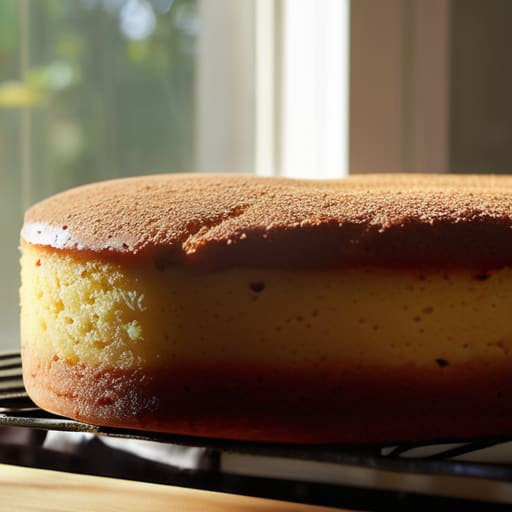
At the end of the day, a domed cake isn’t a mystery to be solved with a new cookbook; it is simply a conversation between your batter and your heat. If you have checked that your oven isn’t lying to you with a faulty dial, and you’ve ensured your pans aren’t scorching the edges before the center has even begun to wake up, you have done the heavy lifting. Remember that a dome is usually just a sign that the outside finished its job too quickly while the middle was still catching up. Adjust your temperature, respect the thermal mass of your pans, and stop treating the oven like a black box that happens to magic things into existence.
I spent three decades watching dough and batter behave in ways that no manual could ever predict, and if there is one thing I learned, it is that patience is your most reliable tool. Don’t let a lopsided sponge make you feel like a failure; let it be the teacher that tells you your kitchen was too hot or your timing was too hurried. Baking is a living, breathing thing, and sometimes it fights back. But once you stop looking for the perfect photo and start listening to what the heat is doing to your ingredients, you’ll find that the most beautiful cakes aren’t the ones that are mathematically flat, but the ones that were given the time and the temperature they actually deserved.
Frequently Asked Questions
If my oven temperature is actually correct, could the way I’m mixing the batter be causing that heavy center and high dome?
It absolutely could. If you’re over-mixing, you’re forcing too much air into that batter, and that air wants to escape upward the moment the heat hits it. You end up with a frantic, uneven rise that pushes a heavy mountain right out of the center. Or, if you’re under-mixing, the flour isn’t properly hydrated, leaving a dense, unformed core that can’t support itself. It’s about the structure, not just the heat.
Does the amount of leavening agent I use change how the cake rises, or is that just another symptom of the heat?
It’s a bit of both, but don’t go blaming the powder just yet. If you’ve over-leavened, you’re essentially building a structure that’s too ambitious for its own good; the gases expand so violently that the cell walls collapse, often resulting in that dreaded central crater. However, if your oven is running too hot, even the perfect amount of leavening will cause a frantic, uneven burst of energy that forces the center upward before the edges set. Check your heat first.
I’ve tried using parchment paper and different pans, but the center still arches; is there something about the weight of the batter itself I’m missing?
It’s not the weight of the batter, darling, it’s the strength of the structure. If your center is arching despite good pans, you’re likely dealing with too much leavening or over-creaming. You’ve trapped so much air in there that the cake is trying to inflate like a balloon before the proteins have a chance to set. Slow your mixing down; you want a stable crumb, not a frantic, gas-filled mountain.