I’ve spent thirty-four years watching people throw money at expensive, specialized silicone molds and fancy convection settings, convinced that a piece of gear is the secret to how to make a loaf cake evenly. It’s a nonsense idea. I remember one rainy Tuesday in the shop, a young lad came in with a beautiful-looking cake that had a massive, sunken crater right down the middle, looking more like a canyon than a dessert. He blamed his oven, then his flour, then his luck, but he hadn’t even considered the physics of the heat or how he’d treated his batter before it ever touched the tin.
I’m not here to sell you a new pan or a gadget that promises miracles. I want to talk to you about the things that actually matter: the weight of your ingredients, the temperature of your room, and why your oven is likely lying to you about its own heat. I’m going to show you how to master the rhythm of the bake so you get a consistent rise from end to end. We aren’t chasing a photograph; we are chasing a perfect, even crumb.
Mastering Baking Pan Heat Distribution and Thermal Physics
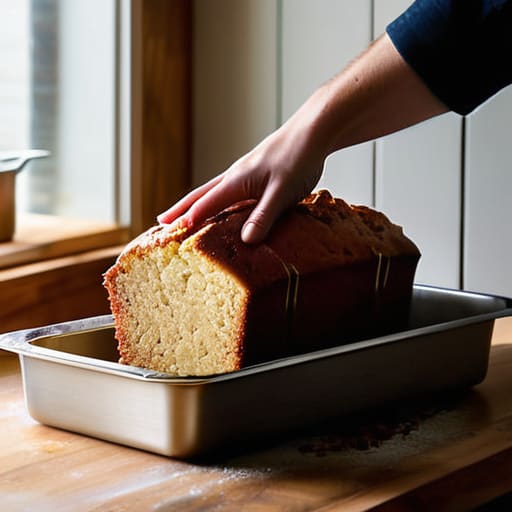
You can have the most precise scale in the kitchen, but if your pan is a heat-sink, your batter doesn’t stand a chance. I’ve seen too many people blame a recipe when the real culprit is a heavy, dark metal pan that grabs heat too aggressively. When the edges of your tin soak up more energy than the center, you get that dreaded uneven loaf cake rise where the sides are parched and the middle stays gummy. For a steady bake, I prefer lighter-colored aluminum; it lets the heat wrap around the batter more gently rather than punishing the perimeter immediately.
If you find yourself stuck in a cycle of loaf cake doming troubleshooting, look at your oven’s air circulation. A crowded oven is a cold oven, and uneven heat pockets will cause your cake to lurch upward in the center before the structure has even set. This is often the primary reason for preventing cake tops from cracking—if the top sets too quickly because the heat is hitting it directly, the expanding gases underneath will force a breach. Think of the pan as a vessel for heat, not a trap.
Preventing Uneven Loaf Cake Rise Through Patient Method
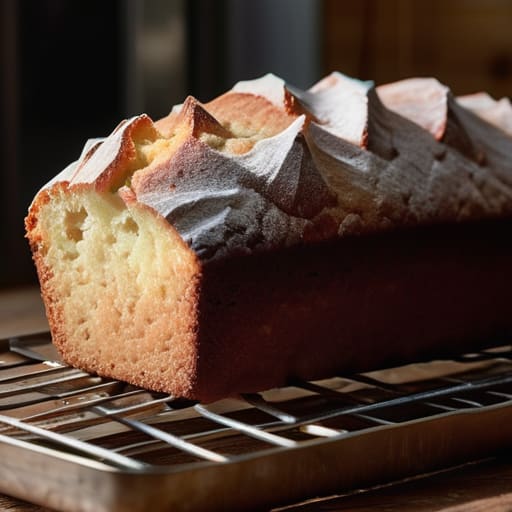
Now, let’s talk about the most common culprit I see: the rush. People treat a loaf cake like a sprint, but it’s a marathon. If you find yourself stuck in a cycle of loaf cake doming troubleshooting, stop looking at your ingredients and start looking at your clock. If you crank that oven up just to “speed things up,” you aren’t helping; you’re just sealing the crust before the center has even had a chance to wake up. This creates that awkward, peaked mountain in the middle while the sides stay pale and gummy.
When you are focused on preventing uneven loaf cake rise, you have to respect the chemistry of the expansion. A cake needs a steady, gentle climb. If the heat hits the edges too hard too fast, the structure sets prematurely, and the steam has nowhere to go but straight up through the center. This is often what leads to the frustration of preventing cake tops from cracking—you’re essentially forcing a delicate structure to explode through a premature crust. Give the batter time to settle and the heat time to penetrate deeply; patience is what ensures the crumb is as consistent as the rise.
The Little Things That Keep a Cake from Tilting
- Stop using cold eggs and butter straight from the fridge; if your emulsion breaks because the ingredients are fighting each other, your batter will never distribute heat evenly. Aim for everything to be at room temperature—around 21°C—so the fats and liquids marry properly before they ever see the oven.
- Sift your dry ingredients twice, and I mean it. If you have clumps of flour or unevenly distributed leavening agents, you’ll end up with pockets of dense, gummy cake in one corner and a hollow, airy mess in the other.
- Don’t be afraid of a little tap. Once your batter is in the tin, give it a firm thud on the counter to knock out those large air bubbles that love to hide at the bottom; those pockets are nothing but heat-traps that lead to an uneven bake.
- Level your batter with a spatula rather than just pouring it in. If you leave a mound in the center, the edges will bake and dry out long before the middle even begins to set, leaving you with a cratered top and a raw heart.
- Respect the rack position. If you’re placing your tin too close to the top element, you’re essentially scorching the crown while the base stays lukewarm; always use the middle rack to allow the air to circulate around the tin entirely.
The Baker’s Final Checklist
Stop trusting your oven’s dial blindly; a cheap thermostat can lie to you just as easily as a measuring cup, so use an external thermometer to ensure that heat is actually where it needs to be.
Respect the chemistry of your batter by avoiding the urge to over-mix or rush the process, because a cake that is forced to rise too quickly will almost always end up with a cracked, lopsided top.
Remember that evenness comes from stability—keep your pans centered and your kitchen temperature steady, because a sudden draft or a hot spot is usually the culprit behind a wonky bake.
The Final Proof
At the end of the day, getting an even bake isn’t about chasing some magical, perfect oven; it’s about understanding how heat travels through your pan and how much patience your batter requires. We’ve talked about why your pan choice matters and why rushing the rise is the quickest way to a lopsided mess. Remember, if your cake is sinking on one side or looks like a mountain range instead of a smooth plateau, don’t go looking for a new recipe. Look at your temperature stability and your handling of the batter. It’s almost always the way the heat is being distributed or the way the air bubbles are being knocked out of the mix that tells the real story.
I’ve spent more years than I care to count standing over a hot oven, and I’ve ruined plenty of cakes myself. Some days the kitchen is just too drafty, or the oven door stays open a second too long, and you have to live with the result. But that’s where the learning happens. Don’t let a wonky loaf discourage you from the next batch. Baking is a conversation between you, the ingredients, and the air around them. Keep your weights precise, keep your hands gentle, and most importantly, trust the process. A cake that isn’t perfectly symmetrical can still be the most delicious thing on the table if you gave it the time it deserved.
Frequently Asked Questions
If my cake is still wobbling in the middle but the edges are already dark and crusty, should I tent it with foil or just pull it out?
Don’t you dare pull that cake out yet. If it’s wobbling, the structure hasn’t set, and it’ll collapse into a sad, gummy mess the moment it hits the air. Grab some foil and tent it loosely—just enough to shield those dark edges from the direct heat. You need the middle to catch up without burning the outside. Keep it in, let the heat do its work, and trust the timer, not your eyes.
Does it actually matter if I use a light-colored metal tin instead of a dark one, or is that just something people say to make it sound complicated?
It matters immensely, and it isn’t just shop talk. Dark tins absorb heat aggressively; they’re like a sponge for radiation, which means your cake’s edges will cook and set long before the middle even begins to wake up. If you want a pale, even crumb, use light-colored aluminum. If you use dark metal, you’re choosing a thicker, darker crust. It’s not about complexity; it’s about how much heat you’re forcing into the batter.
I noticed my loaf always seems to dome too much in the center and crack at the top; is that a temperature issue or am I overworking the batter?
That dome and crack? It’s rarely the batter itself, but how the heat is fighting it. If you’re overworking the batter, you’re trapping too much air, which makes it want to burst upward like a volcano. But more likely, your oven is running too hot at the top, setting the crust before the center has finished its business. Lower your temperature by ten degrees and give it more time; let the heat soak in, not just strike.