I spent thirty-four years watching people walk into my bakery looking for perfection in a box, and I see the same thing happening online with every “complete guide to jam making” that claims you need a laboratory of specialized pectin powders and expensive copper preserves pans to succeed. It’s nonsense. Most of these guides treat fruit like a chemistry experiment rather than a living thing, and they’ll leave you staring at a runny, syrupy mess while telling you that you simply didn’t follow the instructions. The truth is, your jam didn’t fail because you lacked a fancy gadget; it failed because you didn’t respect the relationship between heat and sugar, or you tried to force the fruit to set before it had truly surrendered its soul to the pot.
I’m not here to sell you on expensive additives or complicated gadgets that will only gather dust in your pantry. Instead, I’m going to give you the honest, unvarnished truth about how fruit actually behaves when it meets a boiling cauldron. We are going to talk about fruit ratios, the precise way to judge a set without a thermometer, and why patience is your most vital ingredient. I’ll show you how to listen to the bubbles and feel the change in the steam, so you can stop guessing and start making jam that actually tastes like the season it came from.
The Sacred Sugar to Fruit Ratio
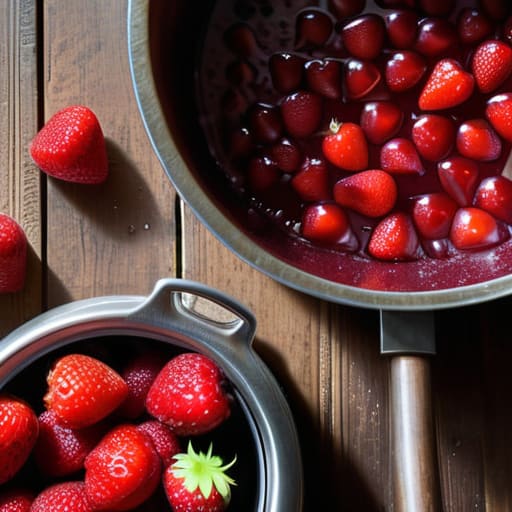
Now, listen closely, because this is where most people lose their way before they’ve even turned on the stove. They treat sugar like it’s just a sweetener, a way to mask fruit that’s gone a bit soft, but in the world of preserves, sugar is a structural necessity. It isn’t just about taste; it’s about the chemistry of the set. If you don’t respect the sugar to fruit ratio, you aren’t making jam—you’re making a delicious, runny syrup that will never hold its shape. I always tell my neighbors that sugar is what holds the water in place, preventing that dreaded syrupy mess.
You’ll see all sorts of fancy charts, but I prefer to think of it as a balance of weight. For every kilogram of fruit, you need to decide how much sweetness you’re chasing, but remember that sugar also works in tandem with natural fruit pectin sources to create that beautiful, translucent wobble. If you go too heavy on the sugar, you’ll end up with something cloying that tastes like a confectioner’s shop; go too light, and you’ll find yourself staring at a pot of fruit soup. It’s a delicate dance, and it requires a steady hand.
Finding Natural Fruit Pectin Sources
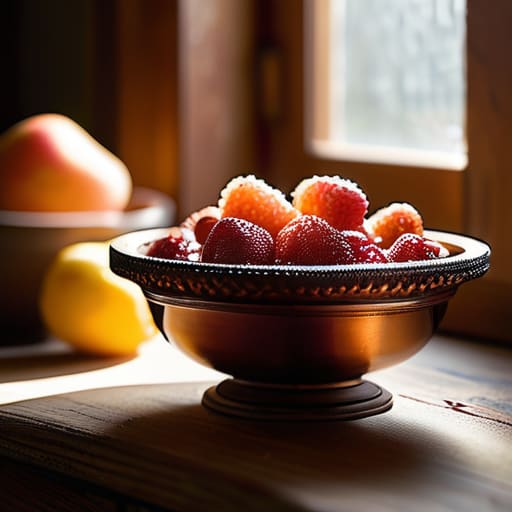
Now, if you’re looking for that perfect, spreadable set without reaching for a box of store-bought powder, you have to start looking at the fruit itself. Not all fruit is created equal in the eyes of a preserve. Some, like strawberries or peaches, are quite temperamental and possess very little of their own structure. If you rely solely on those, you’ll find yourself staring at a bowl of delicious fruit soup rather than jam. To get a proper set, you need to understand natural fruit pectin sources—the invisible glue that holds the fruit and sugar together.
I always tell my neighbors that if you want a sturdy jam, you should look to the citrus or the stone fruits. Adding a bit of lemon juice or even some peels isn’t just about flavor; it’s about acidification in preserves, which helps the pectin chains bond and tighten up. If you are working with low-pectin berries, I often suggest tossing in a few quarters of green apple or some quince. They act as a natural stabilizer, providing the backbone the recipe needs without masking the true character of your seasonal harvest.
The Small Details That Make or Break the Jar
- Stop trusting your eyes and start trusting the temperature; if you aren’t using a thermometer to hit that precise setting point, you are merely guessing, and guessing is a quick way to end up with a jar of fruit soup instead of jam.
- Respect the fruit’s integrity by not over-mashing; if you want to taste the summer, you have to leave some of the fruit’s character intact rather than turning everything into a uniform, lifeless purée.
- Watch your heat like a hawk, because if you turn it up too high just to “speed things along,” you’ll scorch the bottom of the pot and ruin the entire batch with a burnt aftertaste that no amount of sugar can hide.
- Give the pectin a moment to breathe; once you’ve reached the boil, don’t immediately start testing the set, but let the heat work its magic for a few minutes so the molecules can actually find one another.
- Sterilize your jars with more than just a quick rinse; if there is even a hint of moisture or dust left in those jars, your hard work will succumb to mold before the season is out, and that is a waste of good fruit and even better time.
Lessons from the Copper Pot
Trust your senses over your stopwatch; jam is finished when it reaches the point of surrender, not when a timer dings.
Respect the sugar’s role as much as the fruit’s, for it is the preservative that holds the summer’s heat in place.
Never rush the boil, because if you try to force the set with high heat, you’ll end up with a sticky, burnt mess instead of a bright, clean preserve.
The Jar is Only the Beginning
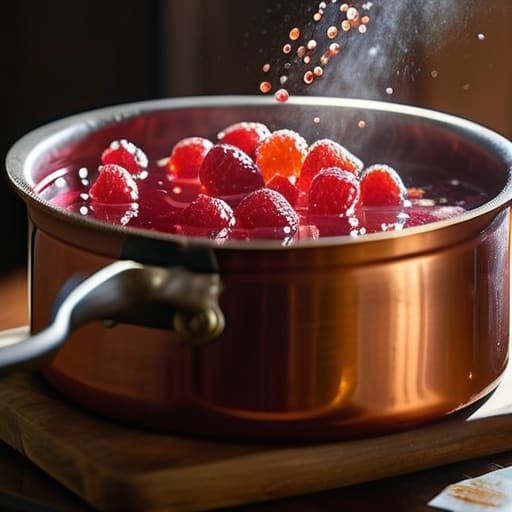
At the end of the day, making jam is a conversation between your fruit, your sugar, and your patience. You’ve learned to respect the pectin, you’ve mastered the ratios, and you’ve understood that the heat is what coaxes the life out of the fruit. If your first batch is a bit too runny or a bit too set, don’t go looking for a new recipe to blame. Instead, look at your stove—was the heat too aggressive, or did you pull it off the flame before the fruit had truly surrendered its essence? Remember that every jar is a record of the temperature in your kitchen and the steadiness of your hand on the spoon.
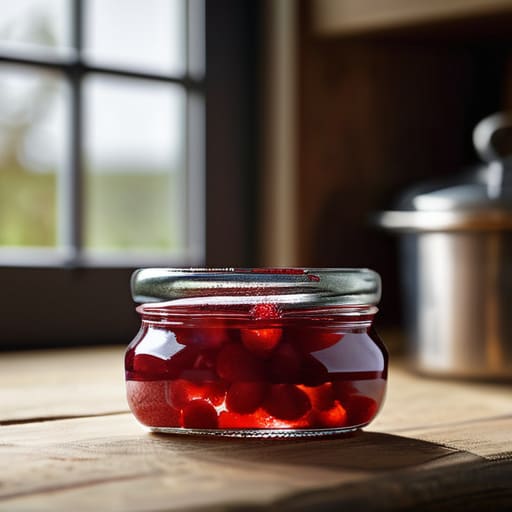
There is a particular kind of quiet joy in seeing a row of glass jars sitting on a windowsill, catching the afternoon light. It isn’t just about preserving food; it’s about capturing a moment in time—the peak of a strawberry season or the very last of the summer plums—and holding onto it. Don’t be afraid to get your hands sticky or to fail a batch now and then. Those little mistakes are just how you learn to read the bubbles and understand the boil. Put your apron aside, pour yourself a cup of tea, and remember that the best things in life, much like a good preserve, cannot be rushed.
Frequently Asked Questions
My jam is still runny even though I followed the sugar ratio; did I miss a temperature cue or just not let it cook long enough?
It isn’t the sugar’s fault; you likely just didn’t let the fruit surrender its heat. If your ratio was correct, you’ve missed the set point. Don’t trust a timer—clocks don’t know how much moisture is left in your pot. You need to watch for the “sheeting” stage. Lift your spoon; if the jam falls in heavy, slow folds rather than a watery trickle, it’s ready. If it’s still runny, give it heat and time.
Can I use frozen fruit for a good preserve, or will the extra moisture from the thaw ruin the set?
You can certainly use frozen fruit, but don’t go in expecting it to behave like fresh berries straight from the bush. When that fruit thaws, it surrenders its juices all at once, which shifts your hydration levels. If you’re working with a 50% fruit-to-sugar ratio, that extra liquid matters. Just weigh your fruit after it has thawed and drained slightly, or adjust your pectin accordingly. Don’t fight the moisture; just account for it.
How do I know when the jam has actually reached the setting point without relying on a thermometer every single second?
You don’t need a thermometer to tell you when the fruit has surrendered; you need your eyes and a little bit of patience. If you want to skip the constant checking, use the cold plate test. Drop a small spoonful onto a chilled saucer. If it holds its shape and wrinkles slightly when you push it with your finger, it’s ready. If it runs like syrup, give it another five minutes of heat.