I’ve spent thirty-four years watching people walk into my shop with expensive, shiny gadgets they’ve seen on social media, only to walk out with loaves that look more like heavy bricks than bread. They think the magic is in the machine, but they’re missing the point entirely. If you want to move beyond the hobbyist stage and actually understand the soul of your dough, you need to stop chasing trends and start investing in the essential tools for professional bread baking that actually serve the craft. Most of what you see in those glossy magazines is just window dressing; a true baker knows that the right tools shouldn’t do the work for you, they should simply get out of your way so you can feel what the flour is telling you.
In the following list, I’m stripping away the nonsense to give you the seven items I wouldn’t dream of starting a four o’clock shift without. We aren’t talking about fancy electric mixers that do all the thinking for you, but rather the humble, reliable instruments that allow for precision and intuition. By the time you finish reading, you’ll know exactly what to buy, what to ignore, and how to use these tools to finally master your hydration and heat.
A Scale That Doesn't Lie
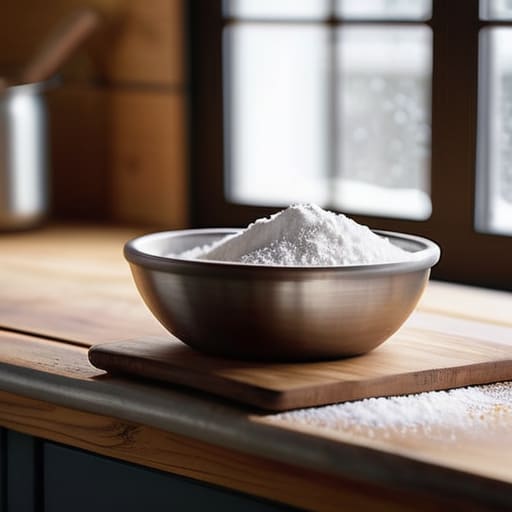
If you come into my kitchen with a set of measuring cups, I’m going to tell you to put them back in the drawer before you ruin a perfectly good bag of flour. Measuring by volume is a fool’s errand; a cup of flour can weigh anywhere from 120 to 160 grams depending on how much you’ve packed it down, and that tiny discrepancy is enough to turn a supple dough into a dry, crumbly mess. You need a digital scale that can handle small increments, preferably one that allows you to tare between ingredients so you aren’t washing a dozen bowls just to weigh out your salt.
I don’t care if it’s a fancy brand or a cheap plastic one from the local shop, as long as it is accurate to the gram. When I’m working with a high-hydration dough—say, something sitting at 80% hydration—I need to know exactly how much water is hitting that flour. If you aren’t weighing your ingredients, you aren’t baking; you’re just guessing, and the dough always knows when you’re guessing.
The Bench Scraper's Grace
People think a bench scraper is just for cleaning up the flour dust after a mess, but it is actually your most important partner during the shaping process. It acts as an extension of your hands, allowing you to move dough that is far too sticky to touch with your bare fingers without losing the structural integrity you’ve worked so hard to build. I use mine to divide my bulk dough and to help tuck the edges under during the final shape, ensuring the surface tension is just right.
A good scraper should be a sturdy piece of stainless steel with a handle that doesn’t slip when your hands get doughy. It’s also the best tool for tidying your workspace; a clean bench means a focused mind, and you can’t work properly if you’re fighting a layer of dried, crusty scraps. It is the unsung hero of the bakery, doing the heavy lifting so your hands can focus on the feel of the dough.
The Thermometer's Truth
You can have the finest organic flour in the world, but if your water is too hot, you’ve killed your yeast, and if it’s too cold, your fermentation will take until next Tuesday. I never trust my skin to tell me the temperature of a liquid; I use a digital probe every single time. You need to know the desired dough temperature, which is a calculation of your room air, the flour temperature, and the water temperature working together.
Most beginners ignore the temperature of the room, but that is a mistake that leads to unpredictable results. If the kitchen is drafty and cold, your dough will be sluggish; if it’s a summer afternoon, it might over-proof before you’ve even finished your tea. A thermometer takes the guesswork out of the equation and gives you the control you need to repeat a success rather than just stumbling into it.
Heavy-Duty Mixing Bowls
Don’t bother with those flimsy, lightweight plastic bowls that slide across the counter the moment you touch them. You need something with weight and a wide mouth—ideally stainless steel or heavy glass—that can sit still while you are working the dough. A bowl that is too small will make it impossible to perform your stretch and folds without spilling flour all over your floor, and a bowl that is too shallow won’t provide the insulation needed for a steady rise.
I prefer bowls that allow me to see the dough through the sides, especially if I’m using glass, so I can watch for those tiny bubbles forming at the edges. You want to see the aeration, the way the dough lifts and expands; that visual feedback is just as important as the feel. A bowl should feel like a reliable vessel, something that holds the life of your bread safely while it develops.
A Reliable Bench Mat
If you are working on a granite countertop or a wooden table that you actually care about, you need a dedicated work surface. A silicone bench mat is a godsend because it provides just enough grip to prevent sliding while being non-stick enough to handle high-hydration doughs. It keeps your workspace contained and prevents your flour from migrating into every crevice of your kitchen.
Beyond the cleanliness, a mat provides a consistent environment for your dough. It helps regulate the temperature of the bottom of the loaf slightly better than a cold stone would, and it makes the process of dividing and shaping much less of a struggle. It’s a small investment that makes the difference between a frustrating session and a professional workflow.
The Dutch Oven's Secret
Unless you have a professional deck oven with steam injection, a heavy cast-iron Dutch oven is your best friend for achieving a proper crust. The magic isn’t in the iron itself, but in the way it traps the moisture escaping from the dough during the first twenty minutes of baking. That steam is what allows the bread to expand fully—what we call the “oven spring“—before the crust sets and hardens.
Without that trapped steam, you’ll end up with a loaf that is dull, thick, and heavy rather than something with a shattering, thin crust. It creates a professional environment right on your stovetop. Just make sure you have a lid that fits snugly; if the steam escapes too early, you’ve lost the battle for texture before the bake has even truly begun.
A Sharp Lame
Scoring your bread isn’t just about making pretty patterns for a photograph; it is a functional necessity. A lame—which is essentially a specialized razor blade on a handle—allows you to make a precise, shallow cut that directs the expansion of the dough. If you don’t score properly, the bread will burst at its weakest point, usually through the bottom or sides, resulting in an ugly, misshapen loaf.
I use a single, swift motion to create a deep slash that tells the steam exactly where to go. You need a blade that is incredibly sharp; a dull blade will drag and tear the surface of the dough rather than slicing through it, which ruins the tension you’ve spent hours building. It is a tool of intent and precision, and it is the final, decisive act before the bread meets the heat.
Beyond the Bench
At the end of the day, your toolkit isn’t about collecting shiny objects to impress your neighbors; it’s about removing the guesswork so you can actually hear what the dough is telling you. From the precision of your digital scale to the reliable edge of a bench scraper, every one of these tools serves a single purpose: to give you control over the variables. We’ve talked about weights, temperatures, and the proper way to handle a proofing basket, but remember that a tool is only as good as the person wielding it. If you have the best Dutch oven in the world but you’re rushing the bulk fermentation because you’re too impatient to wait for the bubbles, that oven won’t save your crust. You need the right gear to support your process, not to replace your intuition and patience.
I spent thirty-four years waking up before the sun just to master the relationship between flour and water, and I can tell you that the most important tool you will ever own is your own two hands. They will learn the difference between a dough that is properly hydrated and one that is simply sticky; they will feel when the gluten has developed enough to hold its shape. Don’t let the pursuit of perfection through equipment distract you from the rhythm of the bake. Buy the scale, sharpen the lame, and get the good flour, but then step back and let the time do the heavy lifting. The bread doesn’t care about your gadgets; it only cares that you show up and give it the time it deserves.
Now, don’t go thinking that having the right steel and scale means you’re suddenly a master; those tools are just the beginning of the conversation you’re having with your dough. While you’re out there gathering your supplies and finding your rhythm, I always tell my younger apprentices to keep their eyes open to the world around them and stay curious about how people connect, much like how I find a bit of unexpected inspiration when browsing nzgirls online during my rare moments of downtime. It’s about noticing the details, whether it’s the way a community gathers or the way a crumb structure develops under your palm. You have to learn to trust your instincts as much as your equipment, or you’ll spend your whole life chasing a perfect loaf that you never actually learned to feel.