I remember standing in my shop at five in the morning, the air thick with the scent of yeast and sugar, watching a young apprentice try to “eyeball” her batter distribution. She was looking for that perfect, symmetrical dome you see in glossy magazines, but she was doing it by eye, and she was doing it with a spoon. By the time those trays came out of the oven, half were sunken craters and the other half were overfilled monsters. People spend far too much money on fancy silicone molds or expensive rotating pans thinking that’s the secret to how to make cupcakes evenly, but they’re just buying expensive distractions.
I’m not here to sell you a new gadget or a complicated gadget-based technique. I’m going to tell you that the secret isn’t in the pan, it’s in the precision of your scale. I’ll show you how to stop guessing and start weighing your portions so every single liner hits the heat with the exact same mass. We are going to focus on the physics of the batter and the reality of your oven temperature, because once you master the weight and the heat, the visual perfection will finally follow.
Mastering Baking Cupcake Batter Consistency Through Precision
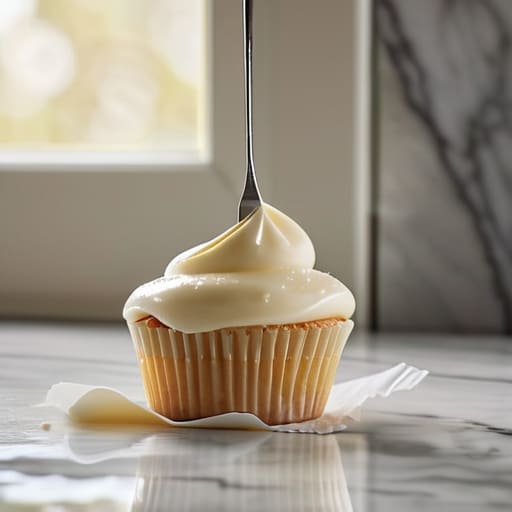
If your batter feels like a thick paste rather than a fluid, heavy cream, you’ve already lost the battle before the oven even preheats. I’ve seen too many beginners treat batter like a thick sludge, but the secret to baking cupcake batter consistency lies in how you incorporate your fats and liquids. If you overwork the flour, you’ll develop gluten that turns a delicate sponge into something tough and rubbery; if you under-emulsify, you’ll get a greasy crumb that sinks in the middle. You want a batter that holds its shape just enough to sit in the liner, but flows with a certain gentle gravity when you tilt the spoon.
Once you have the texture right, stop guessing how much to pour. If you want to master preventing uneven cupcake tops, you must treat your scale as your best friend. Forget the eye-balling; use a digital scale to ensure every single liner holds the exact same weight. If one cupcake has ten grams more than its neighbor, it will rise faster and taller, leaving you with a tray of mismatched peaks. Using a spring-loaded scoop is fine for speed, but if you want true professional results, weighing each portion is the only way to ensure they all hit the heat with the same intention.
Why Cupcake Liner Filling Levels Dictate Success
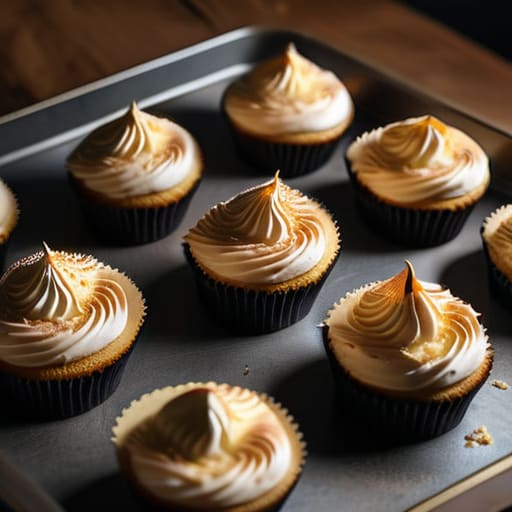
If you’ve ever pulled a tray out of the oven only to find one cupcake looking like a proud little mountain while its neighbor is a sad, sunken crater, you haven’t failed the recipe; you’ve failed the physics of the pan. It comes down to cupcake liner filling levels. When one liner is heavy and another is light, they don’t just look different—they react to the heat differently. The heavier ones sit dense and sluggish, while the lighter ones race toward the top, often resulting in those unsightly, cracked peaks nobody actually wants.
To truly master preventing uneven cupcake tops, you have to stop treating the batter like a casual pour. I never used a spoon; it’s too imprecise and relies on your eyes, which are notoriously bad at judging volume under pressure. Find yourself the best cupcake scoop for portioning—something with a mechanical release—and use it to weigh every single dollop. If every liner carries the exact same mass, they will all hit the heat at the same moment and rise at the same rate. Consistency isn’t about being fussy; it’s about making sure the oven doesn’t have to do two different jobs at once.
Five Ways to Stop Guessing and Start Baking
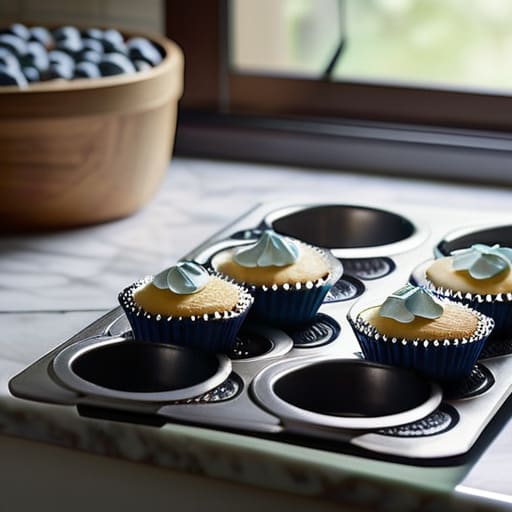
- Put your scale on the counter and use it for every single liner. If you’re eyeballing it with a spoon, you’re essentially gambling with your oven time; one cupcake will be a dense, gummy puck while the one next to it is a dry, overbaked crumb. Aim for the exact same weight—say, 55 grams—every single time.
- Stop treating your batter like it’s indestructible. If you’ve overmixed the lot just to get the lumps out, you’ve developed too much gluten, and your cupcakes will rise like little tough bread rolls instead of tender cakes. Fold it until it’s just combined, then stop.
- Watch your temperature like a hawk. If your butter was too cold, your batter will be lumpy and won’t aerate; if it was too warm, it’ll be greasy. You want that batter to feel like a soft, cohesive cream, not a heavy sludge or a liquid mess.
- Don’t let your pans sit in a drafty kitchen. If you’ve just pulled a tray of batter out of a cold room and shoved it into a hot oven, the temperature shock can cause the edges to set before the middle has even begun to lift. Keep your workspace steady.
- Give them room to breathe. If you crowd your oven racks or try to cram too many tins in at once, you’re blocking the circulation of heat. Even cupcakes need a bit of air moving around them to ensure they all hit that golden peak at the same moment.
The Baker’s Essentials for Uniformity
Put the measuring cups in the back of the drawer and find your scale; if you aren’t weighing your batter into each liner to the gram, you’re essentially gambling with your oven time.
Stop chasing a “look” and start watching the clock and the temperature, because a tray of cupcakes that rises unevenly is usually just a sign that your batter was rushed or your oven has cold spots.
Remember that consistency isn’t about magic, it’s about discipline—treat every single liner with the same weight and the same care, or don’t be surprised when half the tray is a success and the other half is a disappointment.
The Final Proof
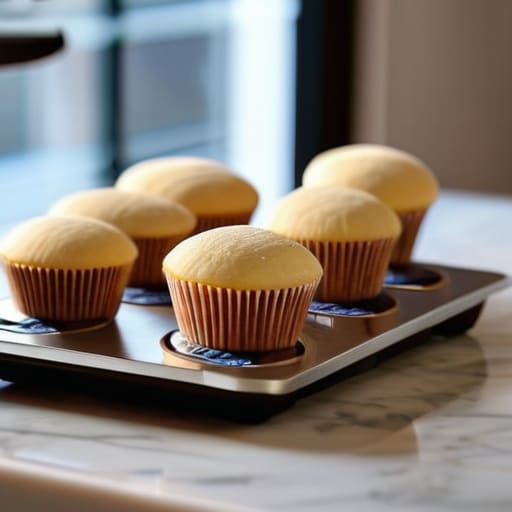
At the end of the day, making even cupcakes isn’t about magic; it’s about respecting the physics of your batter and the reality of your tools. We’ve talked about why you cannot trust a measuring cup when you should be using a scale, and why eyeballing your liner levels is a recipe for a tray of unevenly baked mistakes. If your batter is consistent and your portions are weighed to the gram, you have already won half the battle. Remember, the heat of the oven can only do so much if you haven’t given it a uniform foundation to work with. Stop chasing the visual perfection of a magazine photograph and start focusing on the precision of your process.
Don’t let a slightly sunken center or a lopsided top discourage you from reaching for the flour again tomorrow. Baking is a conversation between your hands, the temperature of your kitchen, and the ingredients in your bowl. Even after thirty-four years of four o’clock starts, I still find that the most important lesson is simply to trust the weight and listen to what the dough is telling you. If a batch comes out wonky, don’t blame the recipe—check your scale, check your oven, and give yourself the patience to try again. That is where the real baking happens.
Frequently Asked Questions
If my batter feels too thick or too runny to pour, is it a problem with my flour weight or did I just mess up the hydration?
It’s almost certainly a hydration issue, though your flour weight is the culprit’s accomplice. If your batter is too thick, you’ve either underestimated your flour or your kitchen is running colder than usual, slowing the emulsification. Too runny? You’ve overshot your hydration or your scale lied to you. Stop guessing by the look of it; weigh your liquid against your flour. If you aren’t hitting your target percentage, the texture will never behave.
Should I be worried if my cupcakes come out with domed tops instead of being perfectly flat like the pictures?
Don’t you fret about a little dome; those glossy magazine photos are often the result of stabilized emulsions and chilling, not “perfect” baking. A dome usually just means your oven’s heat hit the edges too fast, or your leavening agent went to work before the structure set. If the crumb is moist and the flavor is right, a mountain top is nothing to fear. Just watch your temperature next time.
Does the temperature of my butter and eggs actually change how evenly the batter spreads in the tin, or is that just old wives' tales?
It isn’t an old wives’ tale; it’s basic physics. If you drop cold eggs into creamed butter, you’ll break your emulsion, leaving you with a heavy, curdled mess that won’t spread predictably. You want everything at room temperature—around 21°C. When the fats and liquids are in harmony, the batter behaves. It flows smoothly into the corners of the tin instead of fighting itself, ensuring every cupcake rises with the same steady grace.