I spent thirty-four years watching people treat pastry like a high-stakes chemistry experiment, sweating over every millimeter of dough as if a single degree of warmth would ruin their lives. They buy those expensive, specialized pastry cutters and specialized marble slabs, convinced that the secret to a good tart lies in the gear rather than the hands. But if you’re sitting there wondering how rough puff compares to the traditional, labor-intensive method, let me tell you something: most of that fuss is just exhaustion disguised as technique. People get so caught up in the pursuit of textbook, razor-thin lamination that they forget we actually want to eat the thing, not just admire its geometry.
I’m not here to give you a lecture on perfection or sell you a fancy kit you don’t need. Instead, I’m going to tell you exactly what happens when you stop trying to control the butter and start working with it. We’ll look at the structural differences, the hydration levels, and most importantly, how to tell when your dough is ready just by the feel under your palms. I’ll show you why a bit of intentional messiness is often the difference between a heavy, leaden crust and something truly flaky.
Rough Puff vs Puff Pastry Texture the Soul of the Flake
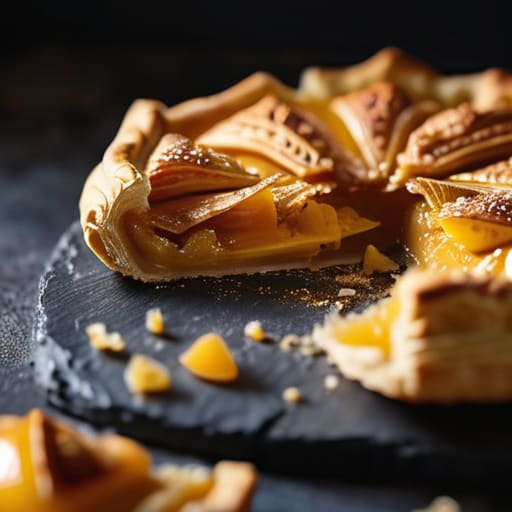
If you’re looking for those textbook, paper-thin layers that shatter like glass the moment a fork touches them, you’re looking for traditional puff pastry. That requires a level of obsessive, rhythmic folding that most people—and frankly, most mornings—simply don’t have the temperament for. The difference between puff and rough puff isn’t just about how much time you spend at the bench; it’s about the architecture of the crumb. Traditional puff is a feat of engineering, aiming for hundreds of microscopic, uniform sheets. Rough puff, however, is much more forgiving. It’s the baker’s way of saying, “I want flakes, not a math problem.”
When we talk about rough puff vs puff pastry texture, we’re really talking about the soul of the bite. Because we aren’t meticulously squaring off every single bit of fat, you end up with larger, more irregular pockets of air. It results in a crumb that is deeply, unapologetically shattery and rustic. While some might call it a shortcut, I call it a choice. You aren’t aiming for the delicate precision of a French patisserie; you’re aiming for a pastry that holds its own against a heavy savory filling or a tart, jammy fruit.
The Difference Between Puff and Rough Puff in Practice
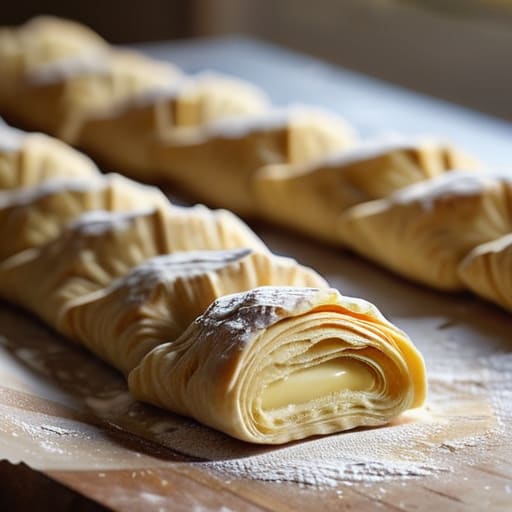
When you actually stand at the bench, the difference isn’t just about how much time you spend; it’s about the temperament of the dough. With traditional puff pastry, you are performing a sort of delicate surgery, trying to keep those butter sheets and flour layers perfectly distinct and uniform. It’s a discipline of precision. But with rough puff, you aren’t fighting for mathematical perfection. You’re looking for irregularity. You want chunks of butter—about 1.5cm cubes—to remain intact so they create their own little steam pockets as they melt. It’s one of those homemade pastry shortcut tips that actually yields a better result for a rustic tart or a savory turnover than the textbook method ever could.
If you’re comparing shortcrust vs rough puff pastry, remember that shortcrust is about a sandy, tender crumb, whereas rough puff is about lift. Because you aren’t spending an hour folding and chilling to achieve microscopic lamination, the layers are thicker and more substantial. It’s less about a delicate, shattered glass flake and more about a hearty, buttery crunch that can actually stand up to a heavy filling without turning into a soggy mess.
Five Truths About the Rough Puff Temperament

- Stop chasing the perfect, razor-thin lamination. If you try to make rough puff look like a professional mille-feuille, you’re going to end up frustrated and with a melted mess. Rough puff is meant to be chunky and irregular; those larger, uneven shards of butter are exactly what create that satisfying, rustic crunch that standard puff pastry lacks.
- Temperature is your only real boss here. Because rough puff relies on larger, hand-cut pieces of fat rather than a disciplined, folded sheet, those bits of butter are much more prone to disappearing into the flour if your kitchen is too warm. If the dough feels tacky or soft, put it in the fridge immediately—don’t try to “work through it,” or you’ll just end up with a greasy biscuit instead of a flaky pastry.
- Forget the scales for a moment and use your hands to feel the hydration. While I always insist on weights for my ratios, a rough puff dough should feel slightly more substantial and less “supple” than a standard puff. If it feels like it’s slipping through your fingers, you’ve likely incorporated too much water or worked the fat too much; it should feel like a piece of cold, damp clay.
- Don’t be afraid of the “rough” part. In standard puff, we spend ages trying to keep the butter and dough at the exact same consistency to ensure even layers. With rough puff, the magic is in the discrepancy. You want those distinct pockets of fat. If you over-mix it to make it smooth, you’ve effectively killed the very thing that makes rough puff worth making in the first place.
- Use it for the right purpose. If you are making a delicate, high-end tartlet that needs to stand up to a heavy custard, you might want the precision of true puff. But if you’re making a savory meat pie or a rustic fruit galette, rough puff is your best friend. It’s sturdier, it’s faster, and it has a much more honest, hearty crumb that doesn’t feel like it’s going to shatter into dust the moment you touch it.
The Baker’s Bottom Line
Forget the textbook definitions; rough puff is about intentional imperfection, trading those razor-thin, professional layers for a hearty, rustic flake that actually holds up under a heavy filling.
Success isn’t found in the measurements alone, but in your ability to respect the temperature—if your butter turns to grease before it hits the oven, you aren’t making pastry, you’re making shortbread.
Don’t let the lack of precision scare you, but do remember that while rough puff is more forgiving of a heavy hand, it still demands you watch the dough, not the clock.
The Baker’s Choice
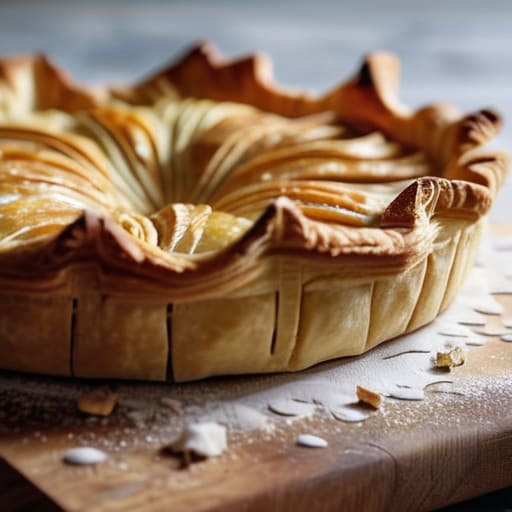
At the end of the day, choosing between these two isn’t about which one is “better,” but about what you need from your kitchen that afternoon. If you have the patience for precise lamination and a kitchen that stays cool, go for the classic puff; it’s a technical triumph. But if you’re staring at a countertop of cold butter and a ticking clock, reach for the rough puff. You’ll get those glorious, uneven shards of pastry and a rustic, shattering crunch that a perfectly uniform layer simply can’t mimic. Just remember that whether you’re working with 25% or 50% fat, the goal remains the same: keep that butter cold and don’t let the dough get warm under your palms.
Don’t let the fear of a “messy” looking dough stop you from sliding a tray into the oven. I’ve seen many a beginner obsess over making their pastry look like a textbook illustration, only to end up with a heavy, greasy slab because they worked the dough too much. Baking is a conversation between your hands and the ingredients, and sometimes, the most beautiful things are the ones that look a little bit wild. So, stop measuring your success by how straight your lines are, and start measuring it by the sound of that first, flaky bite.
Frequently Asked Questions
If I'm using a rough puff for a savory pie, does the higher hydration make it too difficult to handle without losing those distinct layers?
Listen, a 55% hydration dough is a different beast than a stiff pastry, but that’s exactly where the magic happens for a savory pie. Don’t fear the moisture; fear the heat. If your hands are warm, you’ll melt those butter chunks before they even hit the oven. Keep the dough cool and handle it with a light touch. If you’re too aggressive, you’ll just end up with a heavy, greasy crust instead of those glorious, shattered layers.
Can I actually use rough puff for something delicate like a mille-feuille, or is it strictly for rustic, heavy-duty bakes?
If you’re aiming for a mille-feuille that shatters like fine glass, rough puff will likely disappoint you. It’s too sturdy, too honest. For something that delicate, you need the obsessive, razor-thin lamination of true puff pastry. But don’t let that discourage you; if you’re making a tart or a savory turnover, rough puff is your best friend. It’s about matching the dough’s temperament to the dish’s purpose. Don’t force a rustic soul into a delicate body.
Since I can't rely on perfectly even lamination, how do I know if my oven temperature is high enough to actually lift the dough before the butter leaks out?
If you see a puddle of yellow grease on your baking sheet instead of a golden, risen crust, your oven was too cool or you took too long to get it in. You want that initial blast of heat to turn the water in the butter into steam immediately; that’s what forces the layers apart. If the dough feels limp and heavy rather than springy and aerated, your temperature was too low to catch the lift.