I spent thirty-four years standing before a wood-fired oven that didn’t have a single digital sensor to tell me what was happening, and if there is one thing those years taught me, it is that you cannot trust a timer. People spend a fortune on expensive instant-read thermometers and fancy apps, yet they still pull a loaf out of the oven only to find it’s gummy in the middle or as dry as a bone. If you are relying solely on a clock to figure out how to tell when something is baked, you aren’t baking; you are just following instructions and hoping for the best.
I’m not here to give you a list of gadget-heavy hacks or tell you to stare at a photograph of a golden crust. Instead, I want to teach you how to use your own senses—the way a real baker does. We are going to talk about the sound of a hollow crust, the specific resistance of a sponge under your thumb, and the way the air in your kitchen changes right before the timer should go off. I’ll show you how to read the bread, not the dial, so you can finally trust your hands.
Trust the Golden Brown Crust Over a Photograph
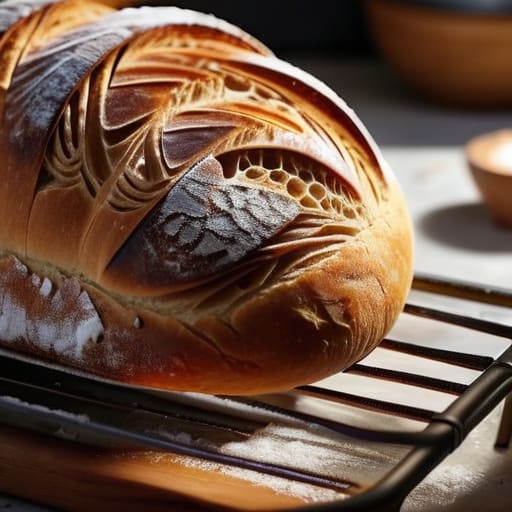
I’ve seen too many young bakers staring at their phone screens, trying to match the color of their loaf to some perfectly lit, airbrushed photograph from a magazine. It’s a fool’s errand. Lighting changes, and your oven isn’t a professional studio. If you’re looking for a color match, you’ve already lost the battle. Instead, you need to look for the deep, honest hues of a golden brown crust that tells you the sugars have actually done their job. You aren’t looking for “pretty”; you are looking for the transformation that only heat and time can provide.
A photograph can’t tell you if the crumb is gummy or if the crust is thick enough to provide that satisfying snap. When I was running the shop, I didn’t care if a boule looked like a model; I cared if it had developed that rich, mahogany depth that signals proper caramelization. If the color is pale and sickly, the heat hasn’t reached the heart of the dough, regardless of what the timer says. Trust your eyes to find the depth of color, not the perfection of the shape.
The Secret Language of Checking Bread Spring
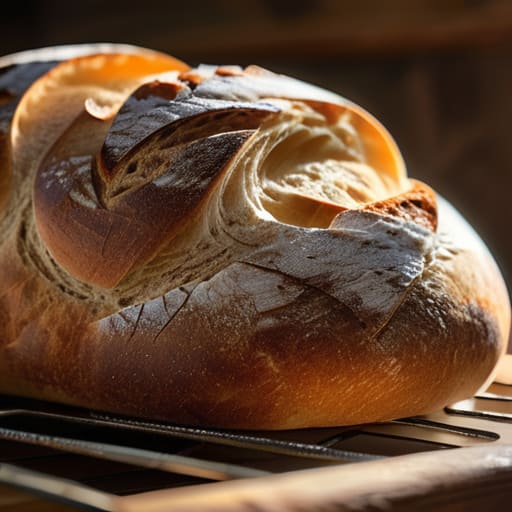
Now, if you’ve managed to get a decent color on that crust, you have to look at how the loaf actually sits in the oven. I call it the “breath” of the bread. When you are checking bread spring, you aren’t just looking for a rise; you are looking for the way the crust stretches and sets. A loaf that has truly finished its work won’t look like it’s still struggling to expand. It should look settled, with the cracks in the crust appearing intentional rather than frantic. If the dough looks slumped or heavy, it’s likely still fighting a battle with its own internal steam.
Don’t be fooled by a sudden burst of heat that makes the bread look puffed and perfect; that can be a lie told by a temperamental oven. Instead, watch for the moment the expansion slows and the surface tension looks firm. You want to see that the structure has stiffened into place. If you see the crust beginning to look dull or slightly shrunken, you’ve waited too long and lost your moisture retention in baking, leaving you with a loaf that’s more of a crouton than a boule.
Five Ways to Listen, Touch, and Smell Your Way to Perfection
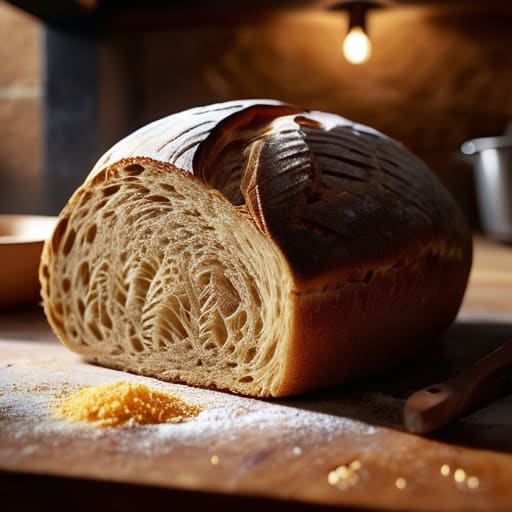
- Use your ears, not your eyes. When you pull a loaf out of a hot oven, turn it out onto a wire rack and listen. If it’s done right, you’ll hear the crust “singing”—tiny, delicate crackles as the air hits the cooling bread. If it’s silent, it might need a few more minutes or a bit more steam.
- The hollow tap test is your best friend for breads. Take your finger and give the bottom of the loaf a firm, confident knock. It shouldn’t feel heavy or thud like a piece of wet clay; it should sound hollow, like a small drum. That resonance tells you the moisture has evaporated from the center where it matters most.
- Stop looking for “golden brown” in a photo and start feeling for resistance. A cake or a sponge is done when the center springs back immediately after a gentle press. If your finger leaves a dimple that lingers, the structure hasn’t set yet—get it back in the heat.
- Trust your nose to tell you when the sugars are caramelizing. There is a very specific window between “smells like flour” and “smells like something is burning.” You want that deep, toasted aroma that fills the kitchen and makes you want to reach for a knife immediately. If you can smell it from the next room, you’re likely right on the edge.
- For delicate things like custards or shortcrusts, use the wobble. A tart filling shouldn’t slosh like water; it should have a slight, gelatinous quiver in the center, like it’s holding its breath. If it moves too freely, the proteins haven’t bonded, and you’ll end up with a puddle on your plate.
The Baker’s Three Golden Rules
Stop looking at your phone for reference photos; a picture can’t tell you if the crust is thick and resilient or thin and soggy, so rely on the sound of a hollow tap and the firmness of the base instead.
Temperature is your invisible ingredient, so if your dough feels sluggish or the oven isn’t holding its heat, give it more time rather than more heat—rushing a bake is the fastest way to end up with a gummy center.
Trust your hands more than your eyes; you should be able to feel the tension in a loaf and the spring of a sponge, because a recipe is just a suggestion, but the physical reality of the dough is the truth.
Putting Down the Timer and Picking Up Your Senses
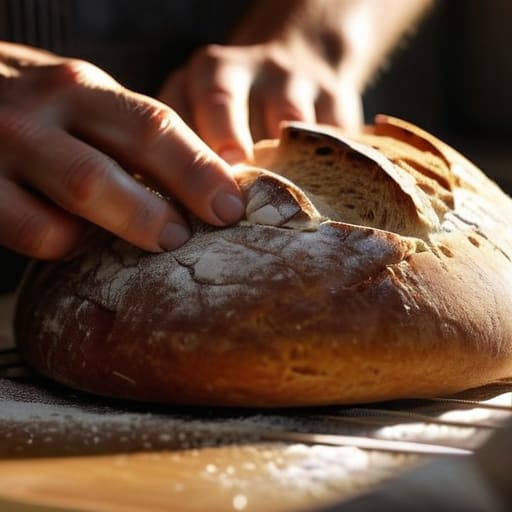
At the end of the day, knowing when a loaf is finished isn’t about staring at a digital clock or praying that the timer isn’t lying to you. It’s about the sum of the small things: that deep, resonant hollow sound when you tap the bottom, the way the crust resists your thumb without feeling soft, and that unmistakable aroma that tells you the sugars have finally done their dance. If you’ve checked your internal temperature, listened to the crust, and felt the spring of the crumb, you have enough information. Don’t let a recipe’s suggested time override what your own hands are telling you about the dough.
I spent three decades waking up while the rest of the village was still dreaming, and if I learned anything from those four o’clock starts, it’s that baking is a conversation between you and the ingredients. There will be days when the humidity is too high or your kitchen is too drafty, and your bread won’t look like the picture in a glossy magazine. That is perfectly fine. Don’t be afraid to make a mistake and learn from it; a slightly over-baked crust is a far better teacher than a perfect loaf you never understood. Just trust your senses, keep your flour weighed, and remember that patience is your best tool.
Frequently Asked Questions
If my kitchen is particularly cold, does that mean I should be looking for a darker crust to compensate for a dough that hasn't fully cooked through?
Good heavens, no. If you chase a dark crust to compensate for a cold kitchen, you’ll end up with a loaf that looks lovely but is gummy and raw in the middle. A cold kitchen slows the fermentation and the oven spring, not the heat transfer. If it’s chilly, give the dough more time to proof before it hits the heat. Don’t push the color; just give the dough the time it needs to wake up.
Is there a difference in how I should check for doneness between a high-hydration sourdough and a stiffer, enriched dough like a brioche?
Oh, there is a world of difference. With a high-hydration sourdough, you’re looking for that hollow resonance when you tap the bottom—it needs to sound like a drum, not a wet sponge. But a brioche? That’s a different beast entirely. Because of the butter and eggs, it won’t sound quite as sharp. You must rely on your thermometer; aim for an internal temperature of 88–90°C. Don’t poke it blindly or you’ll deflate all that precious fat.
When I tap the bottom of a loaf to hear that hollow sound, am I checking for the bake itself or just whether the moisture has evaporated?
It’s both, darling, and they aren’t separate things. That hollow sound is the music of moisture leaving the crumb. When the water evaporates, it leaves behind a structure of air and starch that can actually vibrate. If the center is still heavy and sodden with water, the sound will be a dull, wet thud. You aren’t just checking for “doneness”; you’re listening to the bread tell you its internal structure is finally set.