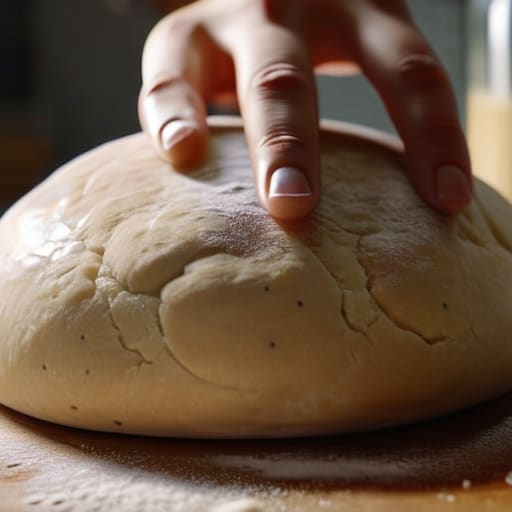
I remember standing over a flour-dusted bench at four in the morning, thirty years ago, watching a young apprentice try to “force” a dough into submission by punching it like it owed him money. He thought he was being efficient, but he was actually just tearing the very thing he was trying to build. People love to buy expensive, high-speed mixers and fancy gadgets, thinking that mechanical power is the secret to success, but they completely miss the point of how gluten develops. You can’t bully a protein network into existence; you have to coax it. It isn’t a violent struggle between man and machine, but a quiet, microscopic conversation between water and grain that happens one fold at a time.
I’m not here to sell you a specialized machine or a complicated textbook theory that leaves you more confused than when you started. Instead, I’m going to tell you what that conversation actually feels like under your knuckles. We are going to move past the technical jargon and talk about the physical reality of your dough—the transition from a sticky, shaggy mess to a smooth, resilient strength that holds its breath when you poke it. I’ll show you how to listen to the dough so you can stop guessing and start knowing.
The Dance of Glutenin and Gliadin Proteins
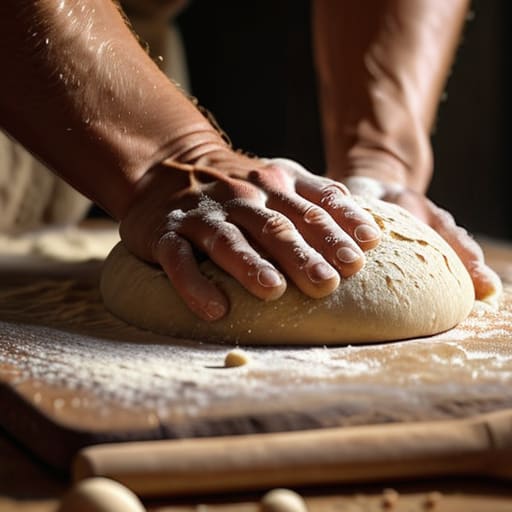
Inside every grain of flour, there are two little characters waiting for a drink to wake them up: the glutenin and gliadin proteins. Think of them as two dancers who haven’t seen each other in years. When you add water, they finally meet on the floor. The gliadins are the easy-going ones; they provide the extensibility, letting the dough stretch and grow without snapping like a dry twig. The glutenins, however, are the stubborn ones. They provide the dough elasticity, the strength that allows the bread to push back against your hands and hold its shape against the heat of the oven.
If you try to force them to dance too fast by manhandling the dough, you’ll end up with a mess. I’ve seen many a beginner try to beat a dough into submission, only to face the bitter overkneading dough consequences where the structure simply collapses into a sticky, useless puddle. You have to let them find their rhythm. Whether you use a long rest or a gentle fold, you are simply giving these proteins the time they need to link arms and build that invisible, resilient net that catches the gas and makes a loaf rise.
How Hydration Dictates the Strength of Your Network
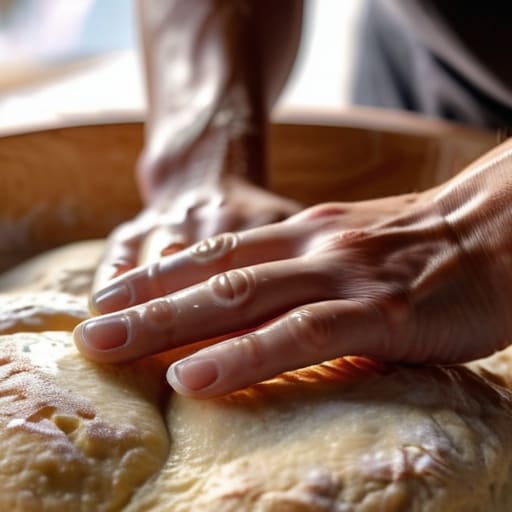
If you want to understand why a dough behaves the way it does, stop looking at the clock and start looking at your water content. I always tell people to think in percentages; if you’re working with a 65% hydration dough, it’s going to feel like a tight, manageable ball that fights back when you try to stretch it. But move that up to 80%, and suddenly you aren’t wrestling a ball anymore—you’re cradling a living, breathing thing. That extra water acts like a lubricant, allowing those glutenin and gliadin proteins to slide past one another and find their partners more easily.
The impact of hydration on gluten is really about the balance between tension and flow. High hydration gives you incredible extensibility—that lovely, slack stretch that lets a loaf expand beautifully in the oven—but it requires a gentler hand. If you try to manhandle a high-hydration dough like you would a stiff bagel dough, you’ll end up with a sticky, frustrated mess. You have to learn to work with the moisture, not against it, letting the water do the heavy lifting of building that internal structure.
Five ways to stop fighting your dough and start listening to it
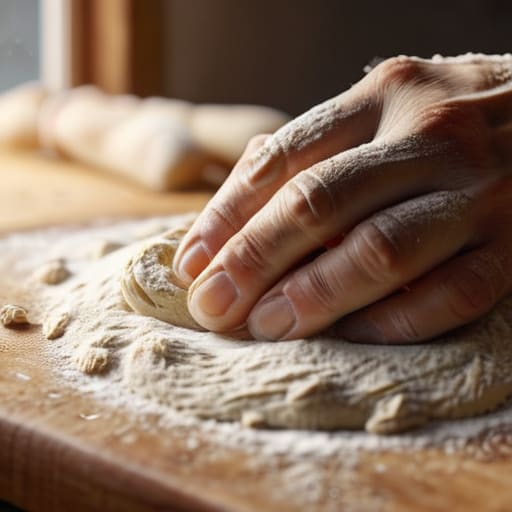
- Stop watching the clock and start watching the dough. If your recipe says “knead for ten minutes” but your dough still feels like a collection of wet pebbles, you haven’t finished. You’re looking for that moment of tension—when the dough stops sticking to your skin and starts feeling like a cohesive, springy muscle that pushes back when you poke it.
- Temperature is your silent partner, and she’s often colder than you think. If your kitchen is drafty, that gluten development is going to crawl at a snail’s pace. I always aim for a final dough temperature around 24-26% warmer than the ambient air if I’m working in a chilly room; if the water is too cold, those proteins stay sluggish and won’t link up no matter how hard you work them.
- Don’t be afraid of the rest. I see so many young bakers trying to force strength through sheer aggression, but sometimes the best way to develop gluten is to do absolutely nothing. A twenty-minute autolyse—just letting the flour and water sit before you even touch the salt—allows the enzymes to do the heavy lifting for you, making the dough much more extensible and easier to handle later.
- Respect your hydration levels. If you’ve gone up to an 80% hydration dough, you cannot treat it like a stiff, 60% bagel dough. High hydration requires more patience and gentler handling, like coil folds, to build strength without tearing the very network you’re trying to create. You can’t bully a wet dough into shape; you have to coax it.
- Watch your hands, not just the surface. A common mistake is over-handling the dough once it has reached its peak. If you keep kneading and kneading long after the gluten is set, you’ll actually start breaking those delicate protein bonds you worked so hard to build. Once it feels smooth, elastic, and holds its shape, leave it be. It’s earned its rest.
What to carry in your hands, not your head
Stop looking for a clock to tell you the gluten is ready; look for the way the dough resists you, transitioning from a sticky, tearing mess into something that feels alive, smooth, and springy under your palms.
Remember that water is your engine, not just an ingredient—the higher your hydration percentage, the more mobile those proteins can be, but the more patience you’ll need to guide them into a structure that doesn’t simply collapse.
Respect the temperature of your kitchen as much as your scale, because gluten doesn’t care what your recipe says if the room is too cold to let the proteins move or if you’re rushing a process that demands time to settle.
Listen to the Dough
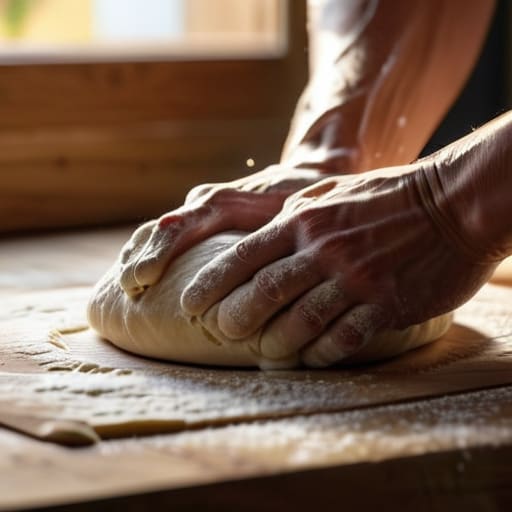
So, when you pull your flour and water together, remember that you aren’t just mixing ingredients; you are setting the stage for a biological transformation. It isn’t just about the protein content on the bag, but how you manage the hydration to let those gliadin and glutenin proteins find one another. You have to respect the temperature of your kitchen and the patience of your hands, because if you rush the development or starve the dough of moisture, no amount of mechanical mixing will save you. Gluten is a living, breathing network that responds to how you treat it, and it will tell you exactly when it is ready if you stop looking at the clock and start feeling the tension under your fingertips.
At the end of the day, don’t let the science intimidate you into being a perfectionist. A loaf that collapses slightly or a crumb that is a bit tighter than you intended isn’t a failure of chemistry—it’s just a lesson in how the environment worked against you that morning. Baking is a conversation between your hands and the grain, and sometimes the grain has more to say than you do. Stop worrying about the perfect photograph and focus on the rhythm of the work. Once you learn to trust the process over the recipe, you’ll find that the best bread doesn’t come from a textbook, but from the quiet patience of someone who knows how to wait.
Frequently Asked Questions
If I’m working with a high-hydration dough, how do I know when I’ve actually built enough strength to hold its shape without overworking it?
You don’t look for a certain texture; you look for the way the dough fights back. With a high-hydration dough—say, 80% or more—you won’t get that tight, bouncy ball you see in beginner videos. Instead, look for “memory.” When you pull a piece of dough, it should resist slightly and then slowly spring back toward its original shape. If it just slumps into a puddle, it’s still weak. If it holds its tension, you’re ready.
Does the temperature of my water change how quickly those proteins start to link up, or is that just a myth?
It’s no myth, darling; it’s physics. Water temperature is the throttle on your dough’s engine. Warm water makes those proteins more mobile, letting them find each other and link up faster, but if you’re too eager and use water that’s scalding, you’ll just cook the starch and ruin the structure entirely. I always look at the ambient temperature first. If your kitchen is a drafty cellar, you’ll need a bit more warmth to get things moving.
At what point does all that kneading and stretching stop being helpful and start actually tearing the network apart?
You’ll know you’ve crossed the line when the dough stops fighting you and starts fighting itself. When you’re working a healthy dough, it pushes back—it feels bouncy, elastic, and alive. But if you keep manhandling it past that point, it loses its “spring.” It becomes slack, sticky, and starts tearing like wet tissue paper instead of stretching. If it feels limp and won’t hold a shape, you’ve overworked it. Stop. Let it rest.