I spent thirty-four years watching people treat royal icing like some kind of temperamental magic spell, as if a dusting of gold luster or a fancy piping tip could hide a fundamentally broken mixture. They buy expensive stabilizers and specialty gums, convinced that the secret to a perfect flood is hidden in a boutique jar, but they couldn’t tell you the first thing about how royal icing works on a molecular level. The truth is much simpler and far less expensive: it is just sugar and protein held together by the right amount of moisture, and if your lines are jagged or your details won’t hold, it is because your ratios were off or your hands were too impatient to wait for the right consistency.
I am not here to sell you a miracle ingredient or a complicated gadget. Instead, I am going to show you how to master the relationship between hydration and drying time so you can stop guessing and start actually baking. We will talk about weights, not cups, and I will explain exactly what that glossy sheen is telling you about your room temperature. By the time we are done, you won’t need a textbook; you will simply know how to feel the icing between your fingers.
The Truth of Egg White vs Meringue Powder
Now, people will tell you that you must use fresh egg whites for a proper icing, but thirty years of watching humidity ruin a batch has taught me otherwise. The debate of egg white vs meringue powder isn’t really about quality; it is about control. Fresh whites are beautiful, yes, but they are temperamental. They react to the slightest bit of grease or a sudden drop in room temperature, and if you are just starting with piping royal icing for beginners, that unpredictability can be a heartbreak you don’t need.
Meringue powder is essentially just dried egg white proteins, and it offers a stability that fresh eggs simply cannot match when you are working in a damp kitchen. If you use powder, you are choosing a predictable chemical reaction over a living one. I find that powder makes it much easier to reach those various royal icing stages of consistency because it doesn’t “weep” as easily. If your icing is separating or turning into a puddle, it is likely because your protein structure wasn’t stable enough to hold the sugar in suspension. Use fresh eggs if you have the patience of a saint, but use powder if you want the dough to behave.
Achieving Perfect Flood Consistency Through Precision
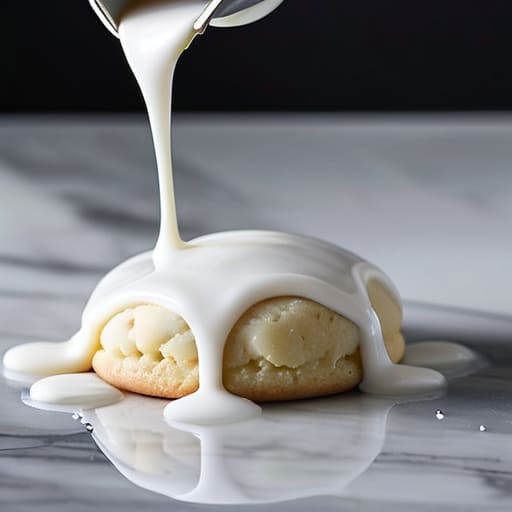
If you are looking for a way to tell if your icing is ready, stop staring at the bowl and start watching how it moves. Most people get stuck in the middle of the royal icing stages of consistency, oscillating between a stiff peak that looks like shaving cream and a watery mess that runs right off the edge of the cookie. To master achieving perfect flood consistency, you have to understand that it isn’t about a timer; it is about the way the icing settles.
I always tell my apprentices to use the “split test.” Take a small amount on your spatula and draw a line through the icing on the cookie surface. If the line disappears back into the pool within ten seconds, you have reached a true flood. If it sits there like a scar, your hydration is too low. If it races toward the edges like a flood tide, you’ve added too much water. It is a delicate balance of protein and sugar, and if you find yourself struggling with piping royal icing for beginners, remember that it is much easier to add a few drops of water to a thick icing than it is to fix a runny one.
Five things your icing is trying to tell you
- Watch your humidity like a hawk. Royal icing is a sugar-based structure that hates moisture; if you are trying to decorate on a rainy afternoon or in a kitchen with a steaming pot of pasta on the stove, that icing will never set. It will stay tacky and weep because the sugar is simply pulling the moisture out of the air.
- Temperature is the silent ingredient. If your egg whites were cold from the fridge when you started, they won’t hold the air you’re trying to whip into them. I always tell people to let your whites sit until they feel like the room, or you’ll find your peaks collapsing before you’ve even finished mixing.
- Stop chasing the “look” and start feeling the viscosity. You shouldn’t be judging your flood icing by a photo on a screen, but by how it moves. If you pull a spatula through it and the trail disappears in three seconds, your hydration is too high. If the trail sits there like a scar, you’ve been too heavy-handed with the sugar.
- Sift your sugar until your arms ache. I know it feels like a chore, but those tiny, microscopic clumps of powdered sugar are the enemy of a smooth finish. If you don’t sift, you’ll end up with little white bumps in your flood that no amount of smoothing will ever fix.
- Respect the drying time. Most people fail because they are impatient and try to layer a second coat before the first has truly stabilized. If you rush the process, the weight of the new icing will simply tear through the structure of the old, and you’ll end up with a sugary, melted mess instead of crisp lines.
The Baker’s Summary
Forget the pictures; focus on the flow. If your icing isn’t moving like warm honey, your hydration is off, and no amount of stirring will fix a ratio that was measured by eye instead of by weight.
Stability comes from patience, not magic powders. Whether you use fresh whites or meringue powder, the icing needs time to settle and the room needs to be steady; you cannot rush the chemistry of sugar and protein.
Temperature is your silent partner. If your kitchen is too humid or your hands are too warm, your icing will behave like a stranger, so learn to read the room as well as you read your bowl.
The Final Polish
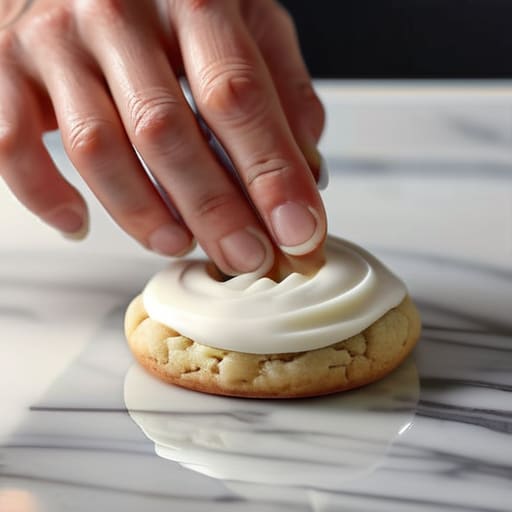
At the end of the day, royal icing is a lesson in discipline. We have talked about why your choice of protein matters—whether you are leaning on the stability of meringue powder or the traditional temperament of a fresh egg white—and why your hydration must be measured with a scale rather than a spoon. If your icing is too thick to flow or too thin to hold a line, do not blame the sugar; look back at your ratios and your room temperature. It is a delicate balance of sugar, water, and air, and once you stop fighting the medium and start respecting the physics of the flow, you will stop seeing failures and start seeing patterns.
Don’t let a few jagged edges or a stubborn, grainy batch discourage you. I spent decades in a bakery where the humidity changed every hour, and I can tell you that even the most seasoned hands have days where the icing just won’t behave. The secret isn’t in finding a “perfect” recipe that works every single time; it is in developing the intuition to know why it isn’t working when it fails. Keep your scale close, your workspace clean, and your patience even longer. Baking is a conversation between you and the ingredients, and eventually, you will learn how to listen.
Frequently Asked Questions
If I’m using a high-hydration icing for flooding, how do I stop it from bleeding into my outlines?
If your icing is bleeding into your outlines, you haven’t failed the recipe; you’ve likely rushed the drying time or ignored the surface tension. High-hydration icing is fluid by design, so those outlines need to be stiff—think of them as the dam holding back the river. Let your outlines sit until they are dry to the touch before you flood. If the room is humid, give them more time. Patience, not more sugar, solves this.
Why does my icing turn grainy or stiff after sitting for a few minutes, and is it a temperature issue?
If your icing is turning grainy or stiff, you aren’t fighting the recipe; you’re fighting the air and the heat. Graininess usually means your sugar hasn’t fully dissolved into the protein, or you’ve over-mixed and introduced too much air. As for the stiffness, that’s almost certainly your environment. If your kitchen is warm, the moisture evaporates too quickly. You have to respect the evaporation; if it sets too fast, your hydration was likely too low to begin with.
Can I actually swap out the sugar ratio to get a different finish, or am I just asking for a disaster?
You’re asking if you can play with the ratios, and the short answer is: yes, but you aren’t just changing the finish, you’re changing the chemistry. If you lean too heavy on the sugar, you’ll get a hard, brittle shell that cracks like dry earth; too much moisture, and it stays tacky forever. It isn’t a suggestion; it’s a structural shift. Treat the sugar like your flour—respect the percentage or expect a disaster.