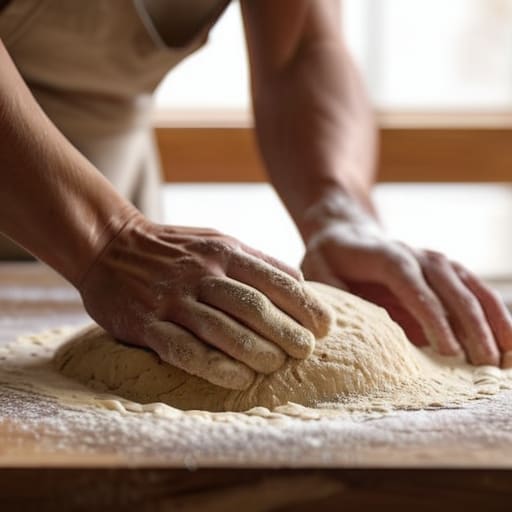
I remember standing in my shop at four in the morning, the flour dust dancing in the dim light, watching a young apprentice treat a high-hydration dough like it was a piece of stubborn laundry. He was punching it, slapping it, and wrestling it into submission, completely oblivious to the fact that he was murdering the very structure he’d spent hours building. People spend a fortune on specialized dough scrapers and fancy silicone tools, thinking that’s the secret, but they’re missing the point entirely. If you want to learn how to fold without knocking out air, you don’t need a new gadget; you need to stop fighting the dough and start listening to it.
I’m not going to give you a list of complicated maneuvers or tell you to watch a thirty-minute video of someone doing it in a pristine, sun-drenched kitchen. I’m going to tell you exactly how it feels when the gluten is ready to cooperate and how to move your hands so you aren’t squeezing the life out of your hard work. We’ll talk about tension, temperature, and the specific rhythm of the reach that keeps those precious bubbles intact. By the time we’re done, you won’t be following a manual; you’ll be reading the dough itself.
The Silicone Spatula Folding Method a Tool for the Patient
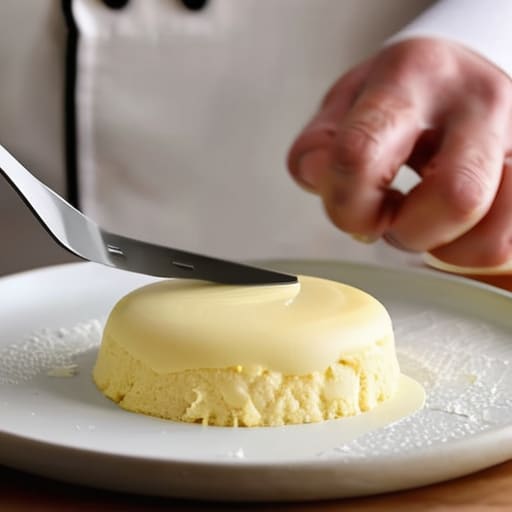
Now, if you’re working with a heavy bread dough, you’ll want your hands, but if you’re working with something delicate—like a sponge or a delicate mousse—you need to reach for your silicone spatula. I always tell my apprentices that a spatula isn’t just a scraper; it’s a precision instrument for maintaining volume in whipped ingredients. When you’re folding egg whites into batter, the goal isn’t to stir, but to marry the two together. You want to use the edge of that spatula to cut through the center, sweep across the bottom, and then bring the weight of the mixture up and over the top.
It’s a rhythmic motion, almost like you’re tucking a child into bed. If you’re too aggressive, you’ll end up with a heavy, sad puddle instead of a cloud. I’ve seen many a beginner try to stir like they’re mixing a pot of soup, and they wonder why their cake turned out like a pancake. This silicone spatula folding method works because it relies on the tool’s flexibility to lift rather than push. You aren’t fighting the air; you are simply inviting the ingredients to join hands without crushing the bubbles you worked so hard to create.
Maintaining Volume in Whipped Ingredients Through Intentionality
Now, we aren’t just talking about bread dough anymore; we’re talking about the delicate architecture of a sponge. When you move from heavy doughs to something like folding egg whites into batter, the stakes change. You aren’t just managing gluten; you are managing millions of tiny, fragile air bubbles that are the only thing standing between a magnificent sponge and a heavy, rubbery pancake. If you treat those whites like you’re trying to stir a thick porridge, you’ll kill them instantly.
The secret isn’t just the tool, though a flexible spatula helps; it is the intent behind the movement. You have to move with the rhythm of the ingredient, not the rhythm of a clock. When you are maintaining volume in whipped ingredients, you aren’t really “mixing” in the traditional sense—you are redistributing. Reach all the way to the bottom of the bowl, sweep up through the center, and turn the whole mass over. You want to lift the heavy base up into the light foam, letting the two marry without crushing the air out of them. It takes a bit longer, and your arm might get tired, but that’s the price of a light crumb.
Five Ways to Keep the Life in Your Dough
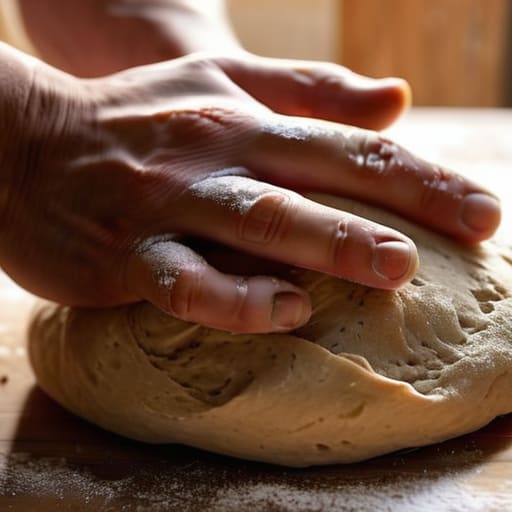
- Stop fighting the weight. When you’re folding, don’t try to force the dough to move where you want it to go; instead, use the weight of the dough against itself. Reach under the mass, lift it up, and let it fall over its own center. If you’re pushing through it, you’re squeezing the air out.
- Watch your temperature, not just your clock. If your kitchen is a drafty 18% below your ideal ambient temperature, that dough is going to feel stiff and stubborn, making you want to manhandle it just to get it to move. A cold dough resists, and a resisted dough loses its structure.
- The “J” motion is your friend. When using a spatula or your hands, think of a sweeping motion rather than a cutting one. You want to sweep the bottom of the bowl upward and over, creating a gentle fold that traps the air pockets rather than slicing through them like a knife.
- Listen to the texture, not the timer. A dough that is properly aerated will feel lighter and more “alive” as you work it. If it feels heavy, dense, or like you’re pushing through wet clay, you’ve likely over-worked it or lost your tension. Stop immediately; you can’t fix a collapsed structure by trying harder.
- Mind the hydration. I’ll tell you a hundred times: a 75% hydration dough behaves entirely differently than a 65% one. If you’re trying to use the same heavy-handed folding technique on a high-hydration batter that you use for a stiff sourdough, you’re going to end up with a pancake. Adjust your touch to the water content.
Three Things to Remember Before You Reach for the Flour
Stop looking at the clock and start looking at the dough; if it feels tight or stubborn, you’re forcing it, and if you force a dough, you’ll always end up knocking the air out.
Whether you are using a spatula or your bare hands, your goal is to encourage the dough to drape and fold over itself, not to squeeze the life out of those precious bubbles you worked so hard to build.
Respect the temperature of your kitchen, because a cold dough is a stiff dough, and a stiff dough is much harder to fold gently without bruising the structure.
The Rhythm of the Fold
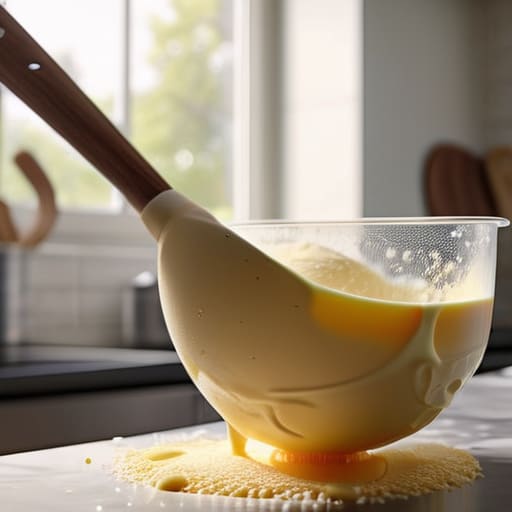
At the end of the day, whether you are using a silicone spatula to guide a delicate batter or your own hands to lift a heavy sourdough, it all comes down to the same thing: respect for the air. You’ve learned that it isn’t about following a mechanical movement, but about reading the resistance of the mixture. If you use the right tool, keep your movements intentional, and stop treating your ingredients like they’re something to be conquered, you won’t find yourself staring at a flat, dense mess in the oven. Remember, the goal isn’t to stir; it is to incorporate without aggression, ensuring those tiny bubbles of life stay exactly where you put them.
I know it feels tedious when you’re standing over a bowl at ten o’clock at night, and I know it’s tempting to just whip it all together to get it over with. But baking isn’t a race, and your dough can tell when you’re in a hurry. When you finally pull that loaf out of the oven or see that sponge rise perfectly high, you’ll realize that the extra minute of gentle, thoughtful folding was never a waste of time. It was the most important part of the process. So, take a breath, watch your hands, and trust the patience you’ve built. The bread will thank you for it.
Frequently Asked Questions
My dough feels heavy and sluggish like it's fighting me; does that mean I've already lost the air, or is it just under-proofed?
Don’t panic; a heavy dough isn’t a death sentence, it’s just a conversation. If it feels sluggish and stubborn, it’s likely under-proofed or your kitchen is running a few degrees too cold. If you’d already knocked the air out, the dough would feel limp and lifeless, not resistant. Right now, it’s just tight. Give it warmth, give it time, and stop fighting it. Let the yeast do the heavy lifting for a change.
If I'm folding a high-hydration dough, how much do I actually need to lift before I start worrying about deflating it?
Listen, with a high-hydration dough—say, something sitting at 78% or higher—you aren’t really “lifting” so much as you are guiding. You don’t need to hoist it toward the ceiling. If you’re pulling more than a few inches off the bottom, you’re just being dramatic and working too hard. Reach under, find the edge, and let it drape over itself like a heavy silk sheet. If it feels like you’re fighting it, you’ve gone too far.
Is there a point where I've folded too much and actually started working the gluten too hard, even if I'm being gentle?
Yes, there absolutely is. You can be as gentle as a summer breeze and still overwork a dough if you simply don’t know when to stop. If you keep folding, you’re still building structure, and eventually, that structure becomes too tight, too elastic, and frankly, stubborn. When the dough starts fighting your hands—springing back aggressively every time you try to shape it—that’s your signal. It’s not being “strong”; it’s exhausted. Stop there.