I remember a young lad who came into my shop twenty years ago, clutching a cookbook like it was the Holy Grail, complaining that his rye loaves were coming out as dense as paving stones. He’d followed every instruction to the letter, yet his kitchen looked like a battlefield of sticky, unmanageable grey sludge. He didn’t realize that understanding how rye behaves differently isn’t something you can learn from a glossy photograph or a list of “easy” steps; it’s something you have to feel in your bones. Rye doesn’t have the same structural backbone as wheat, and if you try to treat it with the same aggressive kneading, it will simply collapse under your ego.
I’m not here to sell you some fancy, high-protein flour or a specialized machine to fix your mistakes. What I’m going to give you is the truth about hydration, temperature, and why that sticky mess on your hands is actually a sign of life. We are going to look at the actual mechanics of the grain so you can stop fighting the dough and start working with it. I’ll give you the weights and the percentages you actually need, and more importantly, I’ll tell you exactly when to stop touching it.
The Rye Flour Pentosan Structure Demands a Different Respect
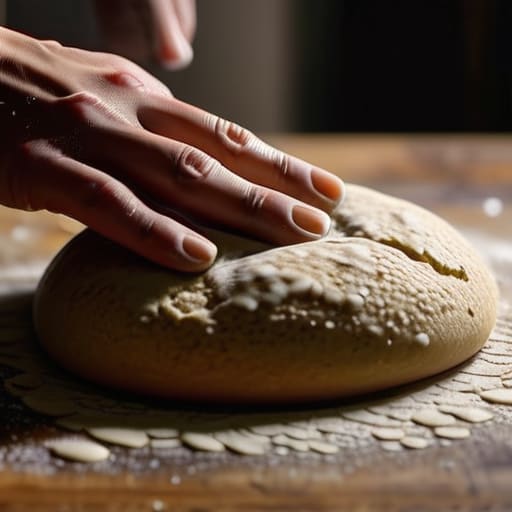
Now, if you try to treat rye like wheat, you’re going to end up frustrated and covered in a sticky mess that won’t budge. The real reason is tucked away in the chemistry: the rye flour pentosan structure is a different beast entirely. While wheat relies on a strong gluten network to hold its shape, rye is dominated by these complex sugars called pentosans. They act like little sponges, soaking up water and creating a thick, mucilaginous gel. This means you aren’t really building a scaffold of protein; you’re managing a heavy, hydrated paste.
Because of this, you’ll find that traditional gluten development in rye bread is a bit of a myth. You can knead a rye dough until your arms ache, but you won’t see those beautiful, elastic windows you get with a sourdough wheat loaf. Instead, you have to focus on managing the enzymatic activity in rye dough. If the enzymes go wild because your kitchen is too warm or your fermentation is too long, they’ll turn your beautiful loaf into a gummy, unbaked brick. You have to respect the gel, not fight it.
Why Gluten Development in Rye Bread Is a Lost Cause
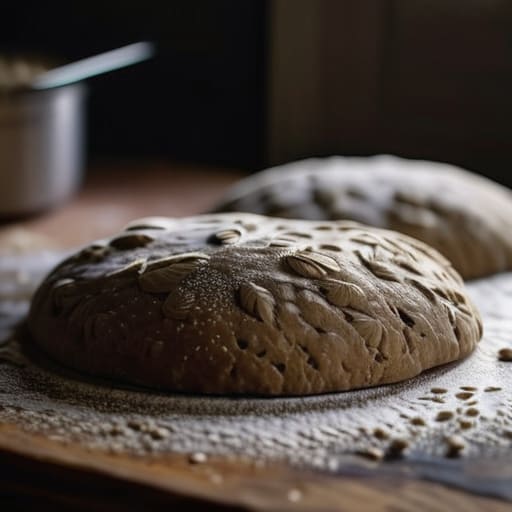
If you’ve ever spent forty minutes vigorously kneading a rye dough only to end up with a sticky, glue-like mess that refuses to hold a shape, stop. You aren’t doing anything wrong; you’re just fighting a losing battle. Unlike wheat, where we rely on a strong protein network to trap gas, gluten development in rye bread is a lost cause. Rye simply doesn’t have the structural backbone to build that elastic web we’re used to. Instead of a gluten cage, you’re dealing with a heavy, complex matrix of starches and sugars.
The real heavy lifting in a rye loaf isn’t done by proteins, but by the rye flour pentosan structure. These pentosans are long-chain carbohydrates that soak up water like a sponge, creating a viscous, gel-like consistency. This is why your hydration levels might feel completely off compared to a standard white loaf. You aren’t looking for “stretch” or “windowpane” here; you are looking for a dough that feels substantial and holds its own weight. If you try to force it to act like wheat, you’ll only end up with exhausted shoulders and a flat loaf.
Five ways to stop fighting your rye and start working with it
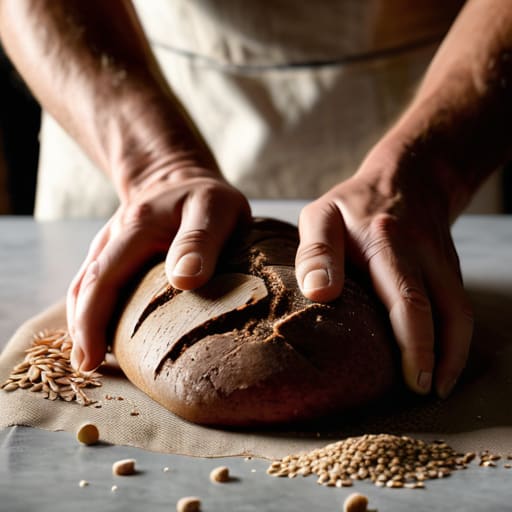
- Stop looking for a windowpane. If you try to stretch rye dough like you’re working a high-protein bread flour, you’ll end up with nothing but a sticky, frustrated mess on your workbench. Rye doesn’t build a gluten web; it builds a starch-pentosan matrix, and you can’t knead strength into it any more than you can knead a puddle into a brick.
- Hydration is a moving target. Because rye is so thirsty for those pentosans, I always start with a higher hydration—think 80% to 85% as a baseline—but don’t be surprised if it feels like it’s drinking even more. If the dough feels like it’s fighting you, it’s usually because it’s still parched, not because you’ve added too much.
- Respect the “sticky beast” phase. Rye is notoriously tacky, and if you try to handle it with dry hands, you’ll tear the structure apart. Use wet hands or a light coating of oil rather than a dusting of flour. Adding too much extra flour to “fix” the stickiness is the quickest way to turn a lovely, moist loaf into a dense, dry brick.
- Let the fermentation find its own rhythm. Rye is much more temperamental with temperature than wheat. A kitchen that’s too warm will make it sour and sluggish all at once, while a cold draft can stall it entirely. Don’t trust a timer; trust the smell and the way the dough rises in the bowl. It’ll tell you when it’s ready, even if it doesn’t follow your schedule.
- Patience during the bake is non-negotiable. A rye loaf might look finished on the outside, but if you cut into it while it’s still hot, the interior will turn into a gummy, unappealing paste. The starch needs time to set as it cools. I’ve seen many a beginner ruin a perfect loaf by being too impatient to wait for that internal structure to stabilize.
What to remember when the flour turns dark
Stop chasing gluten; rye is about pentosans and starch, not a stretchy web, so quit trying to knead it like a sourdough and start treating it like a thick, heavy paste.
Watch your temperature like a hawk, because rye’s enzymes are temperamental and will turn your loaf into a gummy, unbaked mess if the kitchen is too warm or your fermentation is too rushed.
Trust your hands over your timer; rye doesn’t follow a clock, it follows its own internal rhythm, so if the dough feels too slack or too stubborn, wait another hour before you even think about shaping it.
Respecting the Rye
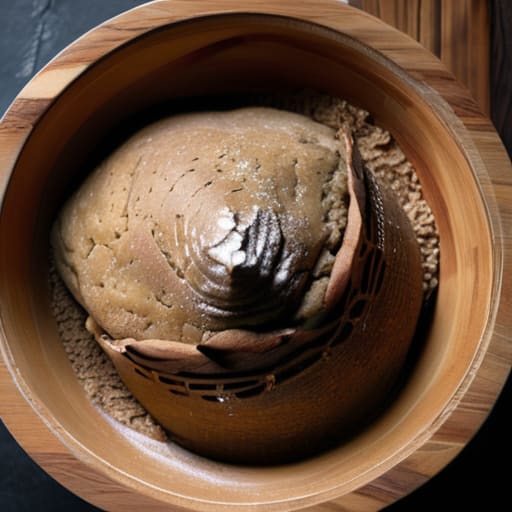
So, if you find yourself staring at a sticky, unmanageable mass of dark dough, don’t go blaming your scale or reaching for more bread flour to “fix” it. You aren’t dealing with a wheat dough that needs more strength; you are dealing with a grain that relies on pentosans rather than a gluten web to hold its shape. Remember that rye is a different beast entirely—it demands higher hydration, much longer fermentation windows, and a complete abandonment of the desire to knead it like a standard sourdough. If you try to force it into a wheat-shaped mold, you will only end up frustrated and with a loaf that refuses to rise.
At the end of the day, baking with rye is a lesson in surrendering control. You cannot bully this grain into behaving, and you certainly cannot rush its slow, complex transformation. It asks you to slow down, to watch how the moisture moves through the flour, and to trust the process even when the dough feels more like porridge than bread. It isn’t always the easiest path to a perfect loaf, but there is a deep, quiet satisfaction in mastering a grain that refuses to be tamed. Just remember: patience is your most vital ingredient, and the rye will reward you if you simply give it the time it requires.
Frequently Asked Questions
If I can't rely on gluten for structure, how do I know when my rye dough has actually finished its bulk fermentation?
You won’t see those lovely, elastic bubbles you’re used to in wheat, so stop looking for them. Rye is more about volume and scent. You’re looking for a subtle, rounded swell—the dough should look aerated, almost like a thick mousse, rather than a bouncy sponge. Give it a gentle poke; it should feel soft and slightly tacky, but not liquid. If it smells pleasantly tangy and has grown by about thirty percent, it’s ready.
Since rye is so much stickier than wheat, should I be looking for a specific way to handle it during shaping, or is it better to just leave it alone?
You don’t “handle” rye so much as you negotiate with it. If you try to tension it like a wheat dough, you’ll just end up with a sticky mess stuck to your palms and a bruised structure. Use very little flour, keep your hands damp, and work with a light, sweeping motion rather than a squeeze. Honestly, if the hydration is high, sometimes the best thing you can do is let it sit in a well-floured basket and stop fighting it.
How much rye flour can I actually swap into my standard wheat recipes before the whole loaf loses its ability to rise?
If you’re looking to keep that airy, open crumb you’re used to, don’t go swapping more than 20% of your flour for rye. Once you hit that 30% mark, the pentosans start acting like a heavy blanket, weighing down your gluten structure before it can even catch its breath. You’ll find the dough gets stickier and much more sluggish. If you want to push higher, you’ll need to rethink your entire hydration and handling strategy.