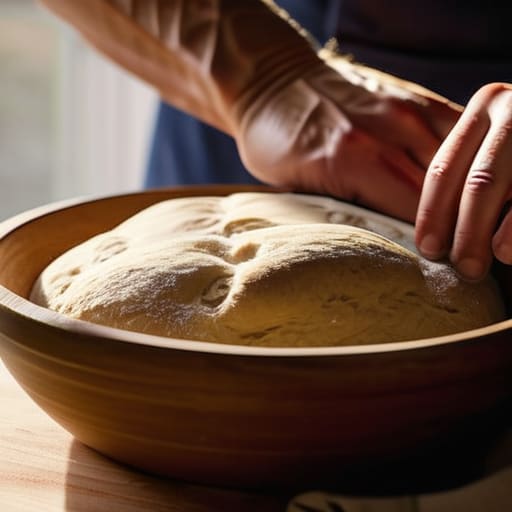
I remember standing in my bakery at four in the morning, thirty years ago, watching a young apprentice try to force a stubborn dough into submission with a heavy wooden rolling pin. He thought he was doing something productive, but he was just bruising the life out of it. People get so caught up in the mechanics of it all, buying fancy stand mixers or following those clinical, scientific videos that treat flour like a laboratory experiment, but they miss the point entirely. They ask me constantly about how kneading develops structure, as if it’s some magical mechanical trick rather than a conversation between your palms and the gluten. The truth is, if you treat the dough like an enemy to be conquered, it will always fight you back.
I’m not here to give you a lecture on protein percentages or to tell you that you need a specialized machine to get a decent crumb. What I’m going to do is teach you how to listen to the dough. I’ll show you exactly when that frantic, sticky mess begins to transform into something with real elasticity and life. We aren’t just moving mass around; we are building a framework that can hold air, and I’ll tell you exactly how to feel that change in your own hands.
The Silent Dance of Gluten Protein Development
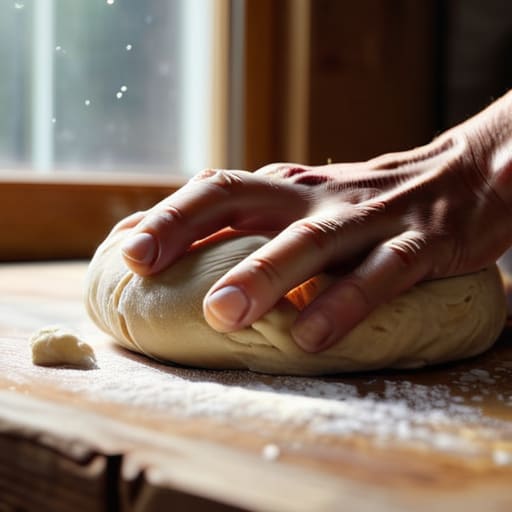
You have to understand that you aren’t just mixing ingredients; you are orchestrating a microscopic construction project. When water meets flour, those sleepy proteins—glutenin and gliadin—finally wake up and start looking for one another. As you work the dough, you are facilitating gluten protein development by physically coaxing these proteins to link up into long, strong chains. It’s not a magic trick; it’s physics. If you treat the dough like it’s an enemy to be beaten into submission, those chains will snap, leaving you with a flat, heavy loaf that has no spirit left in it.
I always tell my students to watch the relationship between elasticity and extensibility in dough. You want a dough that can stretch without tearing, but also one that wants to spring back when you poke it. If your dough feels like a piece of wet rubber, you’ve pushed it too hard; if it just slumps like a puddle, it hasn’t found its strength yet. It’s a delicate balance, and you’ll find that the effect of hydration on gluten is the real pivot point here—the wetter the dough, the more it wants to flow, and the more work your hands have to do to give it backbone.
Why Mechanical Dough Development Cannot Replace Human Touch
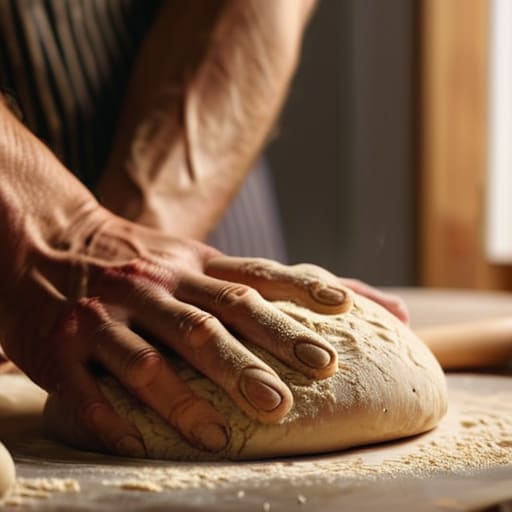
Now, don’t get me wrong; I’ve used a heavy-duty spiral mixer when the orders were high and my wrists were screaming. Mechanical dough development is efficient, certainly, but a machine is a blunt instrument. It knows how to spin, but it doesn’t know how to listen. A mixer can pummel a dough until it’s over-worked and exhausted, leaving you with a structure that’s too tight and a crumb that’s stubbornly dense. It can’t feel that subtle shift where the dough stops being a shaggy mass and starts becoming a living, breathing thing.
When you use your hands, you are sensing the delicate balance of elasticity and extensibility in dough in a way a timer never could. You feel the moment the resistance changes—the way the dough stops tearing under your pressure and begins to push back with a soft, rhythmic bounce. You’re not just moving flour and water; you’re feeling the temperature of the friction and the subtle tension in the gluten. A machine might hit the right speed, but it will never tell you that the dough is feeling a bit sluggish because your kitchen is five degrees too cold.
Five Ways to Listen to Your Dough
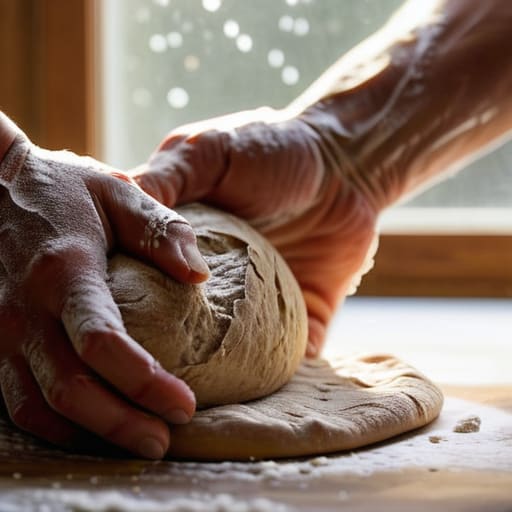
- Stop watching the clock and start watching the surface; you aren’t looking for a specific minute to pass, you’re looking for that subtle shift from a shaggy, torn mess to a smooth, taut skin that holds its shape when you poke it.
- Temperature is your invisible partner in every fold, so if your kitchen feels like a cellar, don’t expect the gluten to wake up; aim for a final dough temperature around 24-26% warmer than your ambient air if you want the structure to build without a fight.
- Learn the difference between working the dough and fighting it; if you’re pushing so hard your wrists ache, you’re likely tearing the very strands you’re trying to build, so ease up and let the rhythmic, repetitive motion do the heavy lifting.
- Use the windowpane test as your guide, not a suggestion—stretch a small piece of dough between your fingers until it’s thin enough to see light through without it snapping; that’s the moment the protein network has finally found its strength.
- Respect the rest periods, because gluten is a living thing that needs to relax; if the dough feels tight and stubborn like a coiled spring, walk away for twenty minutes and let the hydration do the work your hands can’t.
What Your Hands Should Remember
Stop chasing a specific number of minutes and start watching the tension; you aren’t just mixing ingredients, you are weaving a web of strength that holds the gas, and you’ll know you’ve succeeded when the dough stops fighting your palms and starts pushing back with a rhythmic, elastic spring.
Temperature is your invisible partner in every knead, so if your kitchen feels like a cellar, don’t expect that gluten to wake up any faster—the dough doesn’t care about your schedule, it only cares about the warmth of the room and the steadiness of your hands.
Respect the window of development, because once you’ve built that structure, you must leave it alone; overworking a dough that has already found its strength is just as much a mistake as rushing one that hasn’t even begun to stretch.
Listening to the Dough
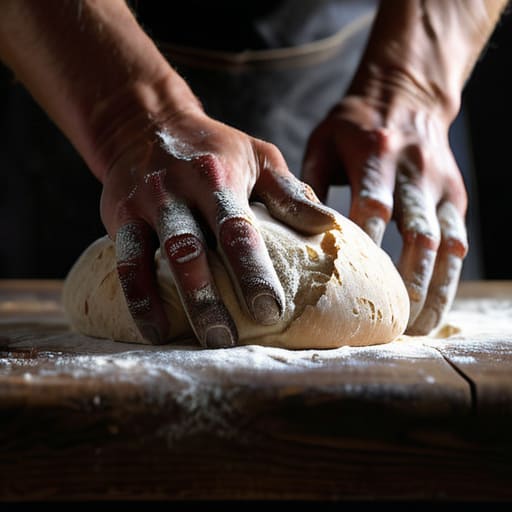
At the end of the day, remember that kneading isn’t just about forcing proteins into submission; it is about creating a cohesive network that can hold onto the gases produced by your yeast. We have talked about the science of gluten and why a machine can’t feel the subtle shift from a shaggy, broken mass to a smooth, elastic ball, but the real lesson is in the feedback loop. You aren’t just following a set of instructions; you are managing a living system. If your dough feels tight and stubborn, it likely needs more rest to relax those proteins. If it feels slack and puddle-like, it needs more strength. Structure is not a destination you reach by counting minutes, it is a state of being that you achieve through constant, gentle adjustment.
Don’t let a heavy loaf or a collapsed crumb discourage you. Most people see a failed bake and blame the flour or the brand of yeast, but usually, they just rushed the development or worked the dough too roughly when it was already tired. Baking is a conversation between your hands and the ingredients, and sometimes you just need to learn how to listen more closely. Put away the timers for a moment, ignore the glossy photos on your screen, and trust what your palms are telling you. If you give the dough the time and the respect it deserves, it will almost always give you something beautiful in return.
Frequently Asked Questions
If I'm using a high-hydration dough, like an 80% sourdough, do I still need to knead it by hand or will the folds do the work for me?
At 80% hydration, you aren’t looking for a traditional knead; you’re looking for strength. If you try to pummel that much water like a standard lean dough, you’ll just end up with a sticky, exhausted mess. Instead, trust your folds. Those periodic stretches and turns are what build the tension without knocking the life out of it. Let the dough find its own structure through time and gentle handling, rather than force.
How can I tell if I've over-kneaded the dough and actually started breaking down that structure I was trying to build?
You’ll know you’ve gone too far when the dough stops fighting you and starts surrendering. If you’re working a high-hydration dough—say, 75%—and it suddenly turns from a springy, elastic mass into something slack, sticky, and unmanageable, you’ve snapped those gluten bonds. Instead of pulling back when you stretch it, it will tear like wet tissue paper. If it feels more like a puddle than a pillow, stop. You’ve broken it.
Does the temperature of my water change how quickly those gluten proteins start to link up during the kneading process?
Oh, it absolutely does. Water temperature is the heartbeat of your dough. If your water is too warm, you’re essentially rushing the proteins into a frantic, disorganized scramble; if it’s too cold, they’ll stay sluggish and stubborn. I always aim for a final dough temperature of about 24% above my ambient room temp. Don’t just guess—feel it. If the dough feels feverish under your palms, you’ve moved too fast for the structure to hold.