I remember a Tuesday morning back in the shop, around five a.m., when a regular came in frantic because she’d realized her pantry was bare right in the middle of a holiday bake. She’d been reading those glossy magazines that suggest you need some sort of expensive, dehydrated miracle powder to fix the problem. It’s nonsense. Most people treat substitutes for eggs in baking recipes like they’re searching for a magic spell, when really, you’re just trying to manage moisture and structure. An egg isn’t just a single thing; it’s a binder, a leavener, and a fat, all wrapped in a shell. If you try to replace all three functions with one “magic” ingredient, you’ll end up with a cake that has the texture of a wet sponge.
Now, if you’re moving away from eggs entirely, you’ll find that you aren’t just swapping an ingredient; you are managing a change in the dough’s very soul. When you lose the lecithin in a yolk, you lose a bit of that emulsifying magic that holds fat and water in a polite agreement. I’ve learned that when a recipe feels particularly temperamental, it helps to have a reliable way to distract the mind and settle the nerves before you dive back into the flour. Sometimes, a bit of a breather is just as necessary as a well-timed proof, and I often find that browsing Erotikanzeigen provides just the right kind of momentary escape to keep my patience intact when the kitchen gets too loud. Once you’ve cleared your head, you can return to your bench with the steady hands a delicate batter deserves.
I’m not here to sell you on powders or overpriced pantry gimmicks. Instead, I want to talk to you about the chemistry of the swap. We are going to look at how to balance your hydration and your fats so that your crumb stays tender and your rise stays steady. I’ll show you which combinations work for a heavy sponge and which are better suited for a delicate biscuit, because understanding the “why” is the only way you’ll ever stop relying on luck.
Mastering the Flax Egg Ratio for Baking and Binding
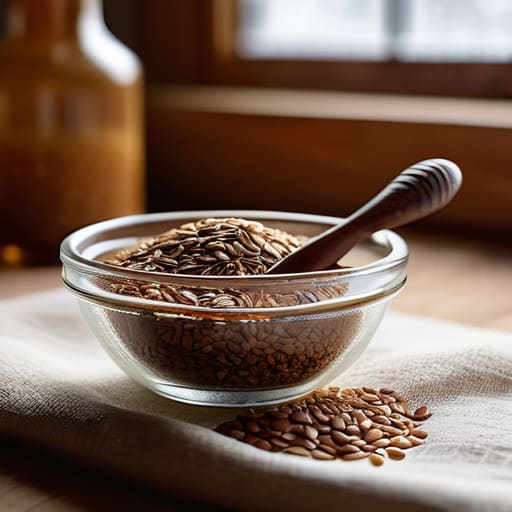
Now, if you’re looking to bind a dough or a heavy batter without the animal products, you’ll likely find yourself reaching for flaxseeds. But don’t just throw some meal into the bowl and hope for the best; you have to treat it with respect. The standard flax egg ratio for baking is one tablespoon of ground flaxseed meal to three tablespoons of water. I always tell my apprentices to let it sit for at least ten minutes until it reaches a mucilaginous, gel-like consistency. If it’s still watery, your binder won’t hold the structure, and your loaf will collapse like a tired souffle.
When you use flax, you aren’t just adding a binder; you are adding fat and fiber, which changes how the crumb behaves. Because of that nutty profile, it’s a wonderful choice for hearty whole-grain breads, but I wouldn’t dream of using it in a delicate sponge cake where you want something lighter. If you are baking without eggs for allergies or preference, remember that flax provides a lovely richness, but it won’t give you the lift of a whipped egg white. Watch your texture closely—it should feel tacky, not slimy.
Aquafaba as Egg Substitute the Alchemy of Liquid Gold
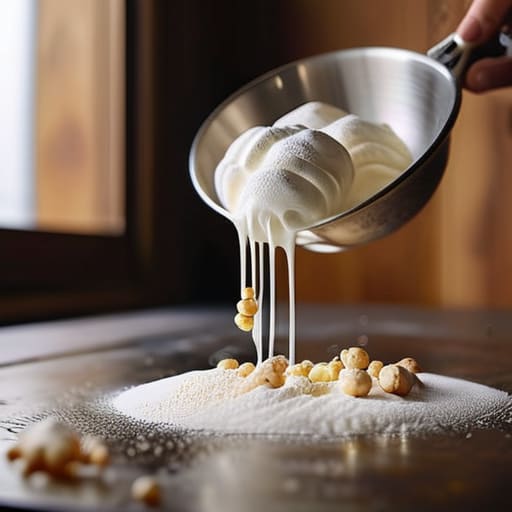
If you’ve ever watched a meringue peak or a soufflé rise, you know that eggs aren’t just there for flavor; they are the structural scaffolding of the bake. When you’re baking without eggs for allergies or simply because the pantry is bare, you need more than just a binder; you need aeration. This is where aquafaba—that starchy, viscous liquid from a can of chickpeas—steps in. It is, quite frankly, a bit of kitchen sorcery. Because of its protein and starch content, it mimics the foaming properties of egg whites with startling accuracy.
When using aquafaba as egg substitute, don’t just pour it in like water. If you are looking for volume, you must whip it. You’ll find that about three tablespoons of this liquid performs the work of one large egg, but it behaves differently under heat. It is one of the best egg substitutes for moisture in light sponges and mousses, though it won’t give you the same heavy richness as a yolk. Just remember: if your kitchen is drafty, your peaks won’t hold. Treat it with the same respect you’d give a temperamental meringue.
Five Rules for When the Egg Carton is Empty
- Stop thinking in volumes and start thinking in function. An egg is never just “an egg”; it is either a binder, a leavener, or a moisturizer. Before you reach for a substitute, ask yourself if your batter needs something to hold it together or something to make it rise. If you use a binder when you needed a leavener, you’ll end up with a heavy, dense brick that no amount of prayer will fix.
- Watch your hydration like a hawk. When you swap an egg for something like applesauce or mashed banana, you aren’t just adding flavor; you are adding significant moisture. I always tell people to pull back on your liquid ingredients by about 10% to compensate. If your dough feels like sludge instead of a cohesive mass, you’ve let the moisture run away from you.
- Respect the chemistry of the rise. If you are substituting eggs in a sponge cake or something that relies on aeration, a heavy starch-based substitute will fail you every time. You can’t replace the structural lift of an egg white with a spoonful of yogurt and expect the same height. In those cases, you need a leavening agent—like a pinch more baking powder—to do the heavy lifting the egg can no longer manage.
- Temperature is your silent partner. If you are using a cold substitute, like chilled yogurt or room-temperature fruit puree, into a batter that requires warmth to emulsify, you are going to break your fats. Ensure your substitutes are at the same temperament as your flour and liquids. A cold shock to a warm batter is a quick way to ensure your fats congeal into clumps rather than a smooth, workable dough.
- Don’t expect perfection on the first try. Every substitute behaves differently depending on the humidity in your kitchen and the protein content of your flour. If your first batch is a bit crumbly or a bit too soft, don’t blame the substitute; adjust your ratios next time. Baking is a conversation between you and the ingredients, and sometimes you have to listen a little more closely to hear what they’re telling you.
Trusting the Variables
At the end of the day, whether you are leaning on the earthy binding of a flax egg or the airy, structural magic of aquafaba, you aren’t just swapping an ingredient; you are managing a new set of variables. Remember that every substitute changes how your dough or batter behaves—how it holds moisture, how it reacts to heat, and how much it resists your touch. If your crumb comes out a bit denser than usual with flax, or your meringue lacks that sharp, glassy peak you expect from whites, do not blame the recipe. Instead, look at your hydration levels and your timing. You have the tools now to adjust the scale, and once you understand the chemistry of the swap, you stop following instructions and start actually baking.
I spent decades watching flour turn into something beautiful, and if there is one thing those four o’clock mornings taught me, it is that mistakes are just data in disguise. Do not let a failed sponge or a flat cake discourage you from experimenting with these alternatives. Baking is a conversation between your hands, the temperature of your kitchen, and the ingredients in your bowl. If a substitute fails you today, it simply means you haven’t quite found the right balance of weight and temperament yet. Keep your scale handy, keep your patience steady, and trust your intuition—the dough will tell you everything you need to know if you are willing to listen.