I spent thirty-four years watching people toss perfectly good flour dust into the bin or throw away sourdough discard like it was common rubbish, all because some glossy magazine told them they needed “specialized zero-waste kits” to be sustainable. It makes my blood boil. You don’t need expensive gadgets or a pantry full of niche substitutes to learn how to bake with less waste; you just need to stop treating your ingredients with such disrespect. Most of what people call “waste” is actually just an ingredient that hasn’t found its purpose yet, whether it’s the leftover whey from yogurt or that bit of starter sitting at the bottom of the jar.
I’m not here to sell you a lifestyle or a set of complicated rules that require a degree in environmental science. What I am going to do is show you how to look at your kitchen through the eyes of a baker who has seen every scrap of dough pass through her hands. I’ll teach you how to use what you have, how to respect the rhythm of your ingredients, and how to turn “leftovers” into the best part of your bake. No fluff, no nonsense—just honest, weight-based wisdom.
Honoring the Grain Through Sustainable Baking Ingredients
When you start looking at your pantry, don’t just see bags of flour and jars of sugar; see the life cycle of the ingredients. I’ve spent my life watching how a single sack of grain can be treated like a commodity or like a gift. If you want to practice true sustainable baking ingredients, you have to stop buying those pre-mixed, highly processed blends that come in plastic tubs. They’re often stripped of the very nutrients that give a dough its character. Instead, source your flour from local mills if you can. There is a world of difference between a flour that has sat in a shipping container for six months and one that was milled last week. You can feel it in the hydration—the local stuff absorbs water more predictably because it hasn’t been chemically bleached into submission.
It’s also about how you treat the “bits” that fall through the cracks. I never viewed a dusting of flour on the bench or a few stray oats as trash. Upcycling bakery scraps isn’t some modern trend to me; it’s just common sense. If you have a bit of coarse bran left over from a sift, don’t toss it. Fold it into your next enriched dough to add a nutty depth that a standard white loaf simply can’t match. Every scrap has a purpose if you have the patience to find it.
Reducing Food Waste in Baking With Precise Percentages
If you want to stop wasting money and flour, you have to stop guessing. Most people treat a recipe like a suggestion, but when you start thinking in baker’s percentages, you realize exactly how much of your raw material is actually being utilized. I’ve seen too many beginners toss out a bowl of “scrap” dough because it didn’t hit the right consistency, but that dough isn’t trash—it’s just a different hydration level. By understanding that your flour is always 100%, you can calculate exactly how much water or fat you need to incorporate those odd ends into a new batch.
Instead of seeing a leftover bit of sourdough or a handful of spent grain as a mistake, treat them as a new baseline. For instance, if you have a small amount of stiff, over-proofed dough, don’t bin it; treat it as a high-protein addition to a new 70% hydration loaf. This kind of upcycling bakery scraps isn’t just about being clever; it’s about respect. When you master the math, you stop throwing away the very essence of your craft.
Five Ways to Stop Treating Your Kitchen Like a Bin
- Don’t let your sourdough discard become a tragedy. If you’re running a levain, you’re going to have leftover starter that didn’t make the cut. Instead of rinsing it down the drain, keep a jar of that discard in the fridge; it’s perfect for thin, crispy crackers or a simple pancake batter that doesn’t need the heavy lifting of a full rise.
- Treat your stale bread with a bit of dignity. A loaf that’s gone hard isn’t “bad,” it’s just lost its moisture. Slice it thin and toast it, or cube it and bake it with a bit of salt and rosemary for croutons. If it’s truly beyond that, soak it in milk for a bread pudding. Bread is too good to die just because it sat on the counter a day too long.
- Learn to use the whole fruit, especially when you’re making preserves or tarts. Those citrus peels? Don’t toss them. If you mince them fine enough and simmer them with a bit of sugar, you’ve got candied zest that will brighten up a cake for weeks. Even the pith, if treated with enough sugar and time, can be turned into marmalade.
- Stop guessing with your measurements. I know it’s tempting to just “eyeball” a bit of flour or a splash of milk, but that’s how you end up with a dough that’s too sticky to handle or too dry to rise, leading to a loaf that ends up in the compost. Use your scale. Precision isn’t just about the perfect crumb; it’s about getting it right the first time so you aren’t throwing away failed experiments.
- Use your scraps to feed your future bakes. If you have leftover pastry dough from a tart, don’t roll it into a ball and shove it in the fridge to dry out. Snip it into small pieces, toss them with cinnamon and sugar, and bake them into quick little bits. It’s better to use the scraps immediately than to let them go grey and useless in the crisper drawer.
Lessons from the Flour Dust
Stop treating your scraps like trash; a dry, crusty heel of sourdough is just a loaf waiting to become breadcrumbs or a soak for a rich pudding.
Trust the math, not the measuring cup, because precision prevents the half-bag of wasted flour that ends up sitting in the back of the pantry until it goes rancid.
Listen to the dough instead of the clock, because rushing a ferment doesn’t just ruin the flavor—it wastes the life of the ingredients you worked so hard to source.
A Kitchen Without Scraps
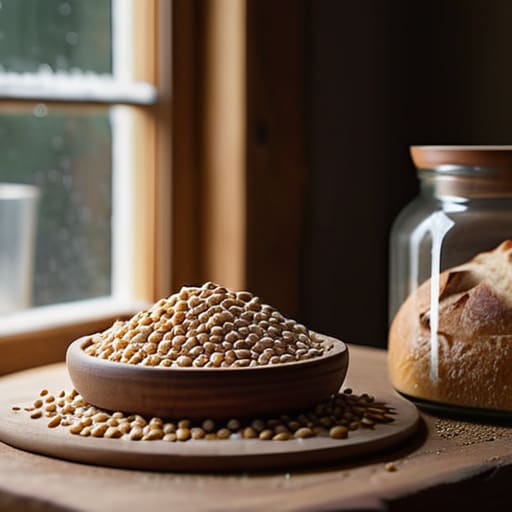
At the end of the day, baking with less waste isn’t about following a strict set of rules or buying expensive organic gadgets; it is about shifting your mindset from consumer to craftsman. We have talked about choosing better grains, using precise weights to ensure nothing is tossed, and treating every leftover bit—from the stale crusts to the liquid from a can of chickpeas—with the respect it deserves. When you stop treating ingredients as disposable and start seeing them as part of a cycle, you realize that waste is often just an ingredient you haven’t found a use for yet. If you manage your hydration correctly and respect your fermentation times, you won’t find yourself throwing away failed loaves because you actually understood the process well enough to salvage them.
I spent thirty-four years watching people rush through their dough, only to end up with a bin full of heavy, sour mistakes. My advice to you is to slow down and listen to what the flour and water are telling you. If you approach your kitchen with patience and intention, you will find that the most sustainable way to bake is simply to do it right the first time. Don’t be discouraged by a flat loaf or a sticky mess; those are just lessons in disguise. Bake with your hands, trust your senses, and remember that the most important thing you can bring to the counter is a sense of care for the things that feed us.
Frequently Asked Questions
I have a bit of leftover sourdough starter that’s looking a little tired; do I have to throw it out, or is there a way to revive it without wasting more flour?
Don’t you dare pour that down the sink. A tired starter isn’t dead; it’s just hungry and likely a bit acidic from sitting too long. If it’s liquidy, it’s just thirsty. Give it a gentle stir to break up any surface crust, then feed it a 1:1:1 ratio—equal parts by weight of starter, flour, and lukewarm water. Let it sit somewhere cozy, away from drafts, and give it time to wake up.
When you talk about using percentages to avoid waste, how do I adjust my recipe if I only have a small amount of flour left in the bag?
Don’t panic and don’t reach for a measuring cup. If you’ve only got 350g of flour left in that bag, that becomes your new 100%. You simply calculate everything else against that number. If your recipe calls for 70% hydration, you take 350 and multiply by 0.70—that’s 245g of water. It keeps the dough’s soul intact. If you try to guess with volume, you’ll end up with a sticky mess and a wasted bag.
What should I do with the scraps of dough that get stuck to the bowl or the bench when I'm shaping my loaves?
Don’t you dare scrape those bits into the bin. Those little scraps are just concentrated dough waiting for a purpose. If they’re clean, gather them up, press them into a small ball, and let them proof separately; they make wonderful, crusty rolls. If they’ve been sitting out too long and feel a bit tacky, tear them up, toss them in some melted butter and sea salt, and bake them into quick crackers. Nothing goes to waste.