I remember a Tuesday morning back in ’94, about three hours into a shift, when I realized I’d run out of whole milk and the delivery truck was still hours away. I stood there in the flour dust, staring at a tray of brioche that suddenly felt like a crisis. Most of those glossy cookbooks would tell you that you’re doomed unless you run to the shop for that specific brand of cultured butter or high-protein flour, but that is absolute nonsense. Learning how to adapt a recipe to what you have isn’t about following a backup list of substitutions; it’s about understanding the logic of the dough so you don’t panic when the pantry looks thin.
I’m not going to give you a list of “emergency swaps” that will leave your cake tasting like cardboard. Instead, I’m going to teach you how to look at your ingredients through the lens of ratios and hydration. We are going to talk about why a bit of yogurt can save a dry sponge and how to adjust your water when your flour is acting temperamental. I promise to give you the math and the feeling behind the changes, so you can stop being a slave to the ingredient list and start actually baking.
Understanding Ingredient Functions Beyond the Printed Page
You have to stop looking at a recipe as a set of laws and start seeing it as a blueprint of roles. When I was running the bakery, I didn’t just see “flour” or “fat”; I saw structure and moisture. If you understand understanding ingredient functions at a fundamental level, you stop panicking when the cupboard is bare. Flour is your skeleton, providing the strength that holds everything up. Fat is your softener, the element that interrupts the gluten to keep things tender. If a recipe calls for butter but you only have oil, you aren’t just swapping one fat for another; you are changing how much tension the dough can hold.
This is where improvising with available ingredients becomes an art rather than a chore. If you’re missing an acid like lemon juice to brighten a heavy batter, a splash of vinegar or even a bit of buttermilk can do the job of shifting the pH. It’s about the intent behind the ingredient. Are you looking for saltiness, moisture, or a specific lift? Once you stop chasing the exact item on the list and start chasing the purpose of that item, you’ll find that the kitchen becomes a much less intimidating place.
Improvising With Available Ingredients and Intuition
Now, let’s talk about actually doing it. When you find yourself improvising with available ingredients, the biggest mistake is treating a recipe like a holy text rather than a map. If a recipe calls for whole milk and you only have heavy cream, don’t just dump it in; you’ll end up with a crumb so rich it feels like eating a stick of butter. You have to adjust your hydration to compensate. I always say that if you’re missing a liquid, look at what you do have and think about its fat content. It’s about flavor profile balancing—if you use a tangier yogurt instead of buttermilk, your dough might ferment a bit faster because of those active cultures. You have to be ready to move the clock forward or back.
The real secret to cooking without a grocery list isn’t a magic list of swaps; it’s knowing how to listen to the bowl. If you swap honey for maple syrup, you’re changing the sugar concentration and the moisture. Don’t look at the clock; look at the dough. If it feels slack or overly sticky, it’s telling you that your substitution was too wet. Trust your hands more than the printed word.
Five Ways to Stop Panicking When the Pantry is Bare
- Master the Hydration Ratio. If a recipe calls for milk and you only have water, don’t just swap them one-for-one and walk away. Milk has fat and solids that affect how a dough moves; if you use water, you might need a tiny knob of butter to compensate for that lost richness. Always look at your total liquid as a percentage of your flour weight. If the dough feels tighter than it should, add water a teaspoon at a time until it feels supple, not sticky.
- Treat Fats as a Spectrum. A recipe asking for unsalted butter isn’t a law, but it is a guide. If you only have salted butter, reduce your added salt weight accordingly. If you’re swapping oil for butter, remember that oil is 100% fat while butter is mostly water and milk solids. You’ll likely need to adjust your liquid slightly to keep the dough from becoming a soup.
- Listen to the Protein, Not the Label. If you reach for a flour that isn’t the “bread flour” the recipe demands, check its strength. If you’re using a weaker cake flour for a heavy rye bread, the structure will collapse like a tired souffle. If you have to use a weaker flour, shorten your kneading time and be gentler with the handling—don’t work the life out of it.
- Sugar is More Than Sweetness. In many doughs, sugar isn’t just for flavor; it’s for browning and moisture retention. If you’re substituting honey or maple syrup for granulated sugar, remember they are liquids. For every gram of honey you add, you’re adding water, so you’ll need to pull a little liquid back from the rest of the recipe to keep your percentages in line.
- Use Your Senses to Bridge the Gap. When you’re improvising, the recipe becomes a suggestion and your hands become the authority. If you swap out an egg for a flax meal or a bit of yogurt, the dough will feel different—it might feel heavier or more sluggish. Don’t fight it by adding more flour until it’s a brick; instead, give it more time to rest. Let the ingredients get to know each other before you try to force them into shape.
The Baker’s Bottom Line
Stop looking at the ingredient list as a set of laws; look at it as a list of jobs. If a recipe calls for whole milk and you only have water, you haven’t ruined the bread, you’ve just changed the fat content. Adjust your hydration percentage accordingly and keep your hands on the dough to feel what’s missing.
When you swap something out, you are changing the chemistry, not just the flavor. A heavier flour means the dough will be thirstier, and a different type of sugar will ferment faster. Don’t panic when the dough behaves differently than the photo—it’s simply reacting to the new tools you’ve given it.
Trust your senses over your measuring cups. If you’ve substituted an ingredient and the dough feels tight or stubborn, don’t force it. Add a splash of liquid or a dusting of flour until it feels right under your palms. The recipe is a map, but your hands are the ones actually doing the driving.
Trust the Process, Not the Paper
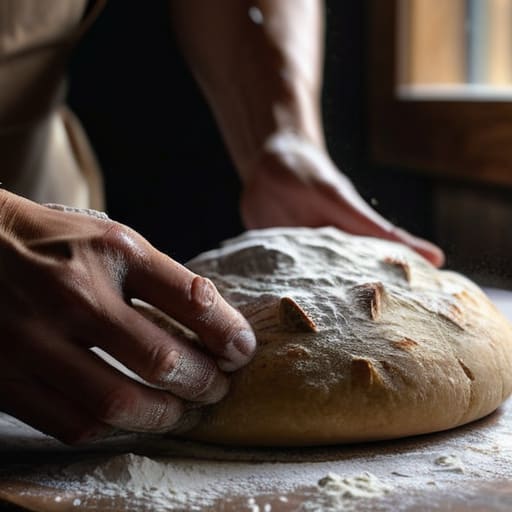
At the end of the day, adapting a recipe isn’t about being a rebel; it’s about being a realist. You now know that a substitution isn’t just a swap—it’s a change in the chemistry of your dough. If you swap heavy whole wheat for white flour, you’ll need to adjust your hydration because that bran is thirsty. If you use a different fat, watch how it affects the crumb. Remember, we look at the percentages and the functions of what we are putting into the bowl, not just the names on the packets. If the dough feels tight, add a splash of water; if it feels slack and weeping, hold back a bit of flour. You aren’t just following instructions; you are managing a living thing.
Don’t let the fear of a “ruined” loaf keep you from the kitchen. Most of my best bakes happened when I was halfway through a recipe and realized I was missing exactly what the dough needed, forcing me to pivot on the fly. A mistake isn’t a failure unless you refuse to learn what it’s trying to tell you. Put the scale aside for a moment, close your eyes, and listen to the texture beneath your palms. Once you stop treating a recipe like a law and start treating it like a conversation, you’ll realize that the best ingredient you ever possessed was your own intuition.
Frequently Asked Questions
If I swap out my usual bread flour for something else, how much do I need to adjust the water to keep my hydration where it needs to be?
If you’re swapping your bread flour for something like pastry flour or an all-purpose, you’re likely dropping your protein content. Lower protein means less structure to hold onto that water. If you’re used to 70% hydration, you might find that same amount of water turns a weak dough into a puddle. Start by pulling back about 3% to 5% of your total water weight. Feel the dough; if it feels slack and sticky, stop adding water.
I'm running low on eggs for this sponge—can I use yogurt or applesauce instead, or am I going to ruin the structure of the cake?
You’re playing with the structure now, and that’s a bit more serious than swapping flour for rye. Eggs are your glue and your lift. If you swap them for yogurt or applesauce, you’re trading fat and protein for moisture and acid. You’ll get a denser, more pudding-like crumb—not a true sponge. If you must, use a bit less liquid elsewhere. But honestly? If you want that spring, go buy another carton.
When I'm substituting fats like butter for oil, how do I know if the dough is going to be too soft to handle?
If you’re swapping butter for oil, you’re moving from a solid fat to a liquid one, and that changes how the dough holds its shape. Oil coats the flour more thoroughly, which can make the dough feel deceptively slick and slack. Don’t panic if it feels a bit “loose.” Just watch the tension; if it won’t hold a shape during your folds, add a tiny bit more flour—maybe 2%—until it feels tacky but resilient.