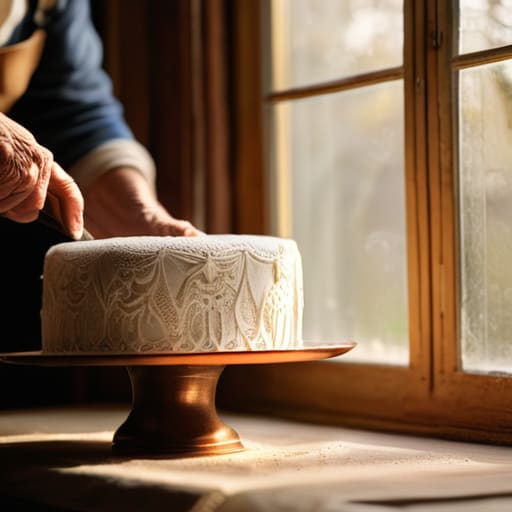
I’ve spent thirty-four years watching people walk into my shop, staring at a tray of beautiful, towering biscuits, only to go home and produce something that looks more like a sad, melted puddle on a baking sheet. Most of those folks are following some fancy, overcomplicated recipe that demands expensive cultured butters or specialized gadgets, but they still can’t figure out how to make biscuits that keep shape. Let me tell you something: it isn’t about the brand of flour you buy or having a designer rolling pin; it is almost always because your hands were too warm or you treated that dough like it was something you needed to punish.
I am not here to sell you a dream or a list of ingredients you can’t find at the corner grocer. I’m going to tell you exactly what is happening inside that dough when the heat of your palms starts to compromise the fat, and why your folding technique is likely the culprit. We are going to talk about temperature, handling, and the discipline of the touch. If you follow my lead, you won’t just be making biscuits; you’ll be learning how to respect the ingredients enough to let them do their work.
The Truth of Ratios Flour to Liquid Ratio for Biscuits
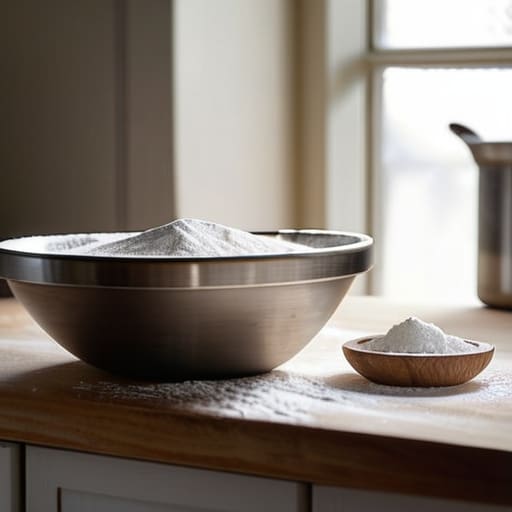
If you want to understand why your biscuits are spreading like puddles on a hot afternoon, stop looking at the brand of flour and start looking at your math. I don’t care what the box says; I care about your flour to liquid ratio for biscuits. For a biscuit that actually holds its height, I aim for a hydration that sits somewhere between 55% and 60%. If you’re eyeballing it with a measuring cup, you’ve already lost the battle. A cup of flour can weigh anywhere from 120 to 160 grams depending on how much you’ve packed it down, and that discrepancy is exactly why your dough ends up too slack to stand up straight in the oven.
Precision isn’t about being fussy; it’s about control. When your ratio is off, you aren’t just making a different texture—you’re inviting disaster. If you lean too heavy on the milk or buttermilk, you lose the structural integrity needed for preventing biscuit spread during baking. You need enough flour to provide a skeleton, but enough moisture to keep it from being a brick. I always tell my apprentices: if the dough feels like it’s fighting you or sliding through your fingers like wet sand, your ratio is broken. Get the weights right first, and the shape will follow.
Why High Protein Flour for Structure Cannot Be Ignored
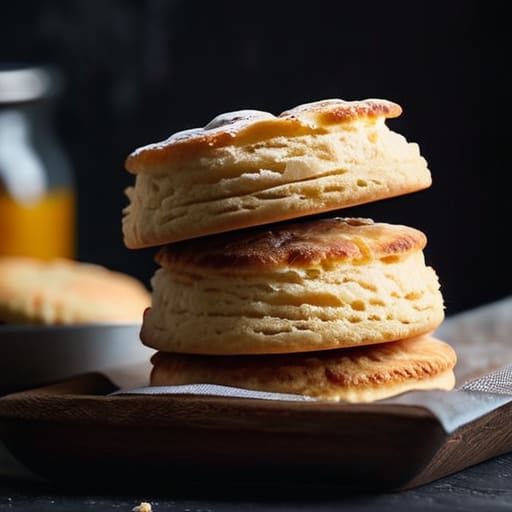
Now, let’s talk about the bones of your biscuit. Most people grab whatever white powder is on sale, thinking it’s all the same, but that’s how you end up with a flat, greasy pancake instead of a tall, flaky stack. If you want height, you need strength, and that strength comes from protein. Using high protein flour for structure isn’t about being a snob; it’s about having enough gluten to hold those pockets of steam and fat in place. Without that scaffolding, your biscuits will simply lose the fight against the heat.
When you use a lower-protein flour, the dough lacks the internal grip required for preventing biscuit spread during baking. It’s like trying to build a stone wall with wet sand—it just slumps. You can have the most perfect temperature of baking fat or the most disciplined hands, but if your flour can’t support the weight of the leavening, you’re just making expensive crackers. Don’t blame your technique when the culprit is actually sitting in your pantry.
Five Ways to Stop Your Biscuits from Spreading Like Puddles
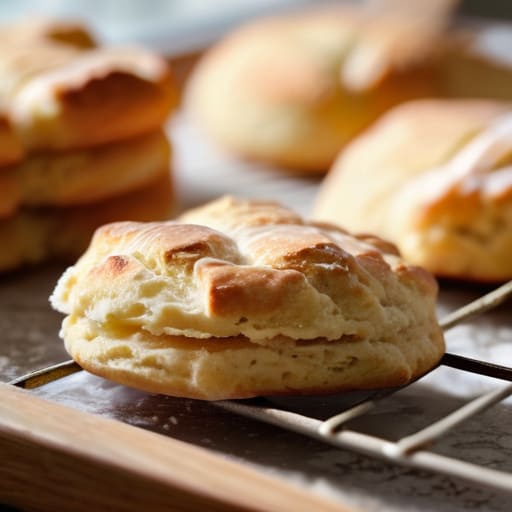
- Watch your hands, not just the timer. If you’re handling that dough like it’s a piece of stubborn clay, you’re melting the fat with your body heat and killing the lift. Keep your touch light and your movements quick; you want to fold the dough, not knead it into submission.
- Temperature is your silent partner. If your butter is softening before it even hits the oven, your biscuits will spread before they ever have a chance to rise. I want that butter cold enough to feel like a stone, and your kitchen shouldn’t be a sauna while you’re working.
- Stop measuring by the cup and start looking at the hydration. If your dough feels tacky or slack, you’ve likely pushed your hydration past 60% by mistake. A biscuit dough should feel cohesive and slightly springy, not like a wet sponge that’s lost its will to live.
- Give the dough a rest, even if you’re in a hurry. If you cut your rounds and shove them straight into a hot oven, the gluten is too tight and the fat hasn’t settled. Ten minutes in the fridge lets the flour fully hydrate and the fat firm back up, which is the secret to those high, vertical layers.
- Don’t crowd the pan. If your biscuits are touching before they go in, they’ll bake into one giant, shapeless sheet of dough. They need their own personal space to expand upwards; if they can’t breathe, they’ll just melt into each other.
The Three Pillars of a Biscuit That Holds Its Ground
Stop trusting your eyes and start trusting your scale; if your hydration is even 2% too high, you aren’t making biscuits, you’re making pancakes.
Respect the protein in your flour, because if you use a weak, all-purpose blend without understanding its limits, your dough will have no backbone to stand up in the oven.
Watch your hands, not the clock; heavy-handed mixing develops too much gluten and toughens the crumb, while a rushed dough won’t have the structural integrity to hold its shape once the heat hits it.
The Baker’s Final Word
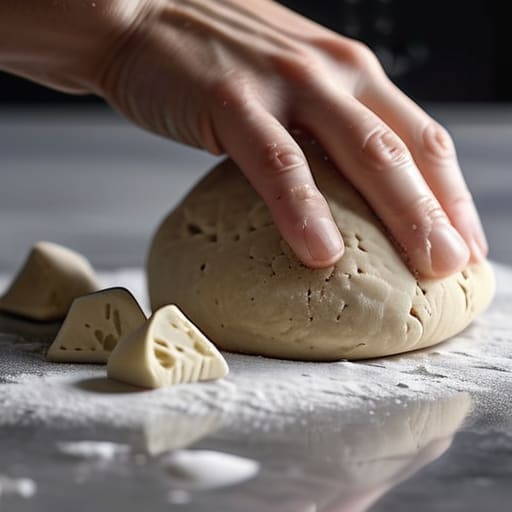
If you’ve followed the math, you’re halfway there. Remember that a biscuit that spreads like a puddle isn’t a failure of the recipe, but a failure of temperature and tension. You cannot escape the reality that your flour choice dictates the strength of the crumb, nor can you ignore how a high hydration percentage demands a gentler hand. If you use the wrong protein or let your butter turn into a liquid soup before it hits the oven, no amount of technique will save the shape. Stick to your weights, keep your ingredients cold, and stop treating the dough like an enemy to be conquered; instead, treat it like something that needs to be guided with intention.
At the end of the day, your kitchen will never be as steady as mine was at four in the morning, and that is perfectly fine. You will have days where the humidity in the air makes the dough feel slack, or where your hands are just a bit too heavy, and your biscuits will come out flat. Don’t throw the batch away in frustration. Look at what happened—was the oven too cool, or did you overwork the layers?—and learn from it. Baking is a conversation between you and the grain, and sometimes the grain has something important to teach you. Trust your hands, respect the time it takes to rise, and eventually, you won’t need a scale to tell you when a dough is ready.
Frequently Asked Questions
If I’m using a higher protein flour to get that structure, how do I stop the biscuit from turning out tough or bread-like?
You’re worried about turning your biscuits into hockey pucks, and rightfully so. High protein gives you the scaffolding, but it’s a double-edged sword. If you overwork that gluten, you’ll end up with something you could use to patch a hole in a drywall. The secret isn’t less flour; it’s more care. Keep your hands light, your fat ice-cold, and for heaven’s sake, stop kneading it like you’re making sandwich bread. Mix until just combined, then stop.
My kitchen is freezing in the winter; how much should I adjust my liquid temperature to make sure the dough doesn't just sit there?
If your kitchen feels like a larder, you can’t expect a cold dough to do anything but sulk. You need to compensate. I usually aim for a final dough temperature of about 26% warmer than the room. If it’s freezing, stop using cold milk straight from the fridge; use liquid that’s warm to the touch, maybe 35°C. You aren’t making tea, mind you—just use the heat to jumpstart the chemistry before the fat melts.
I’ve followed the ratios perfectly, but my biscuits still spread out like pancakes in the oven—am I handling the dough too much during the shaping stage?
You’ve hit the nail on the head. If your ratios are right and they’re still spreading, your hands are likely the culprit. You’re treating that dough like it’s stubborn, but it’s actually just sensitive. Every time you overwork it or press too hard during shaping, you’re melting that precious fat and developing too much gluten. Treat the dough like a sleeping child—be gentle, be quick, and stop squeezing the life out of it.