If you’re looking for a “complete guide to desserts” that promises you can whip up a silk-smooth mousse or a towering sponge using nothing but a handheld mixer and a sense of optimism, you can close this page right now. Most of these glossy manuals are written by people who have never had flour under their fingernails or felt the panic of a broken emulsion at midnight. They focus on the decoration—the gold leaf, the perfect piping, the Instagram-ready drizzle—while completely ignoring the physics of why your custard curdled or why your pastry turned out like a wet biscuit.
I’m not here to sell you on fancy gadgets or expensive extracts that do nothing but pad the price tag. Instead, I am going to teach you the unseen mechanics of sugar, fat, and heat. We are going to talk about why the temperature of your butter is more important than the brand of your chocolate, and why patience is the one ingredient you cannot substitute. This isn’t about following a list of instructions; it’s about learning to understand the chemistry of the bowl so that when things go wrong, you actually know how to fix them.
Mastering Flavor Profile Balancing Through Precision
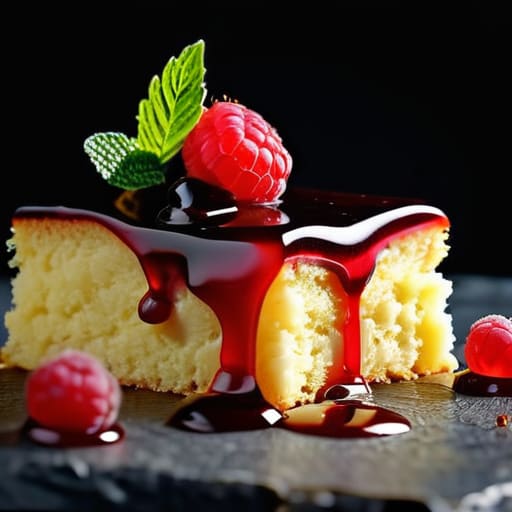
Most people think a dessert is just a way to end a meal with a sugar hit, but that’s a lazy way to think. If you want to move beyond a simple sugar rush, you have to understand flavor profile balancing. It isn’t about making things sweeter; it’s about finding the tension between elements. I’ve spent decades learning that a heavy, buttery sponge needs the sharp, acidic bite of a fruit reduction to keep it from feeling cloying. If you rely solely on sugar, you aren’t cooking; you’re just masking.
When you move into more complex sweet and savory dessert pairings, you’re looking for those subtle bridges. A pinch of Maldon salt in a dark chocolate ganache or a whisper of rosemary in a honey cake isn’t a gimmick—it’s about waking up the palate. You have to respect the weight of your ingredients. A dense, fudgy base requires a light, aerated component to provide contrast. It’s about the interplay of density and air, ensuring that no single note stays on the tongue long enough to become tiresome.
The Science of Pastry Texture Combinations
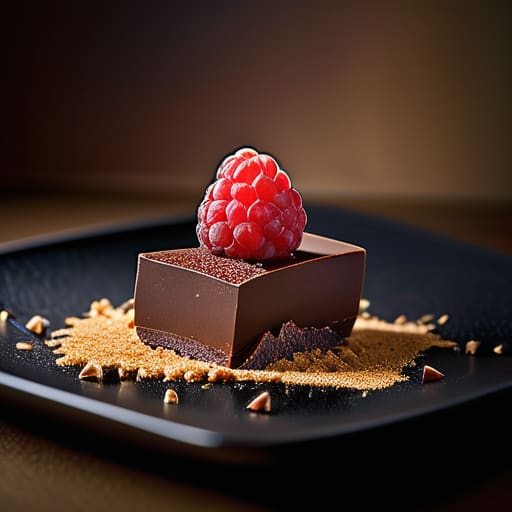
You can have the most expensive vanilla bean in the world, but if your pastry is a monotonous slab of softness, you’ve wasted your money. A proper dessert is a conversation between different mouthfeels. I always tell my apprentices that a plate needs a rhythm; you want the snap of a tempered chocolate shard to interrupt the velvet surrender of a mousse. When we talk about pastry texture combinations, we aren’t just playing with food; we are managing how the tongue perceives weight and resistance. If everything is soft, the palate gets bored and shuts down.
To keep someone interested, you need a structural contrast. Think of a classic tart: you require the short, sandy crumb of a high-fat crust—say, a 55% hydration dough if you’re working with a heavy cream—to act as the foundation for a silky curd. Without that crunchy, buttery architecture, the cream just feels like a puddle. It’s the same principle in sweet and savory dessert pairings; a sprinkle of coarse sea salt or a shard of brittle adds a necessary physical “event” that breaks up the sugar. Texture is the heartbeat of the dish.
The Small Things That Make or Break a Tray
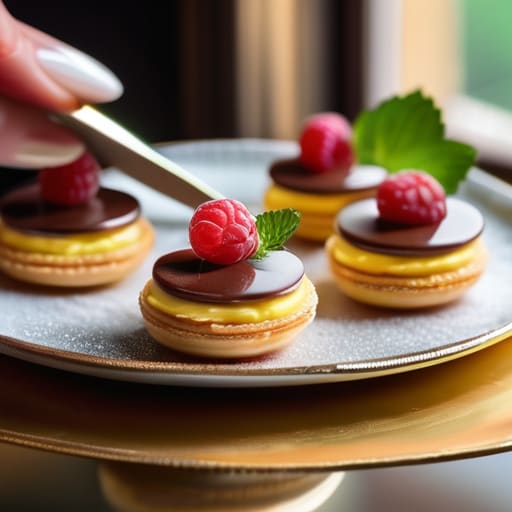
- Stop using measuring cups for your dry goods; they are nothing but a way to invite inconsistency into your kitchen. If you aren’t weighing your flour and sugar in grams, you aren’t baking, you’re guessing, and guessing is how you end up with a heavy, leaden sponge.
- Temperature is your silent partner, so treat it with respect. If your recipe calls for room-temperature butter, that means it should yield to a gentle thumbprint without being greasy or melting into a puddle; if it’s too cold, your emulsion will break, and no amount of whisking will save it.
- Respect the resting period. Whether it’s a shortcrust pastry that needs an hour in the fridge to relax its gluten or a custard that needs to chill to set its structure, rushing the clock is the quickest way to end up with a dessert that lacks soul and holds no shape.
- Salt is not a seasoning you add at the end; it is a fundamental component of the architecture. A pinch of fine sea salt in your caramel or your chocolate ganache isn’t there to make it taste “salty,” it’s there to pull the sweetness out of the shadows so it doesn’t taste one-dimensional.
- Watch the oven, not the timer. Every kitchen has its own temperament, and a clock won’t tell you when a meringue has reached the perfect structural stiffness or when a chocolate souffle is beginning to weep. You have to look for the color, smell the caramelization, and trust your senses over a digital countdown.
The Baker's Truths
Trust your hands over your eyes; a dough that feels tight or a cream that lacks body will tell you more about your success than a glossy photograph ever could.
Precision is your only safeguard against chaos, which is why you must measure by weight and respect the percentages of your ingredients rather than relying on the guesswork of volume.
Respect the invisible ingredients—temperature, time, and patience—because even the most perfect recipe will fail if you try to rush the chemistry or ignore the heat of your kitchen.
The Baker’s Final Word
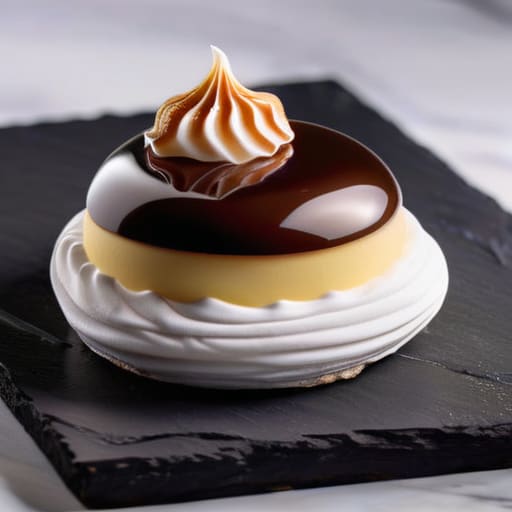
We have spent a great deal of time talking about the mechanics—the way salt cuts through fat, how temperature dictates the snap of a chocolate ganache, and why your crumb structure depends more on your handling than your oven setting. If you have been paying attention, you know that a truly great dessert isn’t a collection of ingredients; it is a controlled sequence of chemical reactions and sensory balances. You cannot cheat the physics of a meringue or the hydration of a sponge, and you certainly cannot hide a lack of discipline behind a heavy dusting of powdered sugar. Remember that precision in your weights and a keen eye for your temperatures are what separate a mere sweet from a masterpiece of texture.
At the end of the day, though, I want you to put down the scale for a moment and actually feel what you are doing. My hands might be stiff now, but they still know when a dough has been worked too hard or when a custard is a heartbeat away from breaking. Don’t be afraid of the messy parts or the batches that go sideways; those are often the lessons that stick to your ribs better than any textbook ever could. Baking is a conversation between you, your ingredients, and the air in your kitchen. Be patient, trust your senses, and remember that the best things in life—much like a well-proofed loaf—simply cannot be rushed.
Frequently Asked Questions
If I’m working with a high-hydration dough and my kitchen is particularly drafty, how do I adjust my timing without ruining the structure?
If your kitchen is drafty, stop looking at the clock and start looking at the dough. A high-hydration dough is sensitive; a cold breeze will stall the yeast before it even finds its rhythm. Don’t rush it with extra heat, or you’ll overproof and lose your structure. Instead, find a warm, still corner—perhaps near the oven—and let the dough dictate the pace. If it isn’t growing, it isn’t ready. Patience, not a timer, is your guide.
When balancing flavors, how much weight should I actually give to acidity versus fat when the recipe calls for heavy creams or butter?
If you’re working with heavy cream or butter, acidity isn’t just a flavor; it’s your structural relief. Fat coats the tongue and mutes everything else. When I’m balancing a rich custard or a shortcrust, I look for acidity to act as a bright counterpoint that cuts through that coating. Don’t think in teaspoons; think in impact. If the fat feels heavy or cloying on the palate, you haven’t added enough acid to wake the flavor up.
I understand that cups lie, but if I don't have a digital scale handy, how can I tell if my flour is too packed or too aerated before I start mixing?
If you’ve lost your scale, you’ve lost your compass, but you haven’t lost your hands. Don’t just scoop that flour straight from the bag; you’ll pack it down and end up with a dry, heavy mess. Instead, use a spoon to fluff the flour into the cup, then level it off with a knife. It should feel light, almost like it wants to drift away if you breathe on it too hard.