I remember a summer afternoon in the shop, years ago, when a young apprentice tried to swap my fruit preserves for a vegan alternative, thinking a simple substitution would suffice. She ended up with a tray of something that felt more like rubber than dessert, staring at me with eyes full of confusion. That is the trouble with modern baking; people treat stabilizers like interchangeable parts in a machine, but they aren’t. If you are standing in your kitchen wondering how gelatine and agar differ, you aren’t just choosing between an animal product and a seaweed extract; you are choosing the very soul of the texture you want to achieve.
I am not here to give you a chemistry lecture or a list of sterile measurements that won’t work in a warm kitchen. Instead, I am going to tell you how these two behave when the heat rises and the clock is ticking. I’ll explain why one yields to a gentle spoon while the other stands its ground like a stubborn mule, and I’ll give you the honest truth about when to trust your hands over a textbook. We aren’t chasing perfection here; we are chasing the right feel.
Gelatine: The Soft, Yielding Heart
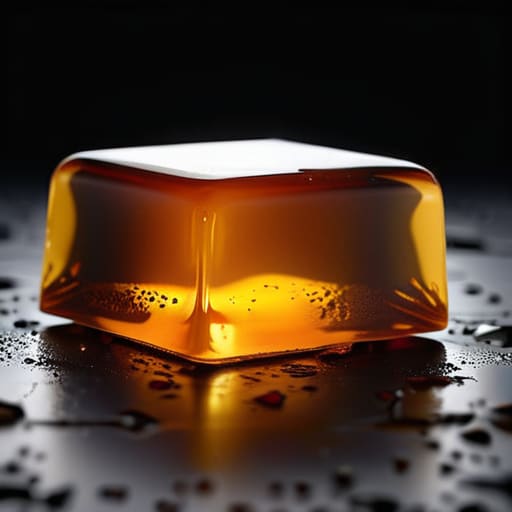
Gelatine is a protein derived from animal collagen that creates a delicate, melt-in-the-mouth structure by setting into a thermo-reversible network. When you study how gelatine and agar differ, you must first understand that gelatine is essentially a creature of temperature, relying on its ability to transition from a firm state back into a liquid the moment it meets the warmth of a human tongue. Its greatest strength is this unrivaled silkiness, providing a clean, elegant finish that feels less like a structural barrier and more like a luxurious embrace.
In my years behind the counter, I’ve learned that gelatine is the ingredient you turn to when you want a dessert to feel effortless rather than engineered. It’s the difference between a mousse that feels like a cloud passing through your mouth and one that feels like a block of cold jelly. You cannot rush it, and you certainly cannot boil it into submission without ruining its soul; you have to treat it with a certain gentle respect to ensure it sets without becoming rubbery.
Agar: The Steady, Stubborn Anchor
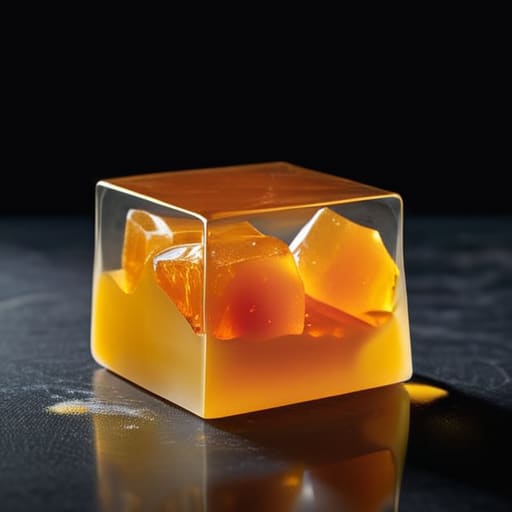
Agar is a plant-based polysaccharide extracted from red algae that produces a firm, stable gel capable of maintaining its shape even under significant heat. Unlike its animal-based counterpart, agar is prized for its extraordinary thermal stability, meaning it won’t lose its composure just because your kitchen is a bit warm or your dessert is sitting out on a summer sideboard. It sets much more quickly and creates a structure that is distinctly more brittle and precise, making it a powerhouse for intricate molds.
If gelatine is a soft conversation, agar is a firm handshake. It is a wonderful tool when you need a texture that holds its ground, but you must be careful not to treat it too roughly during the mixing process. Because it sets so decisively, there is very little room for error once the temperature drops; it demands a decisive hand and a clear plan. It doesn’t melt away with a whisper like gelatine does, so you have to decide exactly how much structural integrity you actually want on the plate.
Comparison of Gelatine vs. Agar
| Feature | Gelatine | Agar |
|---|---|---|
| Source | Animal-derived (collagen) | Plant-derived (seaweed) |
| Setting Temperature | Requires refrigeration | Can set at room temperature |
| Texture | Soft, bouncy, melts in mouth | Firm, brittle, jelly-like |
| Melting Point | Low (approx. 35°C) | High (approx. 85°C) |
| Dietary Suitability | Not Vegan/Vegetarian | Vegan and Vegetarian friendly |
| Best For | Mousses, gummy candies, marshmallows | Puddings, jellies, vegan desserts |
| Clarity | High transparency | Often slightly opaque |
Animal vs Plant Based Thickeners a Question of Soul
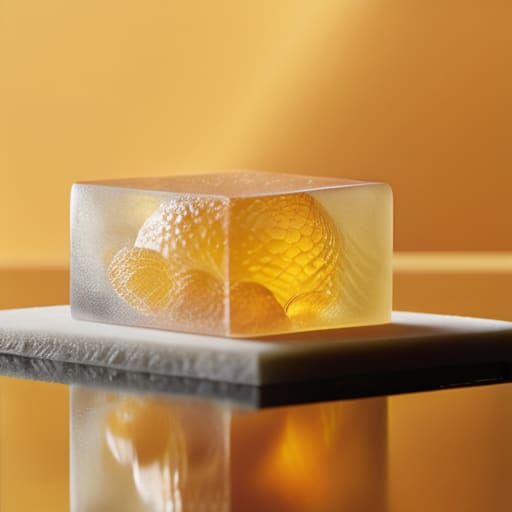
When you’re standing over a warm pot, deciding whether to reach for a packet of gelatin or a jar of agar, you aren’t just choosing a thickener; you are deciding the very spirit of what you’re making. This isn’t about nutrition or politics—though those certainly play a part—it’s about the fundamental nature of the texture you want to invite to the table. One brings a certain life to the dish, while the other brings a disciplined structure.
Gelatin is a living thing that needs warmth to yield, providing that melt-in-the-mouth quality that feels almost sensual on the tongue. It’s temperamental; if your kitchen is too cold, it stays stubborn, and if it’s too hot, it vanishes. Agar, on the other hand, is a plant-based workhorse. It is predictable and unyielding, setting firmly even in a warm room, but it lacks that graceful, dissolving finish. It can feel a bit brittle, almost like a snap rather than a melt.
If you want a dessert that feels like a caress, gelatin is your winner. But if you need a shape that stays put regardless of the weather, agar is the reliable hand.
The Gelatine Melting Point vs Agar Lessons in Thermal Truth
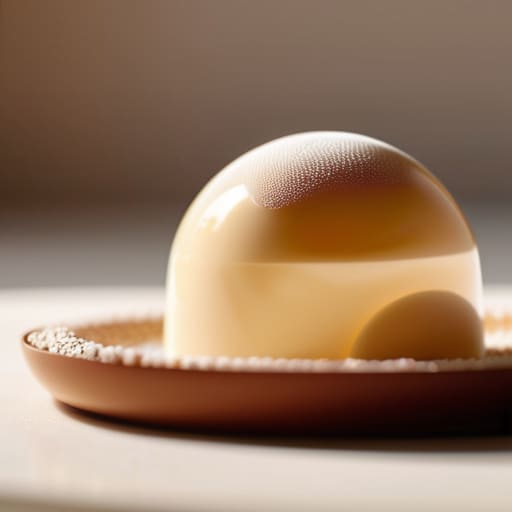
If you don’t respect how a thickener reacts to heat, you aren’t baking; you’re just gambling with your ingredients. In my shop, a tray of mousse left too close to the radiator was a tragedy, not a mistake. Understanding the melting point isn’t about memorizing numbers in a textbook; it is about knowing whether your creation will hold its dignity or turn into a puddle the moment the room warms up.
Gelatine is a temperamental creature. It thrives in the cool, but the second it hits warmth, it surrenders entirely, turning back into a liquid. It’s a beautiful, melting grace that makes a panna cotta feel like silk on the tongue, but it demands a controlled environment. Agar, on the other hand, is a stubborn, sturdy thing. It won’t budge for a warm afternoon or a slightly heated sauce; it stays set until things get truly hot.
For delicate, melt-in-the-mouth textures where elegance is everything, gelatine wins by a landslide. But if you’re making something that needs to survive a summer picnic or a hot dessert, you’d better reach for the agar.
The Baker’s Final Word on Setting Your Success
Choose your thickener by the life you want the dish to have; use gelatin if you want a wobble that melts away on the tongue like a fond memory, or reach for agar if you need something structural, steady, and unyielding.
Respect the heat of your kitchen; remember that gelatin is a sensitive creature that will weep if it gets too warm, while agar is a stubborn soul that stays firm even when the room begins to heat.
Stop looking for perfection in a photograph and start feeling the texture; whether you are working with an animal or a plant, the success of your set depends entirely on how you respect their specific thermal limits.
Choosing Your Path
At the end of the day, choosing between these two isn’t about finding a “better” ingredient, but about understanding what your dessert is trying to achieve. If you want that melt-in-the-mouth, velvety wobble that disappears the moment it hits a warm tongue, you reach for the gelatine. It is temperamental and demands a certain respect for temperature, but it offers a luxury that plant-based alternatives simply cannot mimic. On the other hand, if you are working in a kitchen that feels more like a laboratory—or if you simply need a set that refuses to budge even when the room gets a bit stifling—agar is your reliable, sturdy companion. Just remember that agar doesn’t care for the gentle nuances of heat; it follows its own rigid set of rules, and you must work within them.
Don’t let the science of thickeners intimidate you into staying away from the more delicate confections. Whether you are working with the animal soul of gelatine or the stubborn strength of agar, the secret remains the same: pay attention to the feel of the texture and the rhythm of your kitchen. A recipe is merely a map, but your hands and your senses are the ones actually doing the traveling. If a set comes out too firm or a mousse fails to hold its shape, don’t blame the ingredient—look at your timing, check your heat, and try again. Baking is a conversation between you and the elements, and once you learn to listen, you’ll find the perfect medium every single time.
Frequently Asked Questions
If I’m substituting agar for gelatine in a recipe I already know, how much of the weight do I actually need to use so I don't end up with a rubber puck?
Listen to me: you cannot swap them gram for gram. If you try, you’ll end up with something that feels more like a bouncy ball than a dessert. Agar is much more efficient—it’s a powerhouse. Generally, you’ll use about 38% to 40% of the weight of the gelatin you’d normally use. If your recipe calls for 10g of gelatin, start with 4g of agar. It’s a different kind of strength, more structural and less yielding.
Can I use both together if I want a specific texture, or will they fight each other in the pot?
They won’t fight, but they won’t shake hands, either. If you toss them both into the pot, you’re essentially trying to make a marriage out of two people who speak different languages. The agar will set firmly and stubbornly, while the gelatine wants to melt and wobble; together, they usually just create a texture that feels confused—neither bouncy nor creamy. If you want a specific feel, pick your champion and master it.
Since agar is so stubborn about heat, does that mean I can't use it for delicate fruit purees that I'd rather not boil?
You’ve hit on the exact frustration that makes agar such a temperamental companion. Because agar needs to reach a boil to fully “activate”—to let those molecules shake hands and bond—it can easily cook the brightness right out of a delicate strawberry or peach puree. If you can’t boil it, you’ll end up with a grainy, weeping mess. My advice? Bloom the agar in a tiny bit of water first, then whisk it into a small portion of the puree, bring that up to temperature, and then fold it back into the rest. It’s more work, but it respects the fruit.