I remember a Tuesday morning back in ’94, about an hour after my first oven had been lit, when I stared down at a bowl of what was supposed to be a silky lemon sponge and saw nothing but tiny, weeping clumps of fat and flour. I had been rushing—trying to beat the clock because a local wedding order was looming—and I’d let my butter sit too long against cold eggs. It is the most heartbreaking sight when you’re halfway through a recipe, but if you are wondering how to stop a batter curdling, the answer isn’t a fancy stabilizer or a more expensive whisk; it is simply a matter of respecting the temperature.
I am not going to give you a list of miracle ingredients or tell you to buy a professional-grade emulsifier. Instead, I am going to tell you exactly what is happening inside that bowl when the fat loses its grip on the liquid. We will talk about the math of your ingredients and why patience is your most vital tool when you are trying to marry oil and water. I’ll show you how to fix a broken mess without throwing the whole batch in the bin, because in my kitchen, we don’t waste good flour just because the room was a little too chilly.
The Tyranny of Temperature Room Temperature Ingredients Matter
Most people treat their ingredients like they’re just things pulled from a cupboard, but in my kitchen, temperature is everything. If you take eggs straight from the refrigerator and try to force them into a pool of softened butter, you aren’t just mixing; you are fighting a war you’ve already lost. That sudden drop in temperature causes the fat to seize, which is exactly where the emulsification in baking goes to die. You end up with a grainy, sad mess instead of a smooth, cohesive base.
I tell my apprentices the same thing I tell anyone who knocks on my door: room temperature ingredients are not a suggestion, they are the foundation. When your butter and eggs are at the same thermal level, they want to hold hands. They create a stable structure that can actually support the flour and sugar you’re about to add. If you ignore this, you’ll find yourself desperately fixing broken batter halfway through the process, trying to coax a marriage out of two ingredients that simply refuse to speak the same language. It is much easier to start with harmony than to try and manufacture it once the damage is done.
The Fragile Importance of Fat and Liquid Balance
Once you’ve checked that your eggs and butter aren’t fighting a cold war, you have to look at the actual chemistry of the bowl. Most people think a batter curdles because they’ve done something “wrong,” but usually, it’s just a matter of the importance of fat and liquid balance being ignored. If you dump your liquids into your fats too quickly, or if you try to force a heavy liquid into a fat-heavy base without giving it a chance to marry, the structure simply collapses. It’s not a failure of the recipe; it’s a failure of timing.
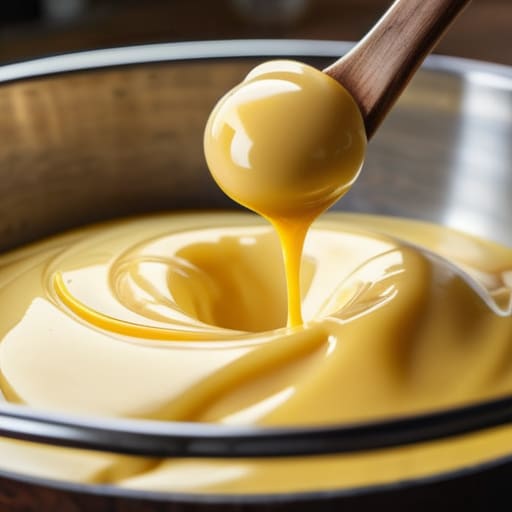
When you are mixing wet and dry ingredients, you aren’t just stirring; you are managing emulsification in baking. If you see that grainy, weeping texture starting to form, don’t just keep whisking harder—that’s the quickest way to turn a lovely sponge into something resembling wet sand. Instead, try adding a tablespoon of your measured flour or a tiny bit more of your liquid base to act as a bridge. You’re looking to find that sweet spot where the fat is suspended perfectly within the liquid, creating a smooth, cohesive ribbon that holds its shape.
Five Ways to Save Your Batter Before It Breaks
- Stop the rush and check your water temperature; if you are adding liquid to a fat-heavy base, that liquid needs to be the same temperature as the room, or the fat will simply retreat into little stubborn beads instead of becoming part of the whole.
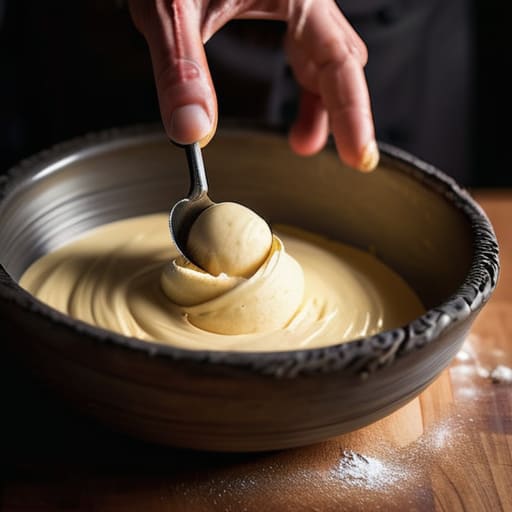
- Add your liquids in stages, not all at once; I always tell my apprentices to think of it like a slow conversation, adding a tiny splash of liquid, whisking until it’s fully swallowed, and then adding another, rather than trying to force a marriage in a single gulp.
- Watch your whisking speed, because frantic energy isn’t the same as thoroughness; if you see the batter starting to look grainy or “split,” stop your vigorous beating immediately and switch to a gentle, steady folding motion to coax the emulsion back together.
- If you see those tiny, unappealing flecks of fat starting to separate, introduce a teaspoon of your dry flour base back into the mix; the starch acts like a tiny sponge that can grab those escaped fats and pull them back into the fold.
- Trust your hands more than your eyes; if the batter feels heavy and greasy rather than smooth and cohesive, it has already begun to curdle, and you need to stop adding more liquid and start adding more structure through flour or a bit of warmth.
The Baker’s Summary: Three Truths to Remember
Stop trusting your eyes and start trusting your thermometer; if your fat is too cold or your liquid is too chilled, the emulsion will break every single time, no matter how much you whisk.
Respect the ratio of your fats to your liquids; if you’ve added a splash too much milk or a knob too much butter, you can’t just “mix harder” to fix it—you have to balance the chemistry.
Patience is your best tool when a batter looks like it’s splitting; don’t panic and don’t add more flour, just find a way to gently nudge the temperature back to where it belongs.
Beyond the Broken Batter
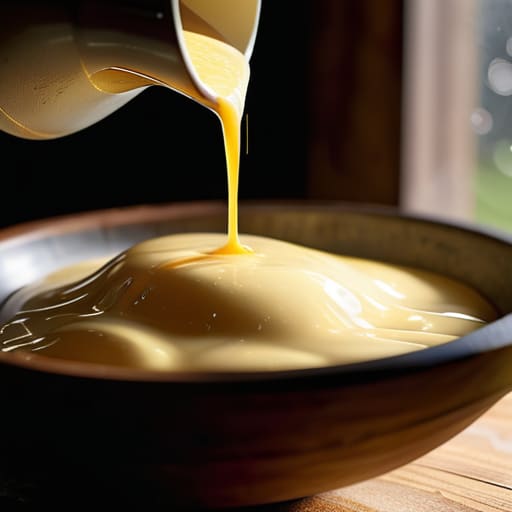
At the end of the day, preventing a curdled batter comes down to respecting the physics of your ingredients. It isn’t magic; it is simply a matter of ensuring your fats and liquids are playing by the same rules. If you keep your temperatures steady and pay close attention to the emulsion process—adding your liquid in a slow, controlled stream rather than dumping it in like you’re filling a bucket—you will find that most “disasters” are entirely avoidable. Remember, if the mixture begins to look grainy or split, it is usually a signal that your kitchen is too cold or your hands are moving too fast. Listen to the texture, not just the clock, and adjust your pace accordingly.
I know how disheartening it feels to see a beautiful, expensive batch of ingredients turn into a lumpy mess right before you’re ready to bake. But please, don’t let a broken emulsion convince you that you aren’t meant to be in the kitchen. Every time a batter breaks, it is just the dough telling you something about the environment you’ve created. Treat these moments as instructional failures rather than personal ones. Even after thirty-four years of four o’clock starts, I still have days where I have to slow down and start over. Baking is a conversation between you and the ingredients, and sometimes, you just have to learn how to listen.
Frequently Asked Questions
If I’ve already gone too far and the batter looks like it’s splitting, is there any way to save it or is it a lost cause?
Don’t throw it in the bin just yet. Most people see a split batter and think the batch is dead, but it’s usually just a matter of re-establishing the emulsion. Take a small spoonful of your dry ingredients—just a bit of flour—and whisk it into a tiny amount of your liquid base first to create a smooth paste. Then, slowly work that paste back into the main bowl. It’s about gentle reintegration, not force.
Does the type of fat I use—like switching from softened butter to melted oil—change how likely the mixture is to break?
It changes everything. When you use softened butter, you’re working with an emulsion—a delicate marriage of water and fat that wants to stay together. It’s temperamental; if it gets too warm, the marriage ends in a breakup. Oil, however, is a single-phase liquid. It doesn’t “curdle” because there is no emulsion to break. You’ll get a different crumb, certainly, but you’ll lose that creamy, aerated structure butter provides.
I always use cold eggs straight from the fridge; how much of a difference does that actually make to the stability of my emulsion?
It makes all the difference in the world. You’re essentially trying to force two things to marry when one of them is shivering. If your butter is at a lovely 20°C and you drop in eggs at 4°C, that fat is going to seize up instantly. You’ll end up with a grainy, broken mess instead of a smooth emulsion. Take them out an hour early; if the temperature is even, the batter behaves.