I spent thirty-four years watching people pull their hair out over a YouTube video, trying to mimic some perfectly manicured, flour-dusted hand movement that looks lovely in a thumbnail but does nothing for the actual dough. They treat it like origami, all precise folds and delicate touches, but if you’re trying to learn how to shape a loaf by following a still photograph, you’ve already lost the battle. I remember being nineteen, standing over a wood-fired oven that felt more like a living beast than an appliance, realizing that the dough doesn’t care about your aesthetic; it cares about tension and temperature. If you’re too aggressive, you’ll tear the gluten; if you’re too timid, the loaf will simply puddle into a sad, flat pancake once it hits the heat.
I’m not going to give you a list of “aesthetic” steps to make your kitchen look like a magazine spread. Instead, I’m going to tell you how to listen to the dough with your palms and how to find that crucial surface tension without being rough. We are going to talk about the weight of the mass and the way it resists your touch, because once you understand the physics of the stretch, you won’t need a guide anymore.
Mastering Bread Dough Manipulation Without Rushing the Process
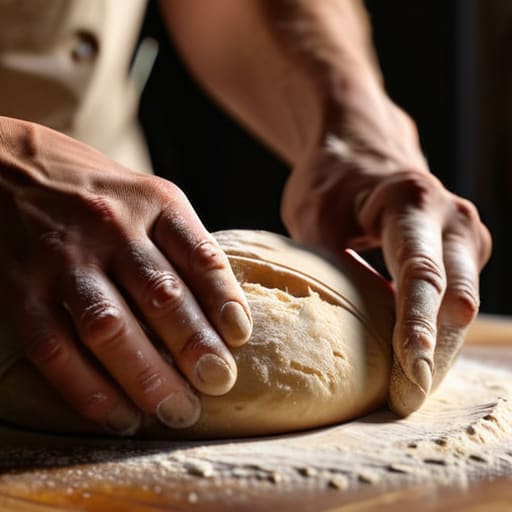
The biggest mistake I see people make is trying to wrestle the dough into submission. If you find yourself fighting a piece of dough that feels limp or stubborn, stop. You aren’t winning that fight; you’re just exhausting your wrists and tearing the gluten structure you worked so hard to build. True bread dough manipulation isn’t about force; it’s about a gentle, decisive pressure. You want to guide the dough, not bully it. If the dough feels like it’s resisting, it usually means it needs another twenty minutes of rest to relax its proteins.
When you finally sit down to work, focus on creating surface tension in the dough rather than trying to sculpt a masterpiece. Whether you are working on a round sourdough boule shaping or aiming for a long batard, the goal is the same: you want a taut, smooth skin on the top. Use the friction of the work surface to pull the dough toward you, tightening that outer layer. If you feel a tear starting, back off immediately. A tear isn’t a failure of technique; it’s the dough telling you that you’re being too heavy-handed.
Creating Surface Tension in Dough Through Gentle Pressure
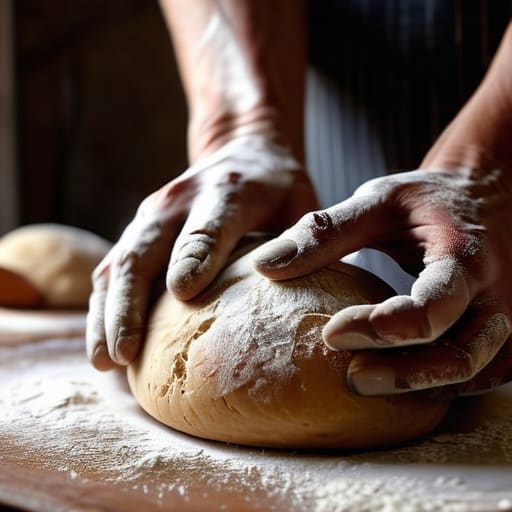
Now, listen closely, because this is where most people lose their nerve. When you’re working on your sourdough boule shaping, you aren’t trying to wrestle the dough into submission like a stubborn mule. If you push too hard, you’ll see it immediately—the dough will tear, the gases you’ve spent hours cultivating will escape, and you’ll end up with a flat, sad pancake. Instead, think of it as guiding the dough into a skin. You want to use the friction of the work surface to pull the outer layer taut.
Use the heels of your hands to move the dough toward you, creating a gentle, rhythmic tension. You aren’t looking for a specific shape at this stage; you are looking for that moment when the surface stops being tacky and begins to feel resilient and smooth. If the dough feels like it’s fighting you, stop. It’s likely too warm or you’re being too aggressive. Creating surface tension in dough is about finding that sweet spot where the structure holds itself together without you having to force it. Let the tension do the heavy lifting for you.
Five things your hands will tell you if you actually listen
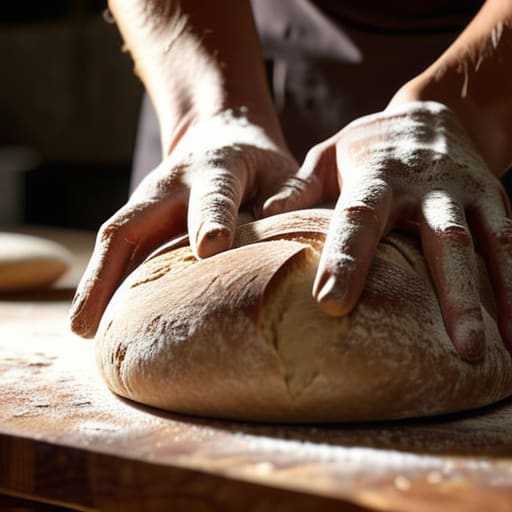
- Stop fighting the dough’s natural state. If you’re working with a high-hydration dough—say, something in the 78% to 82% range—don’t try to manhandle it into a tight ball like it’s a piece of modeling clay. You’ll just tear the gluten you worked so hard to build. Work with the slack, not against it.
- Watch your bench flour like a hawk. I see so many beginners dumping a white cloud all over the counter because they’re nervous. Too much flour during shaping creates a dry skin that won’t stretch when the heat hits it in the oven, and you’ll end up with a loaf that cracks in all the wrong places. Use just enough to keep it from sticking, then nothing more.
- The “stitching” method is your best friend for tension. Instead of just folding the dough over itself, try pulling the sides toward the center like you’re sewing a seam. It creates a much more even distribution of strength throughout the loaf than just a clumsy tuck and roll.
- Check your temperature, not just your clock. If your kitchen has dropped a few degrees while you were prepping, that dough is going to feel tighter and more resistant than it did twenty minutes ago. If it feels stubborn, give it five minutes to relax under a damp cloth before you try to shape it again. Don’t force a cold dough.
- Use the friction of the work surface to your advantage. When you’re doing that final tensioning, use the dough itself to pull against the counter. A gentle, rhythmic dragging motion creates that beautiful, taut skin we’re looking for, but if you feel the dough resisting or “snapping” back too hard, stop. It’s telling you it needs more rest.
The Baker's Truths
Stop looking at your screen for a visual cue; if the dough feels slack or sticky despite your best efforts, it isn’t your technique that’s failing, it’s likely your temperature or your timing.
Tension is a feeling, not a look, so focus on the way the dough pushes back against your palms rather than trying to force it into a perfect, symmetrical shape.
Respect the hydration; a 75% hydration dough will never behave like a 65% one, so stop fighting the stickiness and learn to work with the moisture instead of trying to beat it into submission.
Trust the Dough, Not the Clock
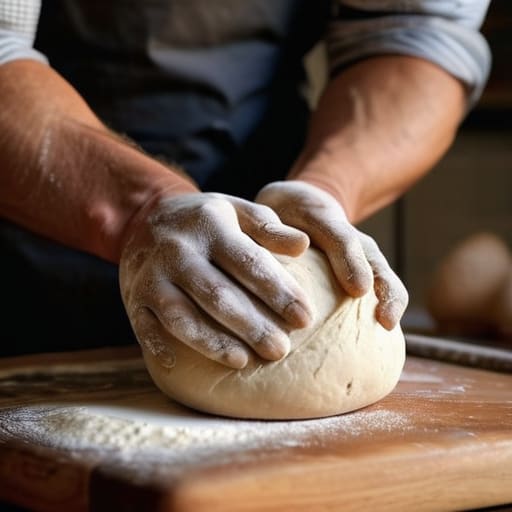
At the end of the day, shaping is less about following a rigid set of movements and more about recognizing when you’ve achieved that necessary surface tension. You’ve learned that you can’t force a loaf into submission; if you fight it, the dough fights back, and you’ll end up with a torn skin and a flat bake. Remember that it’s the combination of gentle pressure and giving the gluten enough time to relax that creates the structure. Whether you are working with a high-hydration sourdough at 80% or a stiffer sandwich loaf, the principle remains the same: listen to the resistance under your palms rather than staring at the timer on your oven.
Don’t let a messy-looking boule discourage you. I’ve seen plenty of “perfect” loaves that lacked soul, and I’ve seen quite a few of my own that looked like lumpy stones but tasted like heaven because I didn’t rush the proof. If your dough feels sticky or stubborn, step back, let it rest, and try again. Baking isn’t a performance for a camera; it is a conversation between your hands and the flour. Once you stop trying to control every single fold and start feeling the life in the dough, you’ll realize that the most beautiful loaves are the ones where you simply stayed out of the way and let the time do the heavy lifting.
Frequently Asked Questions
My dough feels incredibly sticky and won't hold its shape no matter how much I tension it; am I overworking it or is my hydration too high?
It’s likely your hydration. If you’re sitting at 80% or higher, you aren’t “overworking” it; you’re just fighting physics. At that level, the dough wants to flow, not hold a rigid shape. Stop trying to force it into a tight ball—that only leads to frustration and torn gluten. Instead, focus on building strength through more frequent, gentle folds during bulk fermentation. Let the dough find its own structure before you even think about final shaping.
How can I tell if I've applied enough tension to the surface without accidentally degassing all the lovely air I spent hours building up?
You’re looking for a taut skin, not a tight drum. If you’re squeezing the life out of it, you’ve gone too far. When you pull the dough across the bench, it should feel like a drumhead—smooth and slightly resistant, but still bouncy. If it feels like you’re fighting a heavy piece of clay, you’re degassing. Stop. Let it rest for ten minutes; the tension will find its own way back.
If my kitchen is particularly cold today, should I be shaping my loaves more tightly to help them hold their structure during the final proof?
Oh, heavens no. If your kitchen is cold, the dough is likely sluggish and tight already; if you manhandle it with extra tension, you’ll just tear the gluten and end up with a dense, stunted loaf. A cold kitchen means a slow fermentation, not a structural crisis. Don’t compensate with force. Just shape it with your usual gentleness and give it the extra time it needs to wake up. Patience, not pressure, wins the day.