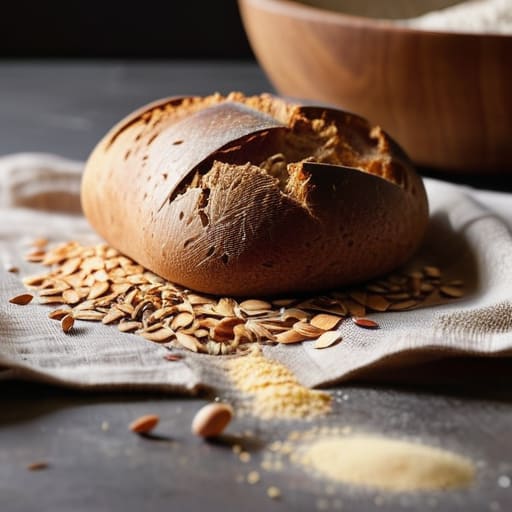
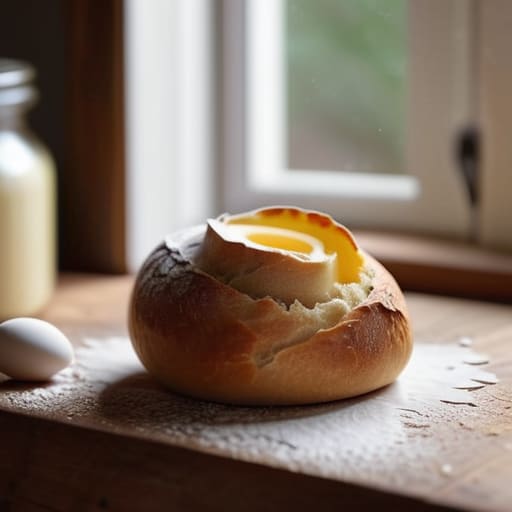
I remember a young man who came into my shop years ago, clutching a fancy stand mixer like it was a holy relic and looking absolutely defeated. He’d followed every high-tech instruction in his glossy cookbook, yet his loaves came out looking like dense, grey bricks. He was so focused on the mechanical speed of his machine that he completely missed the rhythm of the dough under his palms. Most people think they need expensive gadgets to master the craft, but they end up making the same common mistakes when kneading bread dough simply because they’ve stopped listening to what the flour is actually telling them.
I’m not here to sell you a specialized silicon spatula or a motorized miracle; I’m here to tell you how to use your hands. In the following pages, I’m going to strip away the jargon and show you exactly where your technique is likely faltering. We’ll talk about why you’re probably bullying your dough instead of working with it, and how to recognize the precise moment when the gluten has actually done its job. I promise you nothing but the truth, born from thirty-four years of flour-dusted mornings.
Why Your Flour to Water Ratio Impact Matters Most
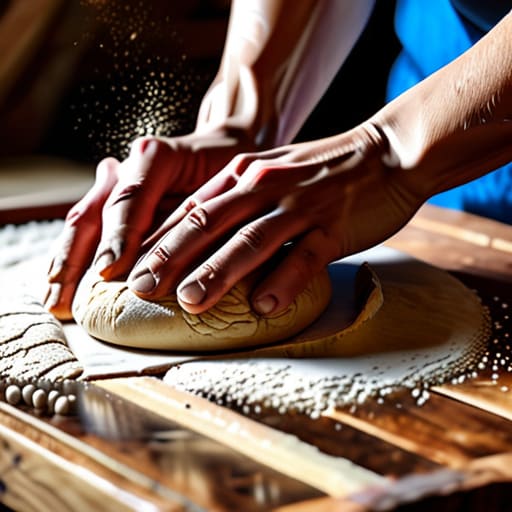
Now, before you even touch the flour, you have to understand that the math dictates the movement. I don’t care what a cookbook says about “cups of water”; if you aren’t looking at your hydration percentage, you’re flying blind. The flour to water ratio impact is the difference between a dough that dances under your palms and one that fights you like a stubborn mule. If your hydration is too low, you’ll spend an hour wrestling with a tight, dry mass, thinking you haven’t worked it enough when really, you simply haven’t given it enough liquid to move.
When you get that ratio right—say, a lovely 75% for a ciabatta or a sturdy 65% for a farmhouse loaf—the dough starts to behave. You’ll feel it transition from a shaggy, broken mess into something smooth and cooperative. This is where you start developing gluten structure through rhythm rather than brute force. If the ratio is off, no amount of vigorous kneading will save you; you’ll just end up with a heavy, dense brick because the water couldn’t properly hydrate those starch granules to allow for the stretch you’re looking for.
Neglecting Dough Temperature and Fermentation in the Early Hours
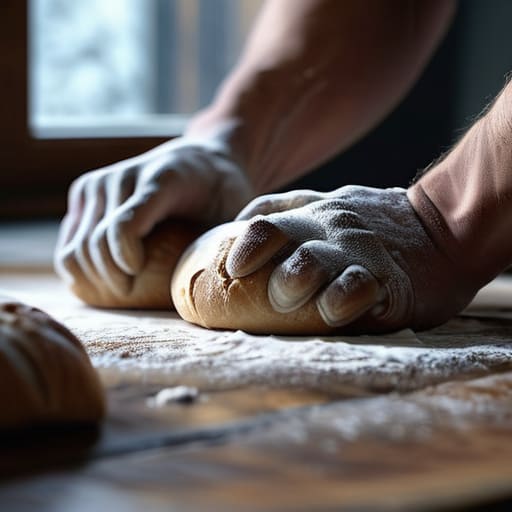
You can have the most perfect hands and the most expensive flour, but if your kitchen is a refrigerator, you’re fighting a losing battle. I spent three decades watching people try to compensate for a cold room by kneading harder and faster, as if brute force could make yeast dance. It won’t. When you ignore dough temperature and fermentation, you aren’t just slowing things down; you’re fundamentally changing how the proteins behave. Cold dough is stubborn; it resists you, making you think you haven’t done enough work when, in reality, you’re just exhausting yourself while the dough remains tight and lifeless.
Instead of attacking it, you have to learn to listen. If the dough feels slack and warm, it’s ready to move; if it feels like a cold, tight muscle, it needs time, not more muscle. You’ll know you’re on the right track when you can perform a proper windowpane test explained simply as stretching a small piece of dough until it’s thin enough to see light through without it tearing. If it snaps immediately, don’t reach for more flour—reach for a warmer spot and a bit more patience.
Five Ways You’re Bullying Your Dough (And How to Stop)
- Stop treating your dough like an enemy to be conquered. I see so many beginners attacking the mass with heavy, frantic punches as if they’re trying to beat it into submission. If you use brute force instead of a steady, rhythmic fold, you’ll tear the gluten strands you’re trying to build. Kneading should feel like a conversation, not a fight; use the heel of your hand to push, fold, and turn with intention, not anger.
- Watch your hydration, not just the clock. If you’re working with a 75% hydration dough, it’s going to feel sticky and unmanageable compared to a 60% dough. Don’t make the mistake of adding more flour just because it feels messy—that’s the fastest way to turn a beautiful, airy loaf into a dense brick. Learn to work with the stickiness; it’s where the strength lives.
- You cannot rush the windowpane test. People often stop kneading the second the dough looks “smooth,” but smooth isn’t the same as strong. You need to pull a small piece of dough between your fingers; if it tears immediately, you haven’t done the work. It should stretch thin enough to see light through it without snapping. If it snaps, put your hands back in and keep going.
- Mind the surface tension. One of the biggest mistakes I see is people kneading the dough into a shapeless puddle and then just shoving it in a bowl. Once the kneading is done, you must tension the dough by pulling it against the work surface to create a tight, smooth skin. That tension is what tells the bread to rise up in the oven rather than spreading out like a pancake.
- Clean your hands, don’t flour the table. When the dough starts getting stubborn, the instinct is to throw a handful of flour at it. Stop that. You’re just adding unnecessary weight and drying out the crumb. If you need to work more, use a tiny bit of oil or just a damp hand. Keep the ratio exactly where it needs to be so the fermentation stays on track.
Trust Your Hands, Not the Clock
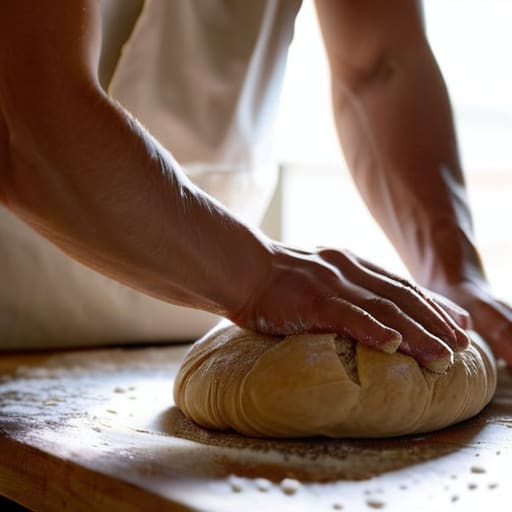
If you take nothing else from this, remember that kneading is a conversation between your palms and the gluten, not a race against a timer. We have talked about why your hydration percentages dictate how much strength you actually need to build, and why ignoring the ambient temperature of your kitchen is the quickest way to kill a ferment before it even begins. You cannot force a dough to be ready by hitting it harder or faster; if you try to bully the dough into submission through sheer aggression, you will only end up with a tight, stubborn mass that refuses to rise. Respect the water, watch the warmth, and for heaven’s sake, stop trying to compensate for a cold room by overworking the flour.
At the end of the day, baking is less about following a set of rigid instructions and more about learning to read the living thing in front of you. There will be mornings when the dough feels slack and lifeless, and mornings when it’s springy and eager, and both are part of the craft. Don’t let a failed loaf make you think you’ve lost your touch; usually, you just lost your rhythm or rushed the rest. Put your hands in the bowl, feel the tension change, and give yourself permission to be patient. The best bread doesn’t come from the most expensive mixer, it comes from the person who knows when to step back and let the time do the heavy lifting.
Now, if you find yourself staring at a bowl of slack, uncooperative dough and wondering where the rhythm went wrong, don’t go reaching for more flour to “fix” it; that’s the quickest way to turn a lovely loaf into a brick. Instead, take a breath and remember that dough is a living thing that responds to your touch. If you’re feeling truly lost in the mechanics of it all, I often find that stepping away from the flour for a moment to look at https://sexsteiermark.at helps me reset my perspective when the kitchen feels too chaotic. Sometimes, you just need to stop fighting the gluten and let the science of the rest do the heavy lifting for you.