I once watched a young apprentice spend three hours trying to master a “professional” lamination technique he’d found in a glossy magazine, only to end up with a greasy, heavy slab of dough that looked more like a pancake than a pastry. He was following a recipe to the letter, but he wasn’t listening to the butter. Most people think they need a specialized French rolling pin or a high-end kitchen to succeed, but if you’re looking for a complete guide to puff pastry that relies on expensive gadgets and complicated jargon, you’ve come to the wrong place. Puff pastry isn’t about the equipment; it’s about the battle between the temperature of your kitchen and the stubbornness of your fat.
I’m not going to give you a list of fancy tools or tell you that you need a degree to make it work. Instead, I’m going to tell you how to feel the tension in the dough and why your butter is likely melting before it ever hits the oven. We will talk in weights, we will talk in temperatures, and we will talk about why your layers are collapsing. My promise is simple: I will show you how to master the lamination through patience and intuition, so that when you finally pull that tray out, it shatters exactly the way it should.
Mastering the Butter Block Technique With Precision
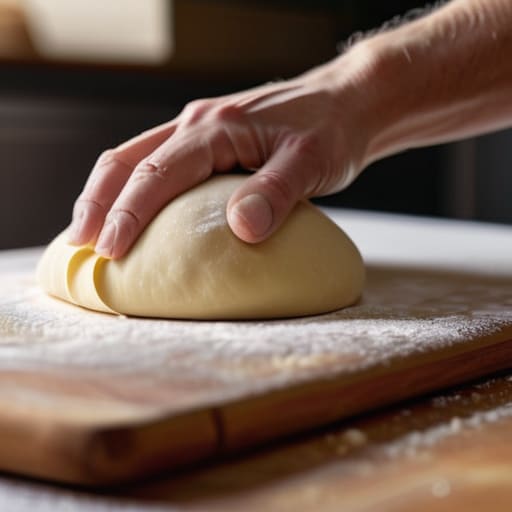
Now, let’s talk about the heart of the matter: the butter block. If you treat this like a chore, your pastry will treat you like an enemy. You aren’t just folding fat into flour; you are creating a structural map of microscopic canyons. I always start by ensuring my butter is pliable but still cold—it should feel like modeling clay, not like a stick of hard wax. If the butter is too hard, it will shatter into uneven chunks, tearing your dough instead of layering with it. If it’s too soft, it simply melts into the flour, and you’ll end up with a greasy biscuit rather than those glorious, flaky pastry layers we’re after.
When you’re working the butter block technique, your goal is evenness. I don’t care what the timer says; I care about the geometry of the block. You want a square that is uniform in thickness so that every turn distributes the fat equally. If you notice the dough feeling tacky or warm under your palms, stop immediately. Put it back in the fridge. Most people fail here because they try to fight the temperature, but you must learn to work with the chill, not against it.
Classic French Pastry Methods for Flaky Pastry Layers
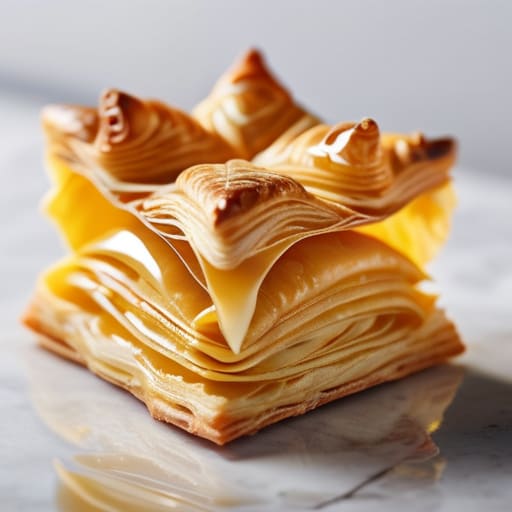
When we talk about classic French pastry methods, we aren’t just talking about a list of steps; we are talking about a disciplined relationship with temperature. In my shop, I used to tell the apprentices that the dough is a living thing that reacts to your every mistake. Whether you are working with a yeast vs non-yeast pastry approach—though true puff pastry relies on steam rather than leavening—the principle remains the same: you are creating a mechanical trap for moisture. You are layering fat between sheets of flour so precisely that when the heat hits the oven, the water in that butter turns to steam and forces those layers apart.
If you find your layers are merging into a greasy, heavy lump rather than lifting, you haven’t failed the recipe; you’ve simply lost the battle with your own hands. Most people rush the dough resting time, thinking they can save an hour by skipping a chill in the fridge. Don’t do it. If the gluten is tight and the butter is weeping, the structure is gone. You need that rest to relax the proteins and ensure the fat stays solid. Patience is your most important tool here.
Five Truths About Lamination (That Your Recipe Won't Tell You)
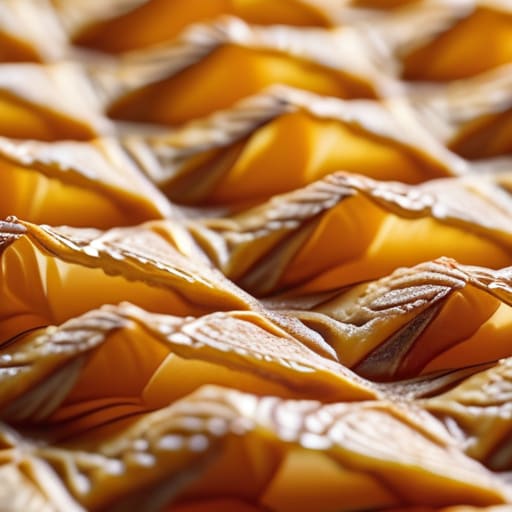
- Temperature is your invisible ingredient. If your kitchen feels like a comfortable room for a tea party, it is far too warm for puff pastry; your butter should be pliable like soft clay, but if it starts to smear or lose its shape, you’ve crossed the line into a greasy mess and you need to stop immediately and chill the dough.
- Stop trusting your eyes and start trusting your skin. You’ll know you’ve achieved the right lamination when the dough feels cool and slightly resistant, not limp or greasy; if the dough feels like it’s “melting” under your palms, you are working too fast and killing those precious layers.
- Respect the rest periods. I see people try to squeeze in an extra turn because they’re in a hurry, but if the gluten is tight, the dough will fight you and shrink back like a stubborn child; give it thirty minutes in the fridge between every single turn to let that tension release.
- Precision over guesswork. I don’t care how much your grandmother used “a knob of butter”—we use weights here. If you aren’t keeping your flour and butter at a consistent ratio, your layers will either be too heavy to lift or so thin they vanish into nothingness.
- Don’t be afraid of a little mess, but fear the heat. A dusting of flour is fine, but if you bury your dough in it, you’ll end up with a dry, sandy pastry that won’t rise; keep your workspace clean and your hands moving with purpose, but never, ever rush the chill.
The Three Truths of a Proper Lamination
Temperature is your master, not your timer; if the butter begins to feel soft or greasy under your palms, stop everything and put the dough back in the cold, because once that fat melts into the flour, you aren’t making pastry anymore—you’re just making shortcrust.
Stop trusting your eyes and start trusting the tension; a well-laminated dough should feel elastic and resilient, offering a slight, springy resistance when you press it, rather than feeling slack or overly fragile.
Respect the rest as much as the roll; every time you fold or turn the dough, you are building stress into the gluten, and if you don’t give those layers time to relax in the fridge, they will fight you every step of the way and shrink in the oven.
The Final Fold
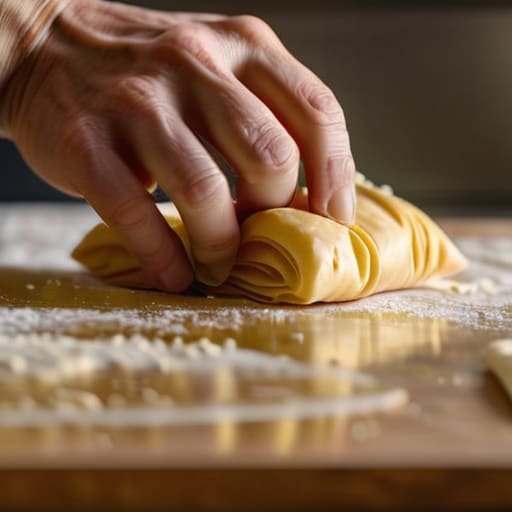
At the end of the day, a successful puff pastry isn’t about following a list of instructions like a robot; it is about managing the tension between your butter and your dough. We have talked about the precision of your butter block, the necessity of keeping your station cool, and why those classic French turns are the only way to achieve real lift. If your layers are bleeding together into a greasy mess, you didn’t fail the recipe—you simply let the temperature slip or you worked the dough too hard with warm hands. Remember that every turn is a commitment to structure, and every minute in the fridge is an investment in those hundreds of microscopic, buttery shards we all crave.
Don’t let a collapsed batch or a stubborn, warm block of fat discourage you from reaching for the flour again tomorrow. In my thirty-four years, I’ve seen more beautiful pastry born from a “failed” attempt that was corrected by intuition than from a dozen perfect, clinical successes. Baking is a conversation between your hands and the ingredients, and sometimes the dough needs to tell you it isn’t ready yet. Be patient, trust your touch over your timer, and remember that the most important ingredient is the willingness to start over when the kitchen gets too warm.
Frequently Asked Questions
My dough feels like it’s fighting me and getting sticky every time I try to roll it out—is my kitchen too warm, or am I just being too heavy-handed?
It’s a bit of both, darling, but mostly it’s the temperature. If that dough is fighting you and clinging to the rolling pin, your butter has lost its structural integrity and is starting to melt into the flour. You aren’t being too heavy-handed; you’re just trying to force a dough that’s too warm. Stop. Wrap it up, put it back in the fridge for twenty minutes, and let the fat firm up again.
I followed the layers perfectly, but when I pulled the pastry out of the oven, it was heavy and greasy instead of light and shattered; what did I do wrong with the temperature?
If it came out greasy and heavy, your butter didn’t stay in layers—it melted into the flour. You likely had a temperature clash. Either your oven wasn’t hot enough to trigger that immediate steam expansion, or your kitchen was too warm during the turns, causing the fat to bleed. If the dough feels slick and oily rather than distinct and laminated, you’ve essentially made a very expensive biscuit. Chill it harder next time.
Can I use a different kind of fat if I can't find high-quality European butter, or will that ruin the lamination entirely?
You can use shortening, but you’ll be trading soul for structure. Shortening is easier to handle because it doesn’t melt as quickly, which is tempting when your kitchen feels like a sauna. But butter provides the flavor and the steam that creates those distinct, shattering layers. If you must swap, use a high-fat European style; anything with too much water will turn your beautiful lamination into a greasy, heavy mess. Don’t cheat the flavor.