I spent thirty-four years watching people walk into my bakery, eyes wide at the glossy, towering peaks of our pavlovas, only to go home and fail miserably because they followed a recipe that treated air like a math problem instead of a living thing. They buy expensive copper bowls and specialized stabilizers, convinced that the secret to how to make meringue lies in a gadget or a fancy ingredient. It doesn’t. Most of that expensive nonsense is just a distraction from the truth: meringue is nothing more than sugar, air, and absolute discipline. If your peaks are weeping or your whites refuse to stand up, it isn’t because you bought the wrong brand of sugar; it’s because your kitchen was too humid or your hands were too impatient.
I am not going to give you a list of “pro tips” that involve buying more equipment you don’t need. Instead, I’m going to tell you how to listen to those egg whites. I will teach you to recognize the exact moment the protein structure has found its backbone and how to manage your sugar so it dissolves rather than grit. We are going to work with weights and temperatures, not “cups and guesses,” so you can finally stop praying to the oven gods and start trusting your own hands.
Mastering Egg White Aeration Techniques Without Rushing the Process
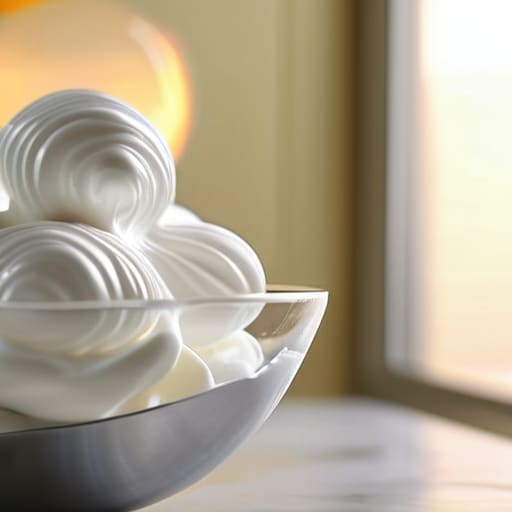
Most people treat a whisk like they’re trying to beat a rug, all frantic energy and high speed. That is your first mistake. If you want real structure, you have to respect the protein. I always start on a low speed, just long enough to break those whites into a uniform foam. If you rush straight into high-speed egg white aeration techniques, you’ll end up with large, unstable bubbles that pop the moment they hit the heat. You want tiny, tight bubbles—the kind that look like sea foam, not soap suds.
As you move up the speed, this is where you introduce your stabilizers. I never skip a pinch of cream of tartar for stability; it’s the difference between a cloud that holds its shape and a puddle that runs. You’ll know you’re getting there when you see the transition from soft peaks vs stiff peaks. Soft peaks will curl over like a tired wave when you lift the whisk, while stiff peaks should stand straight up, proud and unyielding. If they look grainy, you’ve added your sugar too fast and caused sugar crystallization, and you’ll have to start over.
Understanding Stiff Peaks vs Soft Peaks Through Touch
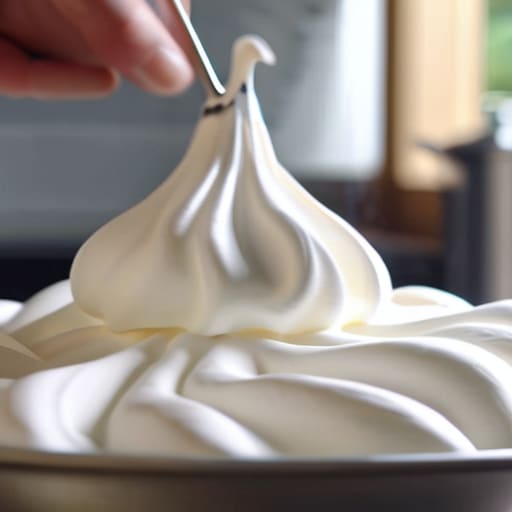
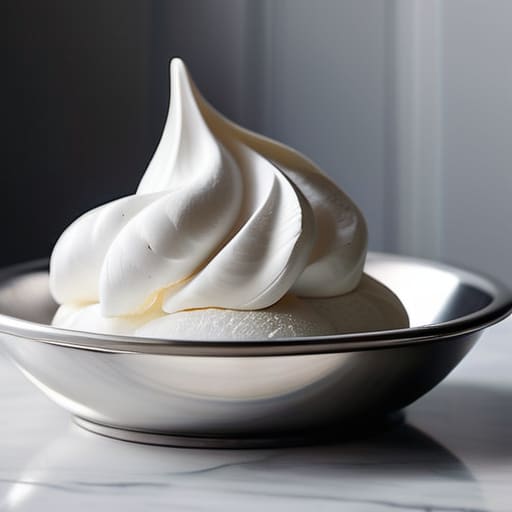
Now, don’t go relying on a timer to tell you when your whites are ready; a clock doesn’t have hands to feel the resistance. When you’re looking for those soft peaks, the meringue should look like a gentle, billowy cloud. If you lift your whisk, the tip will curl over lazily, like a tired dog settling into its bed. This is often where people stumble, thinking they’ve gone too far, but soft peaks are the foundation for a glossy, stable base.
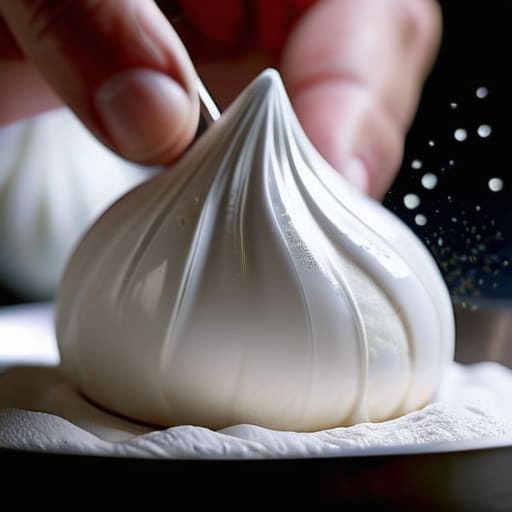
If you keep going, you’ll reach the stage where the whites stand up straight and proud. That is what we call stiff peaks, and they should look like they’ve finally found their backbone. When you lift the whisk now, the tip shouldn’t move an inch. If you try to push the foam around with a spatula at this stage and it feels grainy or looks like it’s breaking, you’ve likely over-whisked, turning your beautiful air into something closer to cottage cheese. Understanding the difference between stiff peaks vs soft peaks is really just about learning to read the texture of the foam rather than staring at the clock.
Five Rules for When the Sugar Starts to Bite
- Treat your equipment like it’s sacred. If there is even a microscopic smear of egg yolk or a ghost of grease on your whisk, your whites will never find their backbone, no matter how long you beat them. I always wipe my bowls with a bit of lemon juice first—it’s a small habit that saves a lot of heartache.
- Stop measuring by the spoonful and start weighing your sugar. For a standard French meringue, you’re looking at a 2:1 ratio of sugar to egg whites by weight. If you try to eyeball it, you’ll either end up with a weeping, syrupy mess or a dry, gritty powder that tastes like sand.
- Add your sugar like you’re feeding a slow-burning fire, not dumping it in a bucket. If you dump the sugar in all at once, you’ll weigh down the proteins before they’ve had a chance to trap the air. A tablespoon at a time, slowly, until the mixture feels glossy and smooth under the whisk.
- Watch the temperature of your room. If your kitchen is drafty or damp, your meringue will feel sluggish and heavy. I’ve seen many a beautiful batch fail simply because the cook tried to pipe them while the air was too cold, causing the structure to tighten up and crack before it ever hit the oven.
- Respect the “weeping.” If you see beads of moisture forming on your meringue, don’t panic, but do pay attention. It usually means you rushed the sugar incorporation or your oven was too cool. Meringue needs a steady, gentle heat to dry out and set; if you try to speed things up by cranking the dial, you’re just going to burn the outside while the inside stays a puddle.
The Three Pillars of a Meringue That Holds Its Ground
Temperature is your first invisible ingredient; ensure your eggs are at room temperature before you even think about picking up a whisk, or the proteins will be too stubborn to stretch and hold the air you’re working so hard to trap.
Sugar is not just for sweetness, it is the structural glue, and you must add it one spoonful at a time—if you dump it in all at once, you’ll weigh down the air bubbles and end up with a weeping, syrupy mess instead of a cloud.
Trust the resistance of the bowl over the ticking of a clock; you’ll know you’ve reached the finish line when the whisk leaves tracks in the foam that stay exactly where you put them, standing up with the same quiet confidence as a well-proofed loaf.
The Final Fold
At the end of the day, a successful meringue isn’t about following a set of instructions blindly; it is about respecting the chemistry of what you are holding in your bowl. You have learned that your equipment must be spotless, that your sugar must be introduced slowly enough to let the structure catch, and that you must trust your hands over a kitchen timer. If your peaks are slouching or your foam looks grainy, do not blame the eggs—look back at your temperature and your timing. Remember that aeration is a delicate dance of air and protein, and if you rush the whisking or bully the whites with too much sugar too soon, you will always end up with a heavy, weeping mess instead of that cloud-like stability we are all chasing.
Don’t be discouraged if your first few attempts look more like a puddle than a peak. I spent my first years in the bakery thinking I had lost my touch every time a batch collapsed, only to realize I was simply trying to outrun the process. Meringue requires a certain level of quiet observation that most modern recipes try to skip over. Once you stop fighting the ingredients and start listening to how the texture changes under your whisk, you will find your rhythm. Baking is rarely about perfection on the first try; it is about the patience to try again when the kitchen is quiet and the light is just right.
Frequently Asked Questions
Why did my meringue turn out grainy and weeping instead of smooth and glossy?
If your meringue is weeping and feels like sand against the tongue, you’ve likely let the sugar rush the water. Sugar is thirsty; if you dump it in all at once instead of raining it down slowly, it won’t dissolve. It just sits there, heavy and gritty, weighing down your air bubbles. Once those crystals refuse to melt into the structure, the whole thing collapses into a sugary puddle. Slow down. Let the sugar find its home.
Is it true that I can't use a copper bowl, or is that just something people say to sound old-fashioned?
It isn’t just old-fashioned talk; there’s real chemistry at play. If you use a copper bowl, the metal reacts with the egg proteins to create a very stable, fine-textured foam. It’s wonderful for a soufflé, but it’s a bit of a trap for beginners. If you’re planning to add cream or fat later—like in a buttercream—the copper can make your whites too stable to fold in easily. Stick to glass or stainless unless you’re certain.
How do I know if my oven is actually hot enough to dry the meringue without it turning a muddy brown?
If your meringue is turning muddy brown, your oven is fighting you. You aren’t baking; you’re roasting. Meringue needs a gentle, steady warmth to dry, not a blast of heat. Don’t trust the little dial on your stove—those things are notoriously fickle. Use an external oven thermometer. If you can’t see the sugar drying into a crisp, pale shell, your temperature is too high or your air is too humid. Lower it and wait.