People will tell you that how to make marmalade is a matter of finding the perfect ratio of sugar to fruit, but they are lying to you. They treat it like a chemistry experiment where you just follow a list of measurements and hope for the best. I spent years watching people throw away perfectly good citrus because they thought they needed a specific brand of pectin or a fancy thermometer to succeed. The truth is much simpler and much more stubborn: marmalade is just citrus, sugar, and the slow surrender of heat. If your jars are cloudy or your peel is like chewing on a rubber band, it isn’t because your recipe failed; it’s because you didn’t respect the fruit or you tried to rush the boil.
I am not here to give you a glossy, filtered version of preserves that looks pretty in a photograph but tastes like nothing. I am going to show you how to work with the bitterness and the pectin that is already there, using the weight of the fruit and the patience of a slow simmer. We will talk about the actual feel of the syrup and why your kitchen temperature matters more than any instruction manual.
Recipe Details
Ingredients
- 1 kg Seville oranges
- 1 kg granulated sugar
- 1.5 liters water
- 1 tablespoon lemon juice
Recipe Instructions
Step 1
First, you must choose your fruit with intention. I like to work with a 50/50 split of bitter Seville oranges and sweeter Valencia oranges to balance the profile, but the math remains the same. Weigh your fruit—discard the seeds and the pithy cores, but keep the skins. If you are using 1000g of fruit, you will need exactly 1000g of sugar to reach a 100% sugar ratio by weight once the juices are accounted for. This isn’t a suggestion; it is the physics of the set.
Step 2
Slice those skins thin. If you leave the peel in thick, jagged chunks, you’ll be picking at your toast like a scavenger rather than enjoying a preserve. Place your sliced fruit and any extracted juice into a heavy-bottomed pot—never thin aluminum, it will scorch and ruin the bright citrus notes—and cover it with enough water to just submerge the fruit. Simmer this gently for about an hour or until the skins are tender enough to yield to a fork. If the skins are still tough, your marmalade will be a chore to eat.
Step 3
Now, we introduce the sugar. Add your weighed sugar to the pot with the softened fruit and juice. Turn the heat up just enough to dissolve the crystals, stirring steadily but not aggressively. You aren’t trying to whip air into it; you are simply ensuring the sugar integrates with the fruit. Once it’s dissolved, let it simmer, but watch your heat. If you rush it too hard, you’ll scorch the bottom, and no amount of stirring will save the flavor from that burnt edge.
Step 4
This is where most people lose their nerve, so listen to me: you must test the set. You are looking for the “wrinkle test.” Take a small spoon, scoop a bit of the boiling liquid, and drop it onto a chilled saucer. Let it sit for a moment, then push it with your finger. If the surface crinkles like an old linen sheet, you are ready. If it’s still runny, give it another five minutes. Don’t get impatient; the difference between a beautiful preserve and a sticky syrup is often just a few minutes of steady heat.
Step 5
Finally, pour the hot marmalade into sterilized jars, leaving a tiny bit of headspace at the top. Seal them immediately. I know it is tempting to dive in with a piece of sourdough while it’s still warm, but marmalade is a lesson in the beauty of waiting. Let the jars sit undisturbed in a cool, dark place for at least a week. The flavors need that time to marry, and the pectin needs to settle into its final, glorious structure.
Finding the Soul in Natural Pectin in Citrus
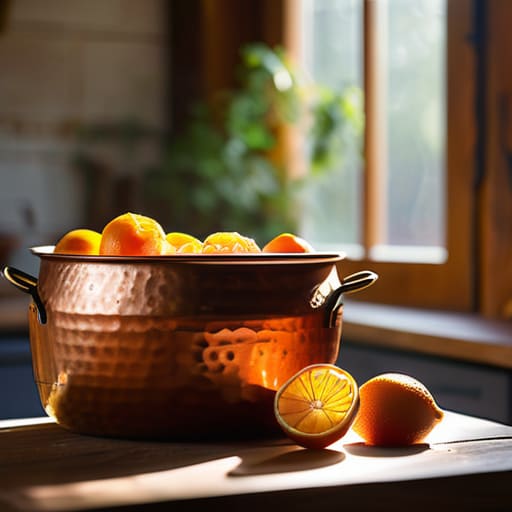
Most people treat pectin like a chemical additive, something to be shaken out of a box and dumped into a pot when the fruit refuses to behave. But if you’re following a traditional marmalade method, you aren’t looking for a shortcut; you’re looking for the fruit to surrender what it already has. The real magic—the structural soul of your preserve—lives in the white pith and the seeds. That is where the natural pectin in citrus resides. I always tell my apprentices: if you strip the fruit too clean, you’re just making a sweet syrup, and you’ll spend your whole afternoon worrying about the set.
Don’t be afraid of a little bitterness, either. A proper bitter orange jam recipe relies on that slight edge to balance the sugar. If you find your batch is looking a bit thin, don’t reach for the store-bought powder; instead, check your heat. You need to hit that specific marmalade setting point temperature with steady, patient heat, allowing the pectin to bond without scorching the sugars. It’s a conversation between the fruit and the flame, and you have to listen to when it’s ready to hold its shape.
A Traditional Marmalade Method That Honors the Fruit
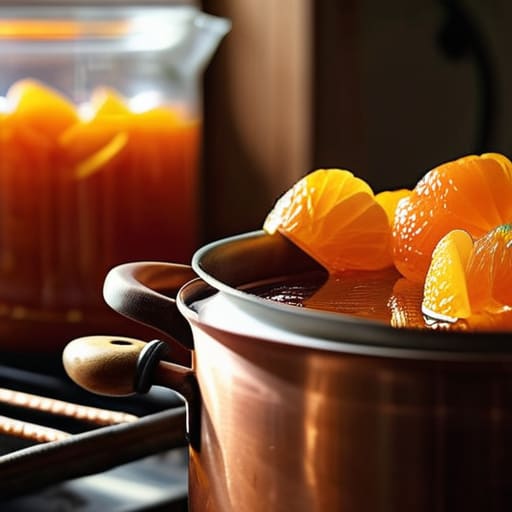
If you want to move away from the supermarket jars that taste more like colored sugar than actual fruit, you must embrace the traditional marmalade method of slow extraction. In my shop, we never rushed the initial softening. You should let those peels simmer until they are tender enough to yield to a spoon; if you try to set a jam with skins that still have a bite, you’ll find the texture jarring rather than elegant. It is a slow dance between the acid of the juice and the sugar, and if you try to cheat the clock, you’ll lose that deep, translucent glow that defines a proper citrus fruit preserves.
Don’t forget that the science of the set is as much about heat as it is about fruit. I always keep a small heavy-bottomed pan nearby to test the marmalade setting point temperature with a small batch before committing the whole pot. It’s much better to find out your boil is too shallow on a spoonful than to realize you have a liquid mess after you’ve already spent an hour sterilizing glass jars for jam. Patience is your best tool here; let the bubbles get heavy and slow, and trust your senses over a timer.
Five things the cookbooks won't tell you about the boil
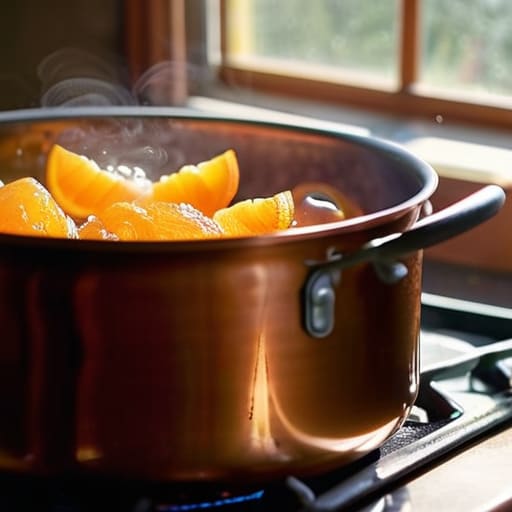
- Watch your temperature, not your clock. A recipe might say ‘boil for twenty minutes,’ but your kitchen isn’t a laboratory and your stove isn’t a precision instrument. You are looking for the set point—that moment when the liquid coats the back of a spoon and holds its shape. If you pull it too early, you have syrup; if you wait too long, you have bitter amber glass.
- Respect the bitterness of the pith. Some people tell you to scrape the white bits away entirely, but that’s where the character lives. If you want a gentler marmalade, slice the fruit thinner, but never discard the soul of the citrus. Just ensure you’ve given it enough time in the initial soak to mellow out.
- Don’t be afraid of the scale. I know, it feels like more work to weigh your sugar against the weight of your fruit and juice, but it’s the only way to ensure the pectin-to-sugar ratio is right. If you’re guessing with cups, you’re gambling with the set, and I’ve never had much luck with gambling.
- The “cold plate” test is your best friend. Before you commit to pouring that hot liquid into jars, put a small spoonful on a chilled saucer. If it wrinkles when you push it with your finger, it’s ready. If it runs, it needs more time. It’s better to boil it for another five minutes than to spend a week mourning a runny batch.
- Let it rest before you judge it. I’ve seen many a panicked baker think they’ve failed because the marmalade looked a bit loose while it was still steaming. Marmalade is a living thing; it needs time to settle and the pectin to fully bond as it cools. Give it twenty-four hours of peace before you even think about opening a jar.
The Three Truths of a Proper Jar
Respect the bitter, for it is the backbone; if you strip away every bit of pith and peel to make it “easy,” you’ll end up with a jar of orange-flavored syrup rather than a true marmalade.
Temperature is your only real guide, not a clock; a boil that’s too frantic will break your pectin, and a boil that’s too lazy will leave you with a sticky mess that never sets.
Trust your hands and your eyes over a timer; the moment the liquid holds its weight on a cold spoon is the moment you stop, because once you pass that point, you’re just making candy.
The Last Bit of Heat
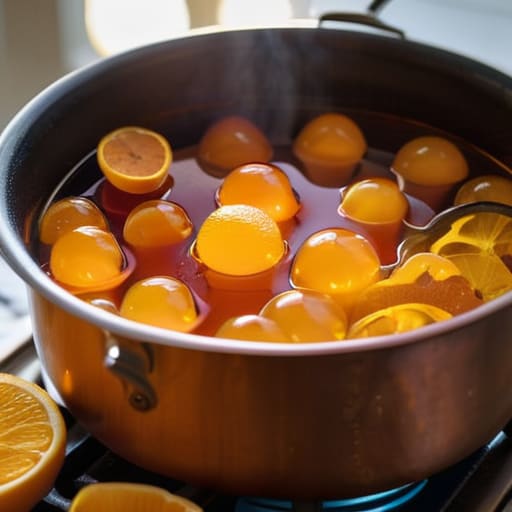
At the end of the day, making a proper marmalade isn’t about following a set of rigid instructions, but about listening to the pot. You have to respect the pectin, give those bitter peels the time they need to soften, and watch the temperature carefully so you don’t scorch the very essence of the fruit. If your set feels a bit loose, don’t panic; it’s usually just a matter of a few more minutes of simmering or a slightly cooler spot in your pantry. Remember, the goal isn’t a shiny, factory-made gel, but a vibrant, honest preserve that tastes like the fruit it came from, not the sugar used to mask it.
When you finally pull those jars from the shelf, let them sit. A marmalade is like a good sourdough; it needs a moment to settle into itself before it’s truly ready to be enjoyed. Don’t be discouraged if your first batch isn’t quite the masterpiece you imagined in your head. Baking and preserving are lessons in humility, taught one sticky spoon at a time. Just keep your weights accurate, your heat steady, and your heart open to the process. There is a quiet, profound joy in spreading something you made from scratch onto a piece of warm toast, knowing you had the patience to wait for it.
Frequently Asked Questions
My marmalade didn't set and looks more like a syrup; did I miss the setting point or was my pectin count off?
It’s rarely just the pectin, though that’s what the books will tell you. If it’s a syrup, you likely didn’t reach the setting point, or you rushed the evaporation. Check your temperature; if you aren’t hitting 104.5°C, it won’t hold. But more often, it’s the acid. If your citrus wasn’t quite tart enough, the pectin has nothing to grab onto. Don’t panic—simmer it down a bit longer, but watch your heat so you don’t scorch the fruit.
Can I use a mix of different citrus fruits, or will the acidity throw off the balance of the whole batch?
You can absolutely mix your fruits, and frankly, I’d encourage it. A single citrus can be one-note, but a blend creates depth. Just remember that pectin and acidity are your structural engineers here. If you’re mixing a sweeter orange with a more mellow fruit, add a splash of lemon juice to keep the pH low enough for the set. Don’t fear the acid; it’s what gives the marmalade its brightness and its backbone.
How long can I realistically keep the jars once they've been opened before the flavor starts to turn?
Once that seal breaks, you’re no longer preserving; you’re just managing. Keep your jar in the fridge and try to use a clean spoon—never double-dip, or you’re inviting mold to dinner. Realistically, you’ve got about three to four weeks before the brightness of the citrus starts to dull. If it smells fermented or looks cloudy, don’t fight it; just toss it. It’s better to waste a jar than to ruin a breakfast.