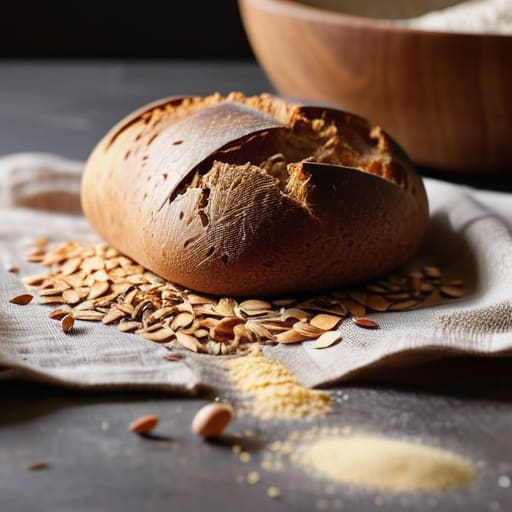
I spent thirty-four years watching people try to scale down recipes by grabbing a handful of flour and a “generous” scoop of a measuring cup, only to end up with a gummy, heavy mess that wouldn’t rise if you begged it. There is this ridiculous notion in modern baking blogs that you need specialized, miniature equipment or some expensive little gadget to master how to bake in small batches. It’s nonsense. When you are working with a tiny amount of dough, the margin for error vanishes; a few grams too much water or a minute too long on the knead isn’t just a slight deviation, it is the difference between a loaf and a brick.
I’m not here to sell you a tiny rolling pin or a boutique silicone mold. I’m going to show you how to respect the math and the mechanics of a smaller dough mass using nothing but a digital scale and a bit of patience. We are going to talk about true baker’s percentages and how to manage temperature when your dough doesn’t have the thermal mass of a commercial batch. I promise to give you the honest, unvarnished truth about how to keep your crust crisp and your crumb airy, even when you’re only feeding yourself.
Scaling Down Recipes Accurately Why Cups Are Your Greatest Enemy
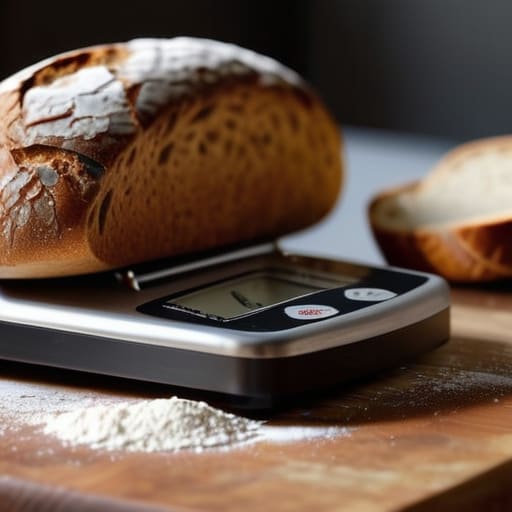
If you try to scale down a recipe using a set of nesting measuring cups, you are essentially gambling with your breakfast. When I was running the shop, I saw plenty of home bakers get frustrated because their small loaves came out like bricks or, worse, a gummy mess. The problem isn’t the flour; it’s the math. A “half-cup” of flour can vary by twenty grams depending on how hard you pack it, and in a large batch, that’s a rounding error, but in a single loaf, that is the difference between life and death.
To succeed at scaling down recipes accurately, you have to abandon the volume mindset entirely. I don’t care if a recipe calls for a teaspoon of salt; you should be weighing that out on a digital scale. When you are dealing with baking measurements for small quantities, even a single gram of extra water can shift your hydration from a manageable 70% to a sticky, unworkable 75%. If you want to stop fighting your dough and start understanding it, put the cups in the back of the drawer and let the scale do the heavy lifting.
Baking Measurements for Small Quantities the Weight of Truth
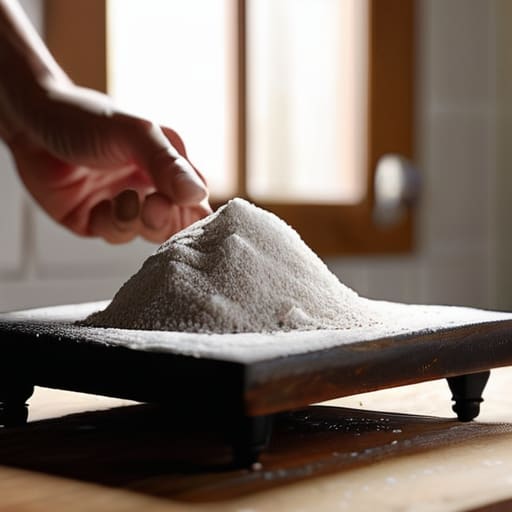
If you’re trying to work with tiny amounts of flour, a digital scale isn’t just a convenience; it is your lifeline. When I was running the shop, we scaled everything by weight because a handful of flour can vary by twenty grams depending on how tightly you pack it, and in a large batch, that’s a rounding error, but in a single loaf, it’s a disaster. When you are scaling down recipes accurately, a single gram of salt can be the difference between a beautiful, fermented dough and something that tastes like a seawater accident.
You also need to be mindful of your baking measurements for small quantities regarding the liquids. I’ve seen too many beginners try to “eyeball” a teaspoon of yeast or a splash of water in a small bowl. If your hydration is supposed to be 72%, and you add a heavy-handed splash because you can’t measure precisely, your dough will be a sticky, unmanageable mess that refuses to hold its shape. Don’t guess. If the scale says 4 grams, give it 4 grams. The dough knows when you’re being sloppy, and it will hold a grudge in the oven.
Five Things to Watch When You’re Baking for Two Instead of Twenty
- Mind your hydration, because small errors scale aggressively. If you’re working with a 70% hydration dough and you accidentally add five grams too much water, that’s a minor hiccup in a ten-loaf batch, but in a single loaf, it’s the difference between a structured crumb and a sticky, unmanageable puddle.
- Watch the temperature of your environment. A large mass of dough has its own thermal inertia; it holds onto its heat like a stubborn child. A tiny piece of dough, however, will surrender its warmth to a drafty kitchen in minutes, meaning your fermentation will stall before you even realize it’s gone cold.
- Don’t rush the bulk fermentation just because the bowl looks small. People often think that because there isn’t much dough to manage, they can speed things up. But yeast doesn’t care about the size of your container; it works on its own clock, and if you push it, you’ll end up with a loaf that tastes like nothing but flour.
- Be careful with your salt. When you’re working with tiny weights, even a single gram of salt can turn a dough from “perfectly seasoned” to “unpalatably salty.” If your scale isn’t sensitive enough to catch those small increments, you’re better off making a slightly larger batch than risking a ruined one.
- Use the right vessel, or don’t bother. If you try to proof a tiny boule in a massive proofing basket, the dough will spread out thin and flat instead of climbing upward. You need a container that hugs the dough, providing enough resistance to help it build the strength it needs to rise.
The Baker’s Bottom Line
If you’re cutting a recipe in half, don’t you dare reach for a measuring cup; a single gram of error in a large batch is a rounding mistake, but in a small batch, it’s a disaster that will ruin your hydration.
Temperature is your invisible ingredient, and it matters even more when you have less mass; a small piece of dough will lose its heat to a cold kitchen much faster than a heavy batch, so keep a close eye on your proofing environment.
Respect the rhythm of the dough rather than the clock; small batches can be temperamental and move quickly, so learn to feel the tension in the gluten and the softness of the fermentation instead of just staring at a timer.
The Final Proof
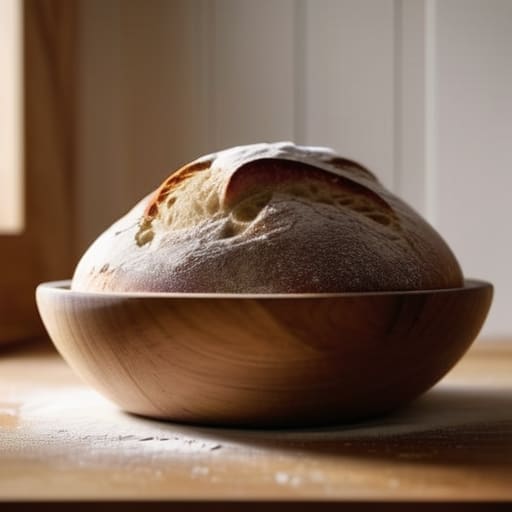
At the end of the day, baking for one or two is just as much an act of discipline as baking for a village. You cannot hide behind large volumes of dough to mask a mistake; in a small batch, every gram of flour and every degree of water temperature is exposed. Remember that you must ditch the measuring cups, stick to your Baker’s Percentages, and keep your scale within reach at all times. If the dough feels too tight or looks a bit sluggish, don’t panic and throw more flour at it—just check your ambient temperature and give it the time it’s asking for. Small batches demand more attention, but they also offer the quickest way to truly understand how your ingredients behave.
Don’t let the fear of a wasted egg or a few stray grams of flour keep you from the oven. Every time you scale a recipe down, you are actually scaling up your own intuition. You’ll start to feel the tension in a tiny piece of dough just as clearly as I felt it in a fifty-kilo batch back in my shop. Baking isn’t about the size of the loaf; it’s about the relationship between your hands and the grain. So, set your scale, trust your senses, and remember that patience is the only ingredient you can’t cheat your way through. Happy baking.
Frequently Asked Questions
If I'm only making a single loaf, how do I stop my dough from drying out during the bulk fermentation?
If you’re just making one loaf, your dough is far more vulnerable to the air in your kitchen than a massive batch would be. Don’t leave it in an open bowl; the surface will skin over before you know it. Use a small, airtight container or a tightly sealed glass jar. Better yet, lightly oil the dough and cover it with damp cloth. Keep it away from drafts—a cold breeze is a thief of moisture.
My scale isn't sensitive enough to measure tiny amounts of salt or yeast; is there a way to handle those small percentages without losing accuracy?
Don’t go buying a laboratory scale just for a pinch of salt; it’s a waste of good money. Instead, use the “build-up” method. If you need 2 grams of yeast but your scale won’t budge, measure out 10 grams, note the weight, then use exactly one-fifth of that pile. It’s a bit of extra math, I know, but it’s much more reliable than guessing by eye. Trust the math, not the flicker on the screen.
When I scale down a recipe, the oven temperature seems to affect my small loaves much faster than a full batch—how do I know when they're actually done?
That’s because a single loaf has more surface area exposed to the heat relative to its mass than a crowded oven does. It’s not just heat; it’s thermal momentum. Don’t trust the timer—the timer is a liar. You need to listen to the bread. Give the loaf a firm tap on the bottom; it should sound hollow, like a drum. If it sounds dull, it’s still weeping moisture inside. Use a thermometer, too. You’re looking for an internal temperature of about 97°C.